VII
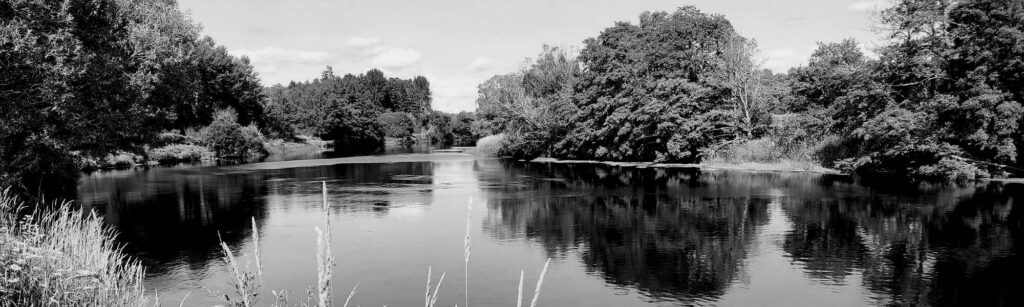
On the River Spey
The River Spey is justly renowned as one of the best of all salmon rivers, the lower half of the river characterised by mile after mile of the most perfect, and most sought after, fly fishing water imaginable. Anglers come from far and wide to cast a salmon fly on its hallowed beats, and pay a pretty penny for the privilege. Fortunate indeed is the man who has secured a prime week on one of its many fine beats, each with a famous name like Castle Grant, Tulchan, Knockando, Balindalloch, Arndilly, Rothes, Delfur, Wester Elchies and Carron, to mention just a few. But the true magic of the Spey lies, for me, not in its salmon but in its sea trout, that other migrant which arrives in numbers through June and July. On the expensive salmon beats, the sea trout will inevitably be overshadowed by the king of fish. Few will have the stamina to fish all day for salmon and half the night for sea trout. There are many, though, who are content to ignore the salmon and look forward instead to the short summer nights, when the sea trout shoals might, on a good night, provide exhilarating sport for those willing to forsake the comfort of a warm bed.
The Spey is arguably the best sea trout river in the British Isles, despite some stiff competition from rivers further south, particularly in Wales, where sea trout, or sewin, fishing vies with rugby as the national sport, on renowned rivers such as the Teifi, Dovey and Towy. Some of the best Spey sea trout fishing is to be had on nearly twenty miles of association water upstream of Grantown on Spey, where the sea trout average around two and a half pounds in weight and fish over five pounds are not uncommon. A double figure sea trout on the Spey, however, is notable. The Spey sea trout rod fishery has been historically one of the largest in the UK, with a 10 year (1992-2001) average annual catch of 4,590. By comparison, only the Rivers Towy and Teifi in Wales have caught more fish.
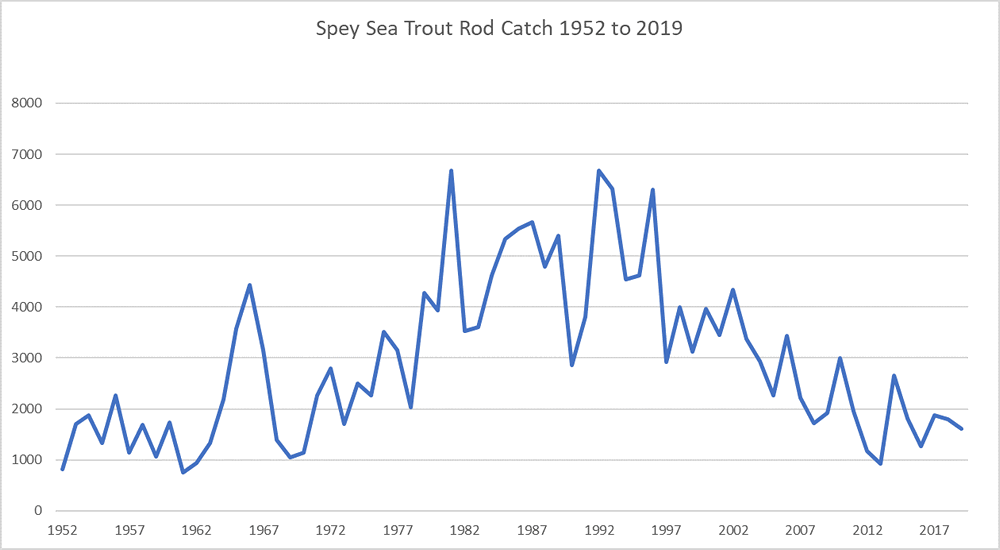
Recent seasons, in common with the general trend over the whole country, have seen a decline in these figures, as shown in the graph above, but the sea trout fishing on the Spey during the summer months can still be excellent. The Spey sea trout run normally begins in May, with stocks increasing throughout June and into July. The best of the night fishing is generally to be had from mid-June to mid-July on the upper middle part of the river, from Grantown on Spey upstream to Aviemore, where the two main associations on that part of the river, The Strathspey Angling Improvement Association and The Abernethy and Aviemore Angling Association, control between them seventeen miles of prime sea trout fishing, with daily and weekly permits readily available to all.
Strathspey Angling Association Sea Trout Catch by Month
| 2004 | 2005 | 2006 | 2007 | 2008 | 2009 | average | |
| Feb | – | – | – | – | – | – | – |
| Mar | – | – | – | – | – | – | – |
| Apr | 4 | 1 | 2 | 5 | 7 | 2 | 4 |
| May | 19 | 12 | 27 | 75 | 11 | 23 | 28 |
| June | 129 | 119 | 180 | 176 | 150 | 118 | 145 |
| July | 85 | 96 | 183 | 87 | 90 | 39 | 97 |
| Aug | 37 | 35 | 61 | 50 | 61 | 55 | 50 |
| Sept | 34 | 45 | 83 | 34 | 19 | 26 | 40 |
As illustrated in the table above, the most productive month for sea trout on the Grantown Association water is normally June, followed by July.
A further six rods are available for private let on the Kinchurdy beat, which offers three miles of excellent sea trout fishing upstream of Boat of Garten. The two angling associations at Grantown and Abernethy might be expected between them to account for approximately one third of the total annual Spey sea trout catch. For example, out of a total Spey catch of 3437 sea trout in 2006, rods on the SAIA at Grantown reported a total in excess of 500, while the Abernethy Angling Association reported more than 700.
TWO WEEKS IN JULY
I had fished very infrequently for sea trout in the early months of 2006. I had been saving my efforts for a long-awaited return visit to the River Spey, planned for the first two weeks of July. The day finally arrived and my wife and I travelled north on Sunday 2nd July to the Grantown Caravan Park. Having already bought my visitor season permit (£550), by post, from Mortimer’s tackle shop, I was all ready to make a start at midnight. Recalling my early successes on the river way back in the summer of 1991, I arrived on the riverbank at Auchernack very early and waited impatiently for midnight to come.
The river was running at zero, i.e. summer level, on the gauge at the New Bridge. A few fish moved in Poll Caich while I waited but by midnight the air had cooled a bit and, not long after, there began a series of lightning flashes, with thunder rolling around the distant hills. Not the best of starts. Fishing a two inch Needle Fly on the point and a size eight bushy black dropper fly, I had a couple of pulls but nothing very convincing and, nervous of waving a ten foot carbon conductor around in the lightning, I thought discretion the better part of valour and retired at two in the morning.
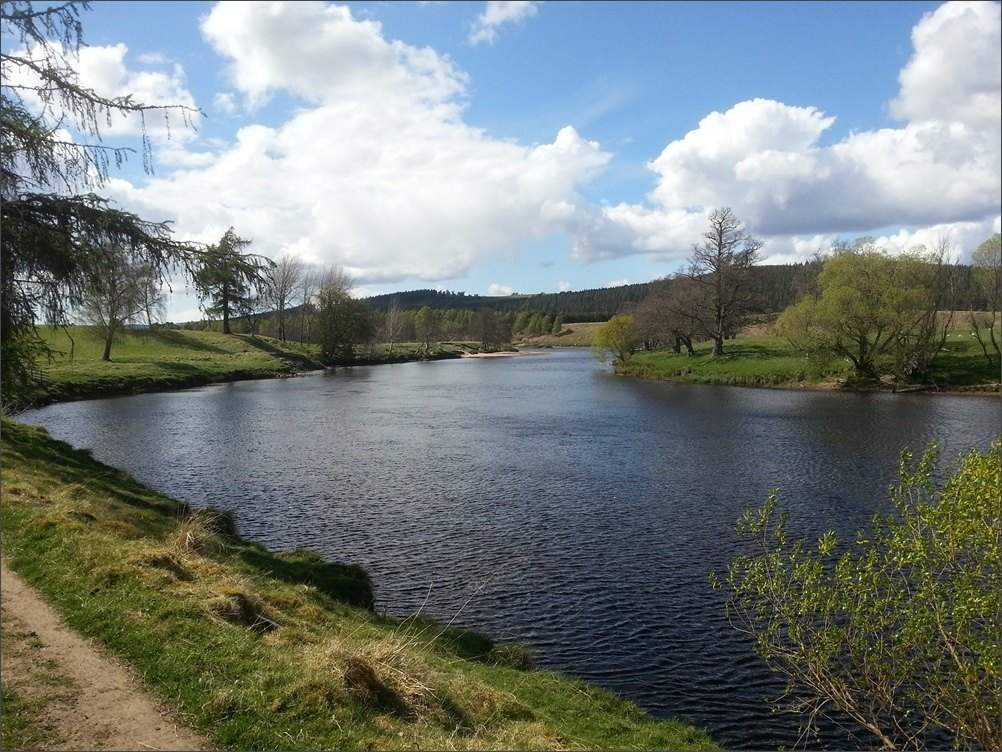
Making my way back up the path to the car, I met another fisher with the same thought. He told me he had caught nine sea trout, averaging around 2½ pounds, during the previous week, during which the river had fallen from 9 inches on the gauge to the present low level. His favourite fishing was from the Auchernack burn down through the Little Stream and the Bends to Tarric Mor. He fished mainly small flies from dusk late into the night.
Monday 3rd July
Following the thunderstorms of the previous night, the river at midday was running at two inches above summer level. We had a walk down the Upper Castle Grant beat and the main pools looked fishable, with good rough water particularly in Slop Thomas, which might be worth a go for sea trout during the day, although the wading looked awkward. I would have to make a wading stick before September, when I would be back for the salmon fishing. I thought that anything above 6 inches would be a good height for salmon. Further upstream, the Little Stream, the Upper and Lower Bends, and Tarric Mor would also provide more than enough lovely fly water for a good day’s salmon fishing.
With the extra couple of inches of water on the river, I decided to give Poll Caich another go that night. The slight rise would give more carry to work the flies. Others had evidently decided, as I had, that the conditions looked promising, as there were three other anglers’ cars parked at Auchernack, all of whom had chosen to fish downstream of the burn. On reaching the pool at dusk, it looked as if the river had continued to rise during the day. My impression was that it was a good few inches higher than last night and carrying a little too much colour for good night fishing.
I had hoped to have the pool to myself. It was not to be, however, as four more fishers appeared on the opposite bank. With the deepest channel running close to the north bank, however, the pool tail is not so easily fished from that side, so the “opposition” were restricted, at this height of water, to the top three quarters of the pool. One had a fish from the middle of the pool, which, by the sound of it, was around the two pound mark. I was happy to concentrate on the pool tail, where, fishing a floating line and two flies, a size 8 palmered Ginger Pearl on the dropper and a size 6 Blue Silver Stoat on the tail, I eventually hooked, and lost, a good fish around midnight.
At one o’clock, I changed to an intermediate line and two-inch Needle Fly but without success. I had one good pull but, apart from that, there was no more action, on either bank as far as I could tell. I concluded that the pool tail, fished from the south bank, may, in the right conditions, be the best part of the pool, although I resolved to try from the other bank at some point.
Tuesday 4th July
The difficult fishing of the previous night was explained the next day by the river level at the New Bridge gauge, which was now nudging the six-inch mark. Indeed, the river may well have been rising and colouring during the early part of Monday night, following the heavy rain of Sunday night. But the river fell steadily, if slowly, during Tuesday and, by 10 p.m., when I arrived again at Poll Caich, it was running at about four inches and much clearer than the night before. It had been a warm day and the temperature now looked set to drop quickly under a clear sky, with a low half moon to the south west, shining downstream.
Tonight, there were no fishers on the opposite bank and I had the pool all to myself. Fearing an early drop in the air temperature, I decided to begin at eleven o’clock, even though it was still quite light. I edged my way down towards the pool tail, casting my flies out to the tree-lined far bank, to swing slowly round over the deeper channels in the riverbed. I had chosen my own 10½ ft rod, built a couple of years ago on a Harrison three-piece blank, rated 6/7, with a number 8 double tapered Aircel floater, and a ten foot cast of two flies, a palmered Ginger Pearl on the dropper and a Mallard, Silver and Magenta on the tail. Tied, for my first visit to the Spey some fifteen years earlier, on a fine wire size 6 blued Aberdeen sea hook, this fly had taken two brace of lovely sea trout from these same pools all those years ago.
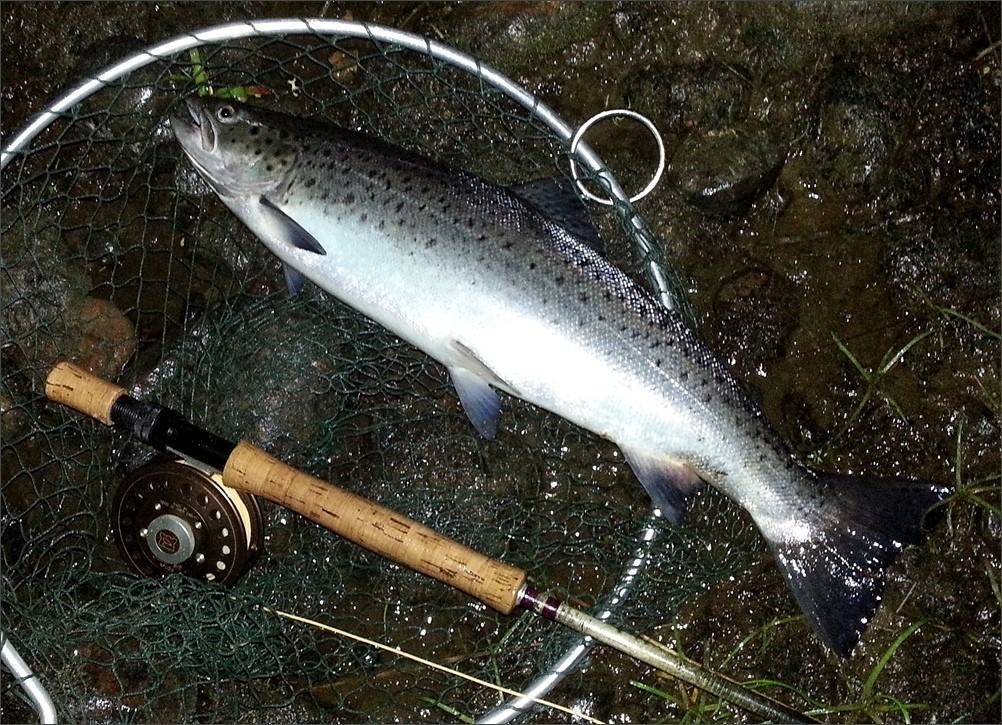
Well, the fly worked its magic again and, after only ten minutes of fishing, I was into a good sea trout which was safely netted after a spirited fight – a beautiful fresh fish about eighteen inches long which, to my surprise, later turned the scales at three pounds. I wasted no time in getting back into position well above the pool tail.
After a couple of missed offers and with the mist threatening to roll upstream from the pool below, I found myself connected to another lively fish, smaller than the last at two pounds and, like the last, silver bright, not long out of the sea. A very encouraging start to the night, and to the week, although this was now my third night on the river. With the mist settling on a calm river under a clear sky, all too soon the short spell of activity came to a sudden end. The fish “went down”. I retired to the river bank for a cup of coffee. Time for a change. I replaced the St Aidan reel and floating line with a Hardy Marquis #10 loaded with a number 7 Shakespeare Glider neutral line, to which I attached a two inch Needle Fly, a simple affair of black squirrel hair and two strands of Krystal Flash, on a six foot leader of ten pound Maxima. I gave it a fair try for an hour or so but the river seemed dead and, with no prospect of any cloud cover, or of the mist dispersing, I retired from the river and was, rather unusually, back in the caravan by half past one, a very happy man. I had fished the same short piece of water for three nights, in varying conditions. I knew that this pool would produce a fish or two, given the right conditions, and I had been right to persevere. It seemed that I had caught the pool at about the right height, four inches and dropping slowly. If conditions had been more favourable on the night…. who knows…?
Wednesday 5th July
Wednesday began with a hot sun shining from a clear blue sky. I expected the Spey to drop another couple of inches during the day. I would have to make a decision before nightfall…. whether to fish the upper river again or to try the Lurg pool, and maybe the tail of the Long Pool, down on the Upper Castle Grant water.
With the river running at about two inches on the gauge by the evening, I decided to try Poll Caich from the north bank. I parked at the Gaich farm entrance behind two other cars and followed the track round the farm and down towards the river, the main track ending just a field away from the river. This is a longer walk than the path from Auchernack on the opposite side but an easy one, allowing north bank access to Poll an Eilean, Poll Caich, the Saddle, Bushes, Auchernack, Little Stream, the Bends and Tarric Mor, all of which might produce sea trout to the night fly. It was a lovely evening, calm and warm with a bit more cloud cover than the previous night, although the half-moon shone again from upstream. I hoped that the slight cloud cover might keep the temperature up enough to keep the mist off the water, at least until after midnight. As it turned out, there was no mist on the river and the conditions remained pretty near perfect, although it didn’t really get properly dark all night. A local fisher, Les, arrived shortly after I did and we had a blether about the river and the fishing while waiting for darkness to fall. We checked out each other’s fly boxes. Les seemed to favour small doubles, neatly dressed Stoat’s Tails in size 10 and 12 being prominent, in contrast to my sparsely dressed singles and Needle Flies.
Around 11.15 p.m., we decided to make a start, although it was still not quite dark. I would start in at the inner bend, wading down towards the tail of the pool (which I had fished the previous evening from the opposite bank) with the bankside trees hard on my left, and Les would follow me down. At this height, the wading was easy enough, and, keeping fairly close to the trees for this first run down, I could reach the middle of the pool which must have been about forty yards wide at this point. A few fish moved in various parts of the pool but it was half an hour before I had an offer. A solid pull resulted in a firm hookhold in a strong and very lively fish of around 2½ pounds, which I eventually netted from my fishing position. I removed the fly (a Stoat’s Tail with blue hackle, tied without a body on a size 8 black nickel Partridge Aberdeen Perfect hook) and returned the fish unharmed to the river. Les, following behind, had one missed offer and, although I had two more runs down the pool, first with a Needle Fly on the tail and, later, with a surface lure, I had only one or two half-hearted offers. I gave up at two o’clock, content with my earlier success.
Thursday again dawned dry, but with a welcome bit of cloud cover and a refreshing breeze. For a change, I would try the Lurg pool tonight, down below the Old Spey Bridge on the upper Castle Grant beat, where there would be a good flow, even with the river now at summer level, and a few more fishers, as this is probably the most popular pool on the association water, both for salmon and sea trout.
Thursday 6th July
I arrived at the old Spey Bridge at 10.30 p.m. with the river running at about one inch above summer level, which I thought would be an ideal height for fishing the Lurg at night. Bailiff Ally Grant arrived and we had a blether about the fishing. He told me that 60 sea trout had been caught the previous week, even though the number of fishermen was down, possibly due to the World Cup. I asked about the prospects for sea trout in the tail of the Long Pool but he thought that they were poor, although the run into the Long pool may be worth trying. It seemed, though, that the best chance of a fish would be in the Lurg pool itself. On arriving at the river, we found the Lurg occupied so I left Ally to go about his business and tackled up to fish the fast water of Poll na Creice, just below the Old Bridge, from which I would fish down into the Lurg. The wading was tricky – all the way down to the tail of the Lurg in fact – and I decided I would be wise to make a wading stick before September. I had booked the last 2 weeks in September in the Caravan Site, as well as the last week in July for a last crack at the sea trout. Another fisher arrived at the Lurg hut and I waved him in ahead of me. That made three of us in the Lurg and I also found that an additional two fishers had chosen to fish the same pool from the concrete platform on the right bank.
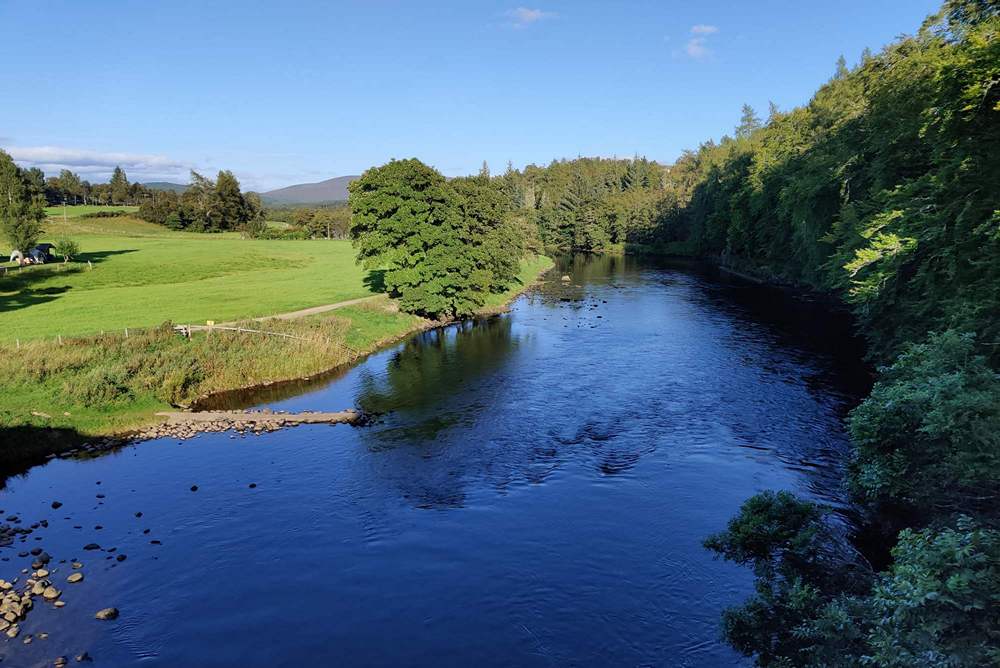
One or two fish moved in the pool as I fished down but I did not see anyone catch a fish. I felt that the flow in the top half of the pool was a bit fast, swinging the fly round just a bit too quickly. There was a section in the middle where the flow seemed just right, around the end of the platform on the right bank, just above the slower, deeper belly of the pool, where the flies had to be worked a bit. My favourite part of the pool was the tail, where there was a good flow. I recall having hooked a sea trout here when I had fished it some fifteen years earlier. Again tonight, I had a good take in midstream. It seemed a heavy fish but it behaved in a most unusual manner. First it splashed about on the surface for a second or two, coming half out of the water, before rushing upstream towards me at a terrific pace. I hand lined as fast as I could but couldn’t keep up. When just below me, the fish decided to veer off at great speed towards the far bank. It was then that I felt the power of this fish. It then stopped and jumped in midstream. Preferring, whenever possible, to play a fish from the reel, I tried, at this point, to reel in the few remaining yards of loose line, while, at the same time, keeping a bit of pressure on the fish. I didn’t get it quite right, though, and the fish threw the hook in one final leap. A good fish lost after a very exciting few seconds!
I would have liked to spend a good while fishing the tail but, with another fisher following behind, I gave it another ten minutes before deciding to have a walk down to the Long Pool. I had a few casts in the run in to the pool – a good flow to swing the flies across the current and not too difficult wading – before moving right down to the tail, where I found good streamy water between long trailing weed beds, which was wadable at this low height. I saw only one fish move but this water would certainly be worth exploring in more favourable conditions, especially when the Lurg is busy. By this time the sky had cleared and the temperature had dropped. I checked my watch and was surprised to find that it was 2 a.m. I moved back up to the Lurg, where only the two fishers on the far bank remained. I gave it another half hour, with the mist settling on the pool tail and the dawn breaking in the eastern sky. Time for bed.
The Upper Castle Grant water, although superb for salmon, and very productive for sea trout, is not the easiest water to fish at night and I suspected that I would spend more time upriver during my sea trout weeks in June and July. I was thinking of trying the water between Auchernack and Tarric Mor the following night, perhaps making an early start in the Little Stream. Tally so far: Three nice sea trout caught (3, 2 ½ and 2lb), two hooked and lost and a few missed offers. Not bad for the first five nights.
Friday 7th July
The Spey was now running at summer level and the weather had turned a bit fresher, with patchy cloud carried high on a westerly breeze. I found only one other angler’s car parked at Auchernack, a lad from Tyneside, who stopped for a chat, as I waited for darkness to fall on the Auchernack Burn pool. He was making his way back from the Little Stream, where he had been trying for a salmon. He told me of his good fortune in regularly fishing a beat on the much improved North Tyne, where runs of salmon have greatly increased in recent years, especially since the buying out of the Northumberland drift nets, allied to the efforts of Peter Gray at the Kielder hatchery. One worrying aspect of the Tyne runs, however, was the decline of sea trout in the past two or three years. We passed the time in interesting fishing talk until it was dark enough for me to make a start.
This was my first time on the Auchernack Burn pool. I wondered why I hadn’t thought to fish it before now, as it seemed, on close inspection, to be one of the most promising, and easily fished, low water sea trout streams on the whole of the association water.
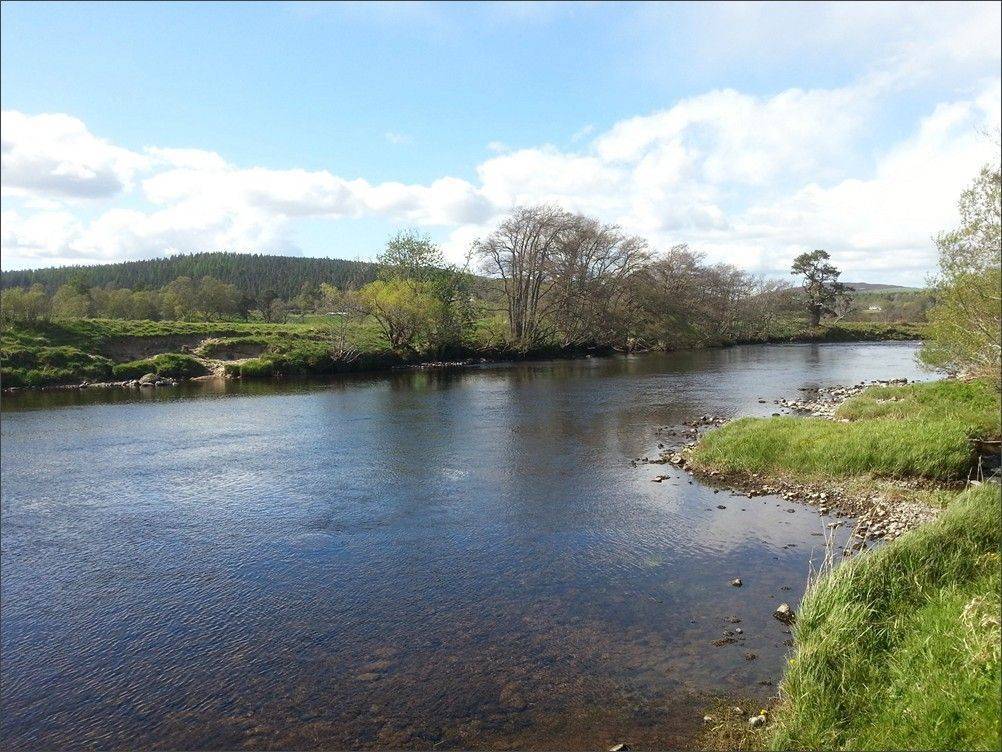
Beginning just above the mouth of the Auchernack burn on the south bank, a deep glide flowed smoothly from a wide, deep corner pool, gradually shallowing and increasing in speed towards a line of trees on the far (north) bank. This gave a possible 100 yards or so of fishing, although the most likely looking section at this summer level was the top half of the stream, from a point opposite the Auchernack burn to about thirty yards below the start of the trees lining the far bank, although it might well be worth fishing right to the tail of the stream where the river prepares to enter the Little Stream, particularly on a warm night with fish seeking out the faster shallow streams.
Soon after beginning, casting from the burn mouth, I had a good pull just above the trees. Wading to thigh depth, over an uneven stony riverbed, allowed a cast to the far bank and the floating line swung nicely round into the central stream, which increased in speed as I moved down the pool. Fishing a floating line and two flies, a black hairwing with yellow hackle on the point and a Mallard and Magenta on the dropper, I had a good take about twenty yards below the start of the treeline on the far bank. After wallowing on the surface in mid-stream for a few seconds, the fish threw the hook. I continued to concentrate on the top half of the pool but all activity ceased as the temperature dropped quickly under the fast clearing sky, although there was enough of a breeze to keep the mist off the river. All in all, a profitable night and the discovery of what is sure to become a favourite sea trout cast, although it does seem to be a popular pool at night.
Monday 10th July
I did not fish Saturday and Sunday. Rain over the weekend put the river up steadily to settle at three inches on the gauge by Monday evening, just about perfect for Poll Caich. I arrived early at Auchernack to find only one other car, a salmon fisher fishing the last of the light down on the Bends. So, surprisingly in such promising conditions, it seemed that I had the pool to myself with no competition on the north bank. There was a bit of cloud, which later brought a few heavy showers. I made a start shortly before eleven, wading gradually towards midstream well above the tail.
At this height of water, the whole bottom half of the pool would fish well, with enough flow to swing my two flies round nicely on the floating line. I had a Mallard and Magenta on the dropper and a Black and Yellow fly, with tarnished silver body, dressed some years ago on a Partridge Grey Shadow hook, on the tail – both size 8, longish in the shank. I had reverted to my favourite rod, built on a Bruce and Walker Multitrout blank, recently shortened slightly in the butt to a length of 10 ft 2 inches, and perfect for a number eight floating line. I had a pull soon after starting, as the flies swung out from under the trees, so carried on down the pool expectantly. I did not have long to wait. At 11.05 p.m. I had a solid take from a strong fish towards the bottom of the treeline. A very lively acrobatic fish, it leapt in the air, well clear of the water, six times before circling me where I stood up to the waist in the river. It took a good while to bring to the net, my second fish of three pounds, perhaps a bit more, from the Spey within a week. I removed the hook then revived the fish in the gentle current and he swam off none the worse for our brief encounter.
I waded in again to the middle of the stream but now the threatened rain arrived. I am never very hopeful of hooking a sea trout in the rain, so I was surprised to feel a very strong take from what I was sure was a good fish just a little way out from the trees, in the channel which ran near the far bank. Unfortunately, it came unstuck. The showers passed, leaving a cool air under a clear sky. The fish had again gone down. I tried a Needle Fly on the tail and fished on till 1 a.m. but with no more offers.
So far, it seemed that the period when the sea trout are most active and willing to take a fly is very short, limited to about an hour into the darkness; certainly, during this past week it had not extended past midnight, when the air temperature had generally dropped noticeably. I was hoping now for a bit of good cloud cover for the next few nights to keep temperatures up above 10 or 11 degrees throughout the hours of darkness. Tuesday began windy but dry and, with no more rain today up in the hills, the river should drop a couple of inches, which would be a good height for Auchernack Burn.
Tuesday 11th July
Today, we drove north to the falls of Shin, passing and photographing the Findhorn, Nairn, Ness, Beauly, Conon and Kyle of Sutherland on the way. Salmon were leaping at the Falls on their way to the upper Shin beats. Back on the Spey that evening, the river height had held up throughout the day and remained at three inches at 10 p.m. Finding the Auchernack burn pool occupied by another angler, I fished the water upstream. Conditions, however, were very poor, with a very strong downstream wind, which disturbed and cooled the pool surface. I fished from dusk but with little confidence. I worked my way down through the Saddle and Bushes, hoping to finish the night with a cast or two on the Auchernack burn pool, but the earlier occupant was still there so I decided to leave him to it and call it a night. If the rain holds off, I will fish the Auchernack Burn pool tomorrow night, even if I have to share it.
Wednesday 12th July
I arrived at the Auchernack parking spot early, at around ten, just before another car arrived – a fisherman from London who visits Grantown regularly for the fishing. We walked down the path to the river, bemoaning the decline of sea trout stocks in general, the salmon farms, overfishing of sandeels etc. At one time, he had fished the Oscaig/Garvie system at Inverpolly in the north west, before the coming of the salmon farms and the sea lice. He had been coming to Speyside for many years now and had witnessed a decline here too, both in the size and numbers of sea trout, although I suggested that the Spey was holding up better than most other sea trout rivers, for example on the Solway, where the stocks had declined dramatically, and inexplicably, within the past few years. Since I had arrived first, he had no objection to my intention of fishing the Auchernack Burn pool, which he had himself fished unsuccessfully the previous night, and made his way up to the sandy bank, at the tail of Poll an Eilean, a particularly productive spot, fished from either bank.
It was again a cool evening but the wind was less severe than the previous night and the top half of the Auchernack Burn pool, at this height of two inches above summer level, was very fishable. I began perhaps a bit too early, again fearing an early drop in temperature, and had a take around 11 p.m., in midstream just below the start of the treeline. The fish had followed the fly as it swung towards midstream, nipping it lightly on the way round before deciding to take. I hooked the fish but again only briefly. It splashed on the surface and was gone. Apart from one small brownie, I had no more offers and the air temperature dropped quickly under a clear, starry sky. I tried a 1½ inch Needle Fly on the tail until 1 a.m. before making my way back up the now familiar path to the car, my way lit by a low full moon piercing the dense birchwood. I came upon a young roe deer in a clearing. She turned to look at me, unsure, then ran off in fright. I am hoping for a mild, calm, cloudy night before the week’s end.
Thursday 13th July
Earlier today, we had a look at the river above and below Broomhill bridge, which forms the boundary between the Grantown Association water below and the Abernethy Association water above. The lower pools of the Abernethy AA, including the Nethy pool and the tail of Frankie’s Corner, looked very good for sea trout. Here, the Abernethy Association have built several concrete casting platforms for disabled anglers, with easy wheelchair access from a car park reserved for the purpose. This is an excellent facility. Of more immediate interest to me, the top end of the Grantown water, below the bridge, consisted of a short series of pools and runs, the third of which extended for a hundred yards or so of very fishy looking water. I decided to give this a good try that evening. I arrived early, with no other anglers to be seen, and set about exploring the pools from the left bank. The top pool, immediately below the bridge, although short, looked a likely spot, both for sea trout and salmon. From this first pool, the current glided into a second short pool and on to the third, which looked extremely promising.
As the light faded, draining the colour from the bankside bushes, I made a start in the rough water at the head of this third pool and worked my way slowly and methodically down its hundred yard length, as sand martins flew in and out of their holes in the high sandy bank opposite in the last of the evening light. With the river approaching summer level, I found that it was fishable all the way with easy wading over sand and gravel down the left bank. The fly worked very nicely all the way down and I half expected a pull on every cast. The gradually shallowing and widening tail looked particularly attractive. I fished slowly through this pool and down into the next, which gradually slowed, merging into a long stretch of dead water. It was after midnight when I reached the lower limit of fishable water. In more than an hour’s fishing, I had seen only one small sea trout move. I was very surprised, not to say disappointed, as the whole length looked to me like ideal sea trout water.
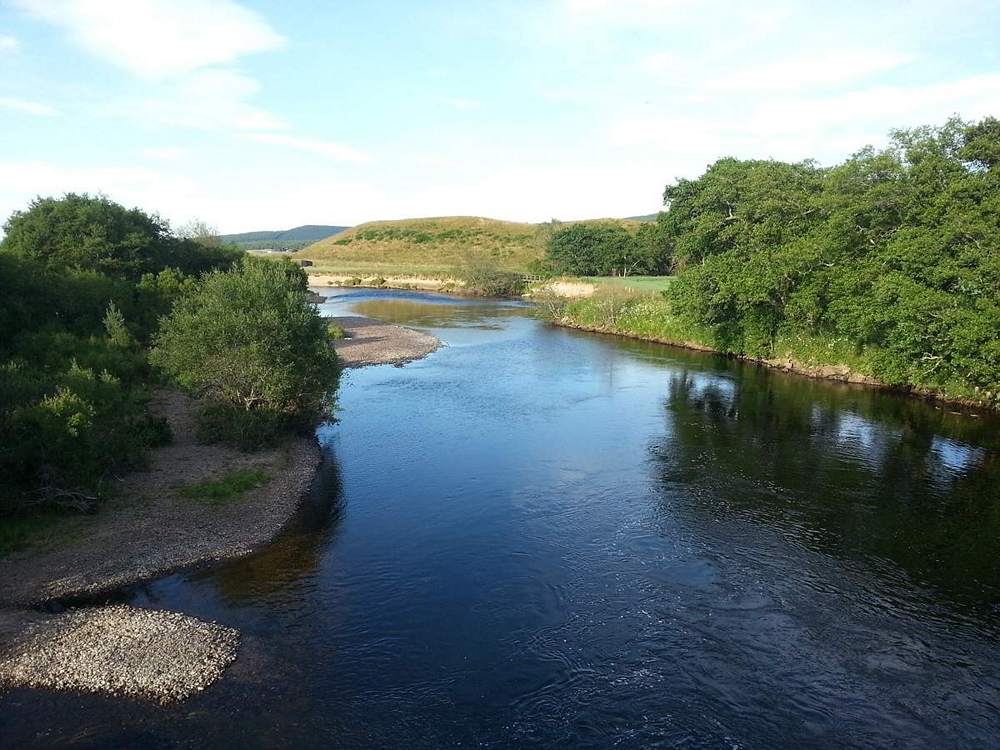
I made my way back up to the bridge, where I had a few last casts in the bridge pool, as a near full moon rose in a clear sky above the hill to the south. Back to the drawing board! I will try here again another time for sea trout and also for salmon later in the year. Tomorrow night, Friday, will be my last night of this trip. I will revisit Auchernack.
Friday 14th July
The river had now fallen back down to summer level. I again met Steve from London at the Auchernack car park and we made our way down to the river. He had been fishing here the previous night and had two fish, bringing his total for his fortnight to four sea trout and a brown trout of 3½ lb. The Auchernack Burn pool was occupied, so we both walked up to Poll Caich and waited till dark, exchanging snippets of information on what we knew of the sea trout fishing on the river. Steve thought that the top sea trout pool was the Lurg but, like me, preferred the quieter pools of the upper river. It was a nice calm, mild evening, but with a clear blue sky and virtually no cloud, so the best of the fishing would likely be early on. Steve began above the burn and I went in a little way down the pool.
I had one offer early on but didn’t connect and it was around midnight before I hooked a fish, right down in the pool tail, a nice fresh lively fish of two pounds which had taken the blue silver stoat on the dropper. I kept it for breakfast. Mist again descended on the water. I fished on for another half hour with a Needle Fly on the tail but the river had gone quiet and I left the pool at 1 a.m., more than happy with my catch for the night, and indeed with my total, in eleven nights fishing, of five perfect sea trout, smallest two pounds, largest in excess of three pounds, with an average of over 2½lb. I would be back soon for more of the same!
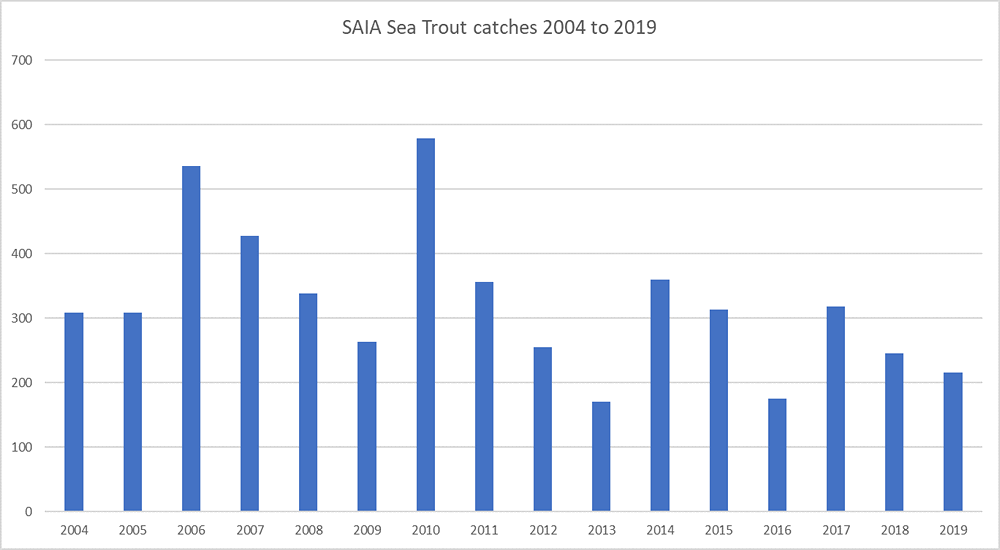
Spey sea trout runs have seen a general decline in recent years and, as the graph above illustrates, this decline is reflected in reduced catches on the Strathspey Angling Improvement Association water compared to earlier years, with the occasional very good year (2006 and 2010) bucking the trend. It should be remembered, however, that there is also a much reduced fishing effort today, with fewer anglers visiting the association waters in recent seasons.
Against a background of declining sea trout stocks on many rivers, the 2006 season had been a good one on the Spey for both salmon and sea trout, with improved catch returns on the association beats. In excess of five hundred sea trout had been reported on the Strathspey Angling Improvement Association water, and more than seven hundred on the Abernethy Angling Association water just upstream at Boat of Garten. So it was with high hopes that my wife and I arrived again at the Grantown Caravan Park on June 17th 2007. What would the week have in store, I wondered?
Conditions looked promising, with the gauge at the new bridge showing a settled river running at two inches above summer level – a near perfect height for night fishing at Grantown. Reasonably clement weather was forecast for the early part of the week, with night temperatures to remain above nine degrees. Eleven o’clock on Sunday night found me sitting by the wall of the old cemetery, all tackled up and ready to go. I passed an impatient hour at the riverside overlooking the tail of Poll a Clachan, hoping for some sign of a sea trout. Nothing! Midnight finally came and I fished earnestly till about two in the morning. Nothing! Ah, well, never mind, tomorrow night would be better.
Monday was spent in the usual mundane way…. walking, sightseeing, shopping, followed by a leisurely evening meal …. then a final tackle check before I set off for my first full night on the river. I decided to try the upper beat and managed to squeeze the car in to the roadside parking place beside two other cars. There was still a good bit of daylight left as I took the path through the woods, which would bring me to the river. On the way down I met a couple of anglers making their way up from the river. I was delighted to see that, in their landing net, they carried three good sized sea trout, taken on worm earlier in the evening. Things were definitely looking up!
I carried on down the path to the river with a decidedly optimistic spring in my step. Dusk found me on a now familiar pool, wading carefully and making my first tentative casts of the night. I had selected a reel loaded with a new intermediate line, more by way of experiment than anything else, and began with my usual cast of two size eight flies. Sea trout were showing in the pool and I had a few pulls, but didn’t manage to hook anything.
Midnight came and, having substituted a Needle Fly for the tail fly, I re-entered the pool with renewed hope. I was soon into my first fish of the week, in fact my first of the season, a nice fresh and very lively two pounder, taken on the Needle Fly. I fished on till after two o’clock. I had a few more pulls but no further contact. On leaving the river, I encountered another fisherman who had been fishing downstream at the Bushes. He had taken four sea trout between one and two o’clock on a size six fly, and on a floating line.
We were both back again the following night on the same stretch of river. I had come equipped this time with my usual set up – ten foot rod, Hardy JLH reel and number eight double tapered floating line, ten foot cast of eight pound Maxima and two size eight flies – a Ginger Pearl on the dropper and a sparsely dressed Silver Stoat on the tail. It was a nice night with some cloud cover clearing as the night progressed, a bit of wind now and again and temperatures no lower than about ten degrees. The river was again running at two inches above summer low, just about perfect for this part of the river.
Impatient to get started, and with sea trout moving in the pool, I began before it was properly dark and had my first sea trout of the night at 11.15 p.m., a lovely fresh fish of two pounds, hooked in the shade of the trees on the far bank. It had gone for the Ginger Pearl on the dropper. It was safely returned. A good start to what turned out to be one of the most memorable nights I had had in recent years. I fished till two o’clock and caught three more of the most perfect sea trout you could hope for, two at two and a half pounds each and a beauty of three and a half pounds, all taken on a one and a half inch Needle Fly.
I knew, of course, that a repeat of Tuesday night’s fabulous sport was really a bit too much to hope for. Nevertheless, you will not be surprised to learn that I was back on the same pool at 11 p.m. on the Wednesday night, raring to go. Despite rain earlier in the day, and the worry that the river might have risen, conditions turned out perfect, just what you would order if given the choice, i.e. a clear river again running at two inches, good cloud cover, mild temperatures with hardly a breath of wind. Liberal application of Skin-So-Soft was needed to keep the midgies at bay – well, it doesn’t always keep them at bay but it does seem to dissuade them from biting.
The bats were active as I began, again with a size eight Ginger Pearl on the dropper and a Needle Fly on the tail of a ten foot cast, fished again on the floating line. Well, however unlikely, the impossible happened! After a slow start, I left the river at two in the morning, having taken four more shining silver sea trout, all on the Needle Fly. The smallest weighed two pounds and the heaviest around four and a half pounds, both returned safely, with two fish of about two and a half pounds each kept for the table.
As I sat down the next day to a delicious breakfast of Spey sea trout, I reflected on a superb couple of nights fishing. The rain was drumming on the caravan roof, to the dramatic accompaniment of thunder and lightning. The river would be too high that night for sea trout fishing. I would just have to settle for salmon.
A move to Speyside in 2009 allowed me the luxury of convenient access throughout the season to the seven miles of fabulous fishing on the waters managed by the Strathspey Angling Improvement Association, based in Grantown on Spey, long recognised as one of the best angling associations in the country. My sea trout catches began to look a bit more respectable. The 2010 season was a good one on the Spey and I ended that season with a total of 41 sea trout, all from the association waters of the Rivers Spey and Dulnain. I was in Heaven!
The River Dulnain
In addition to its extensive fishing on the river Spey, the Strathspey Angling Improvement Association also manages 12 miles of salmon and sea trout fishing on the River Dulnain, a major tributary which joins the Spey a mile or two above Grantown.
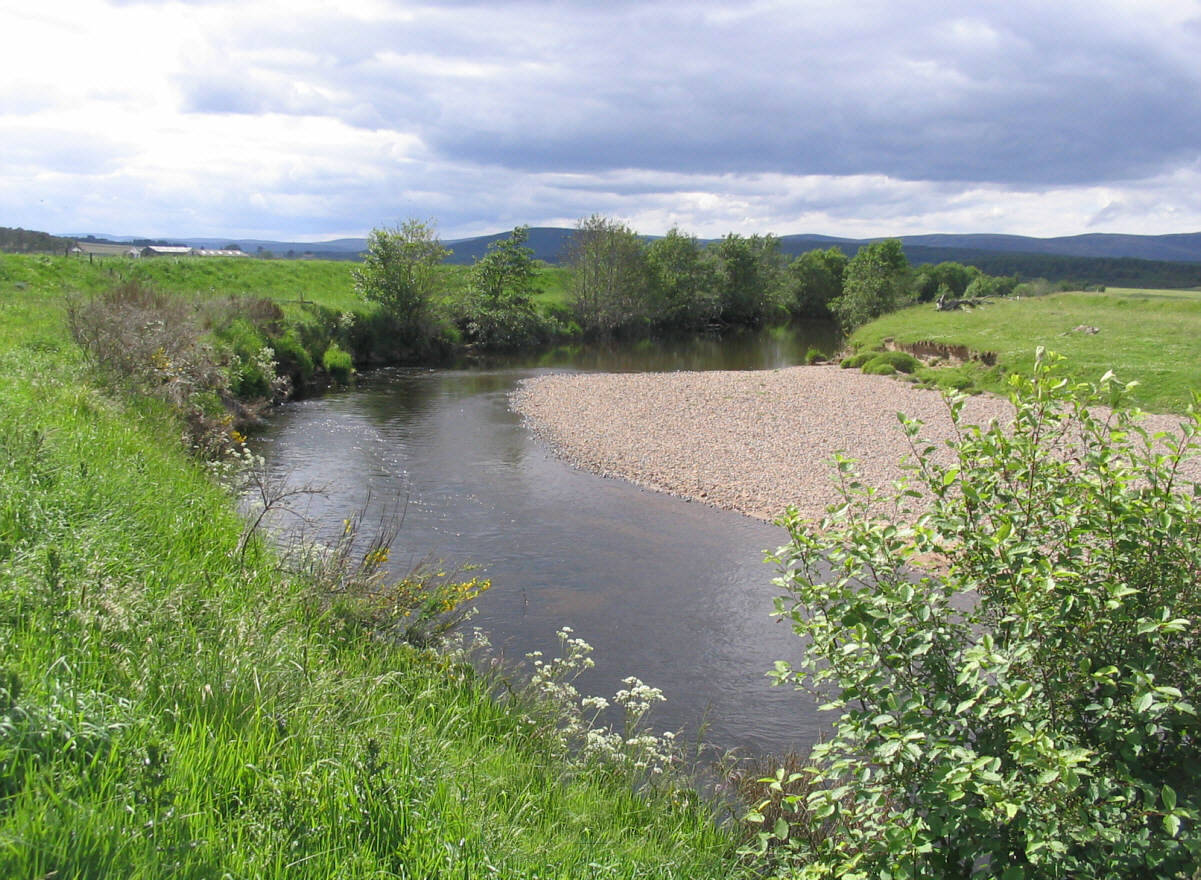
The Dulnain is a valuable spawning stream, its main salmon run now generally occurring late in the season, in August and September, although earlier running salmon may be caught at any time after May given water. Sea trout also run the River Dulnain from June onwards, offering a useful alternative when the main river is running too high for night fly fishing.
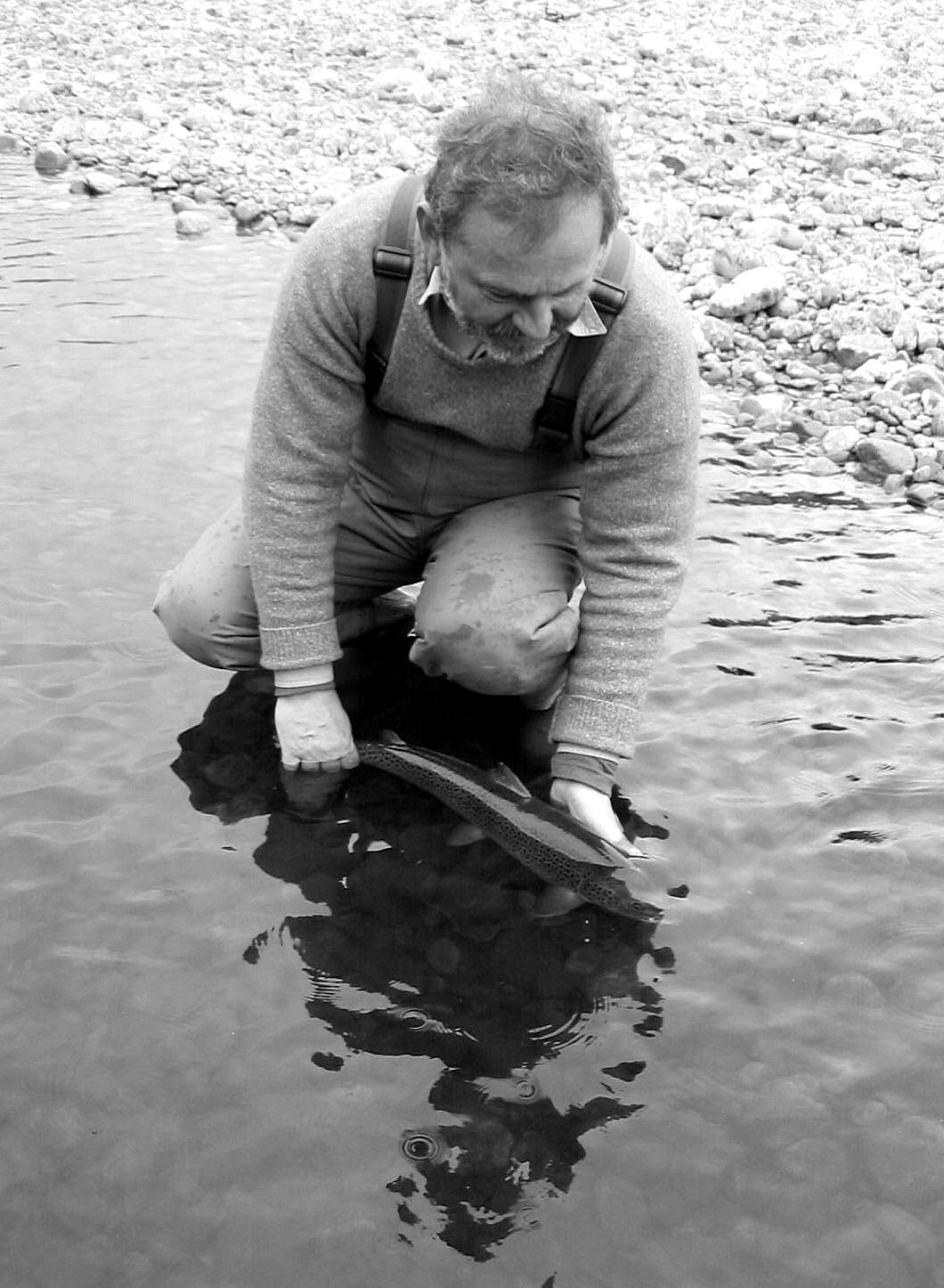
Wild brown trout are also worth pursuing on the River Dulnain, which seems to be very lightly fished these days for any species, most fishers concentrating on the main river.
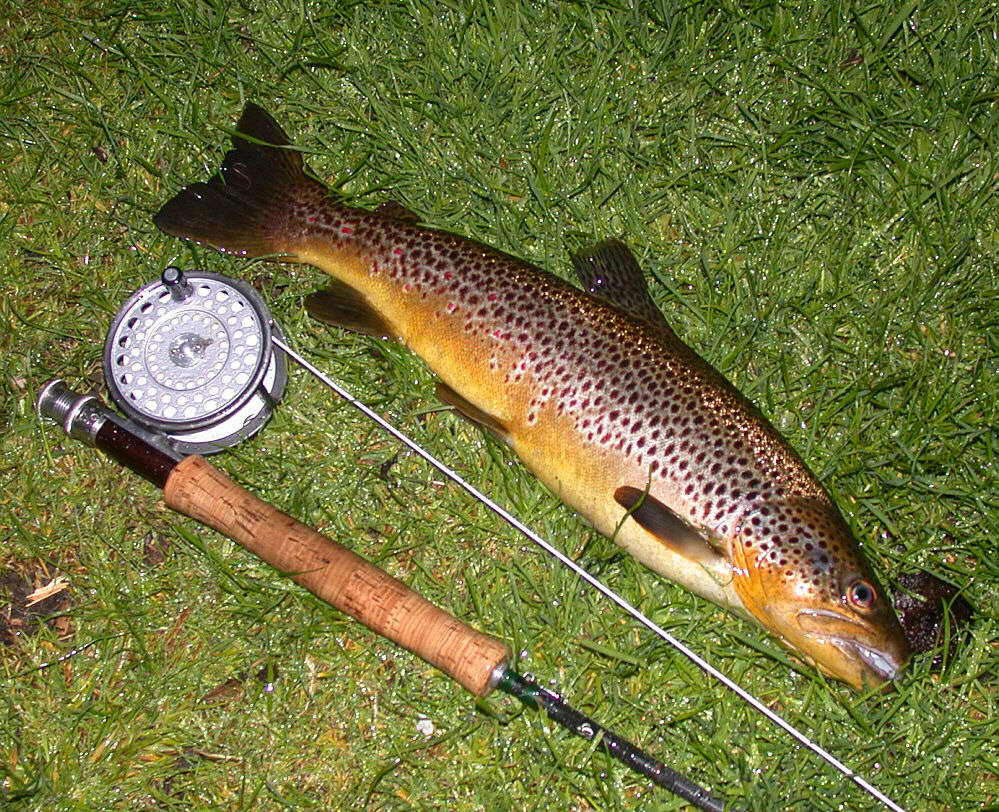
The Dulnain often runs with a heavy peat stain after rain, which can make the fly fishing on the main river difficult, but, when the Spey is running a bit too high and coloured for the fly, Dulnain salmon and sea trout can be taken on fly or spinner on a falling water during the day, while night time sea trout fishing is worthwhile once the level has dropped to within six inches or so of summer level and is again running clear.
THE RIVER SPEY AT GRANTOWN
When the bulk of the snow on the Cairngorms has melted by late spring or early summer and the Spey level has fallen to within six inches or so of summer low level, the pools on this upper section of the Grantown Association (SAIA) water come into their own. In these few miles are to be found some of the very best sea trout pools in the whole of the British Isles. With settled low water conditions, together with favourable weather from late May on, they can provide some superb night fishing. Each has its own character, each with its own ideal fishing height, and sea trout may be caught on any of them.
The Upper Pools on the Association Water
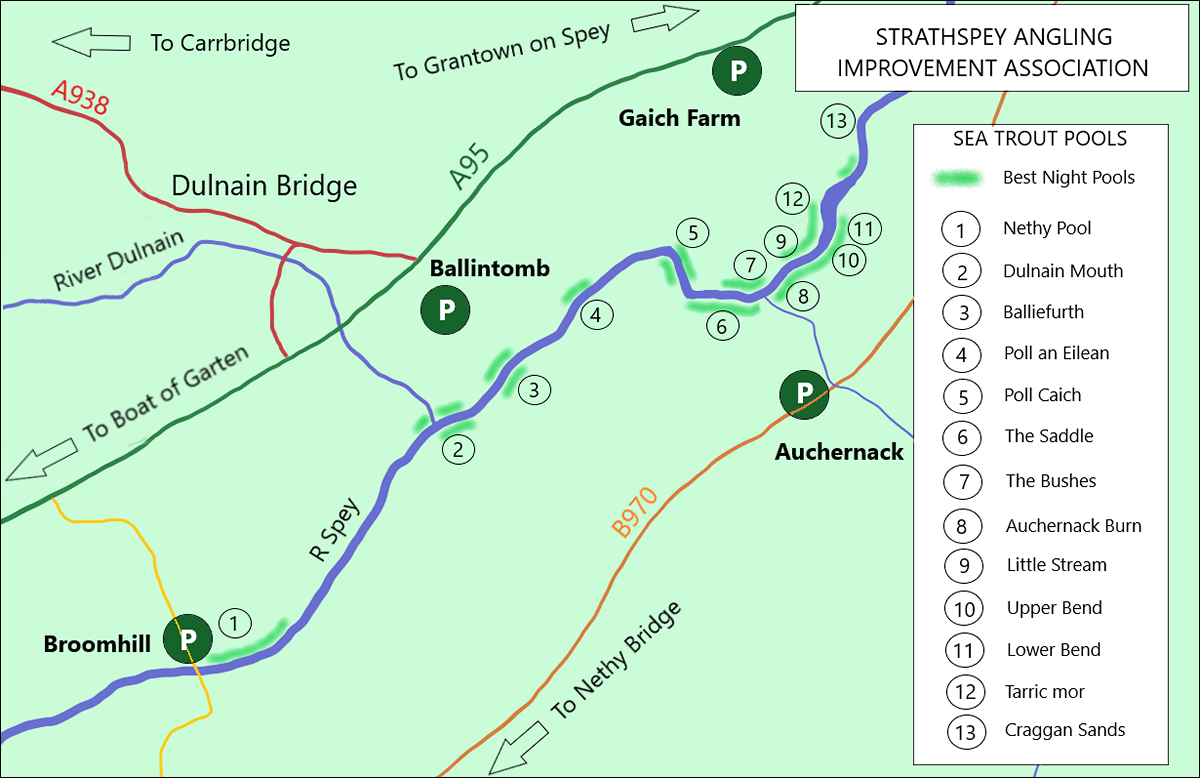
1 The Nethy Pool (see photograph above)
This pool lies downstream of the old wooden Broomhill Bridge, which forms the boundary with the Abernethy Angling Association beat upstream of the bridge. This Nethy Pool (SAIA) should not be confused with the perhaps more renowned Nethy Pool (Abernethy AA) a little way upstream at the mouth of the River Nethy, a major Spey tributary. The Nethy pool below the bridge consists of a series of component pools ending in a hundred yard length of very attractive fly water, which is easily waded off the left bank over a bed of fine gravel, but only in low water with the river height approaching summer level. The pool is a pleasure to fish, casting from the shallow gravel towards the deeper flow under the high sandy, and largely treeless, right bank for its full length, as far as a gradually shallowing tail where it merges with a long slow section of less appealing water below. Parking at the bridge is very convenient.
2 Dulnain Mouth
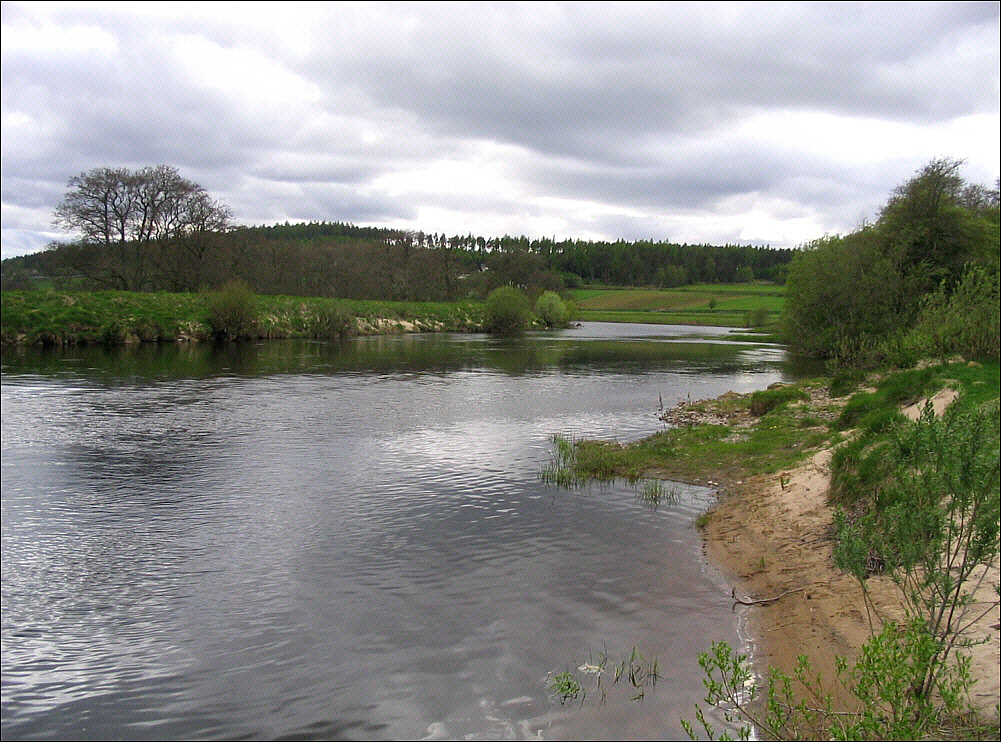
This pool, at the junction of Spey and Dulnain, is very productive both by day for salmon and at night for sea trout (although I once caught a lovely fresh eight pound salmon one night in late May while trying for a sea trout).
It can be accessed from the south side via Balliefurth Farm (in daylight hours only) or, by both day and night, by driving through Ballintomb Farm on the north side and parking on the disused railway line near the River Dulnain (Note: It may not be disused for much longer, as plans are afoot to relay the old line, thus extending the existing steam railway from Broomhill Station to Grantown on Spey).
3 Balliefurth
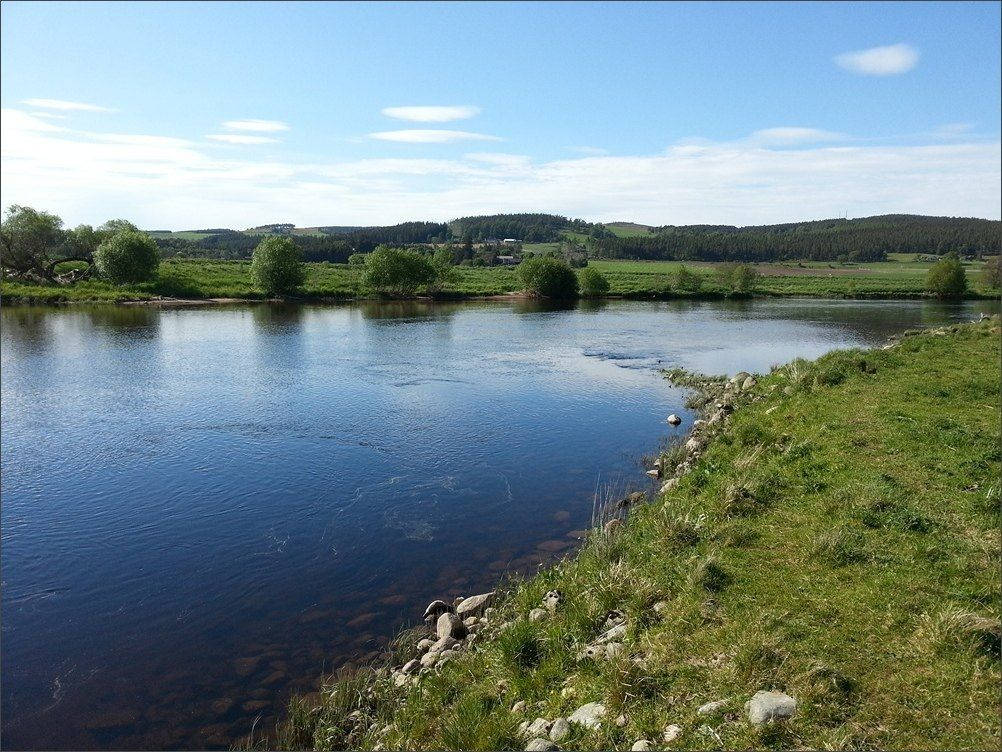
Lying some way downstream of the Dulnain Mouth, this pool can be fished productively from either bank, with the most likely taking area lying in the 150 yard length from the inflow of the stream/drain down to the fence end on the Balliefurth side, quite a long cast from the north bank, where the wading is over soft sand which shelves off steeply in places. Access and parking as for the Dulnain Mouth Pool.
4 Poll an Eilean
A long sandy pool with the island at the top end exposed only in low water. The pool then opens into a slow wide section above a fairly sharp right hand bend, where the river narrows and picks up pace in the tail end before merging with the deeper Poll Caich below. The tail of Poll an Eilean can be very productive at night. The wading here is precarious on the south side as the soft sandy riverbed drops off steeply where the river narrows. It is most often fished from the north bank where the wading is good. The north bank of Poll an Eilean is best accessed at night on foot from downstream via Gaich Farm. This is one of the best night pools on the upper beat, despite the fairly long walk up.
5 Poll Caich (see photograph above)
This is one of the deepest holding pools on the upper beat. With the fall of darkness, sea trout may move from their daytime lies in the deep body of the pool up into the tail of Poll an Eilean or drop down towards the shallower tail of Poll Caich itself. The upper half can be fished at night by continuing down the left (north) bank from the tail of Poll an Eilean above, while the tail of Poll Caich is best fished from the right bank, before continuing down through the Saddle Pool below. Access is by foot via Gaich Farm or from Auchernack on the south side.
6 The Saddle, 7 The Bushes, 8 Auchernack Burn, 9 Little Stream, 10 Upper Bend, 11 Lower Bend
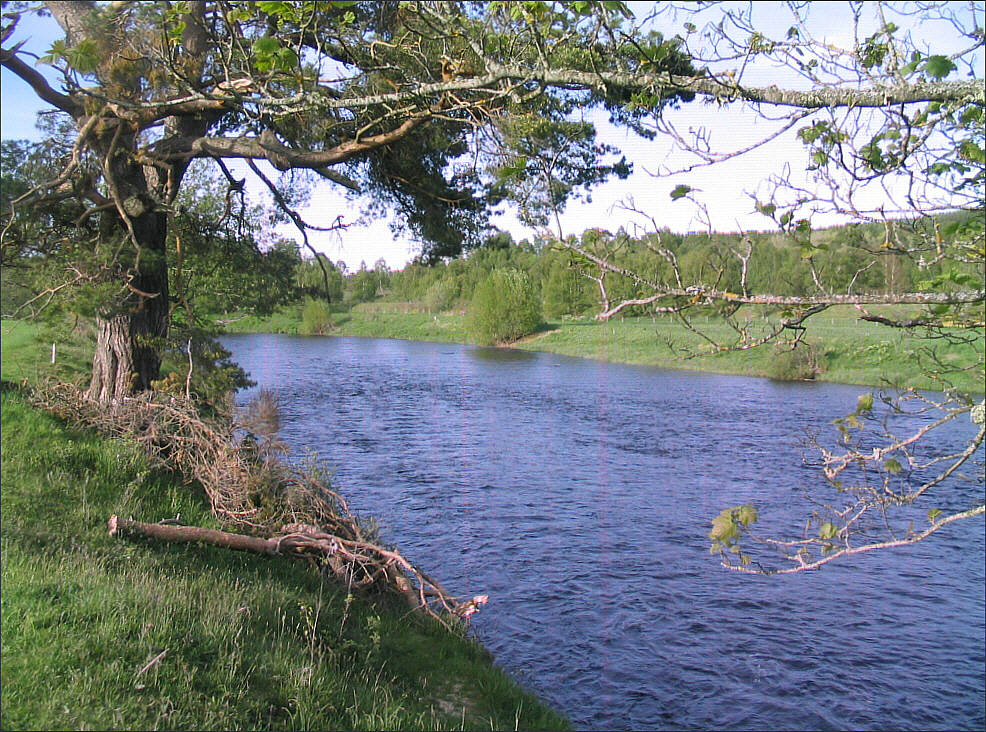
From the Saddle all the way down to Tarric Mor, the river is pleasantly streamy with a good flow in every pool, all of which may produce sea trout to the night fly.
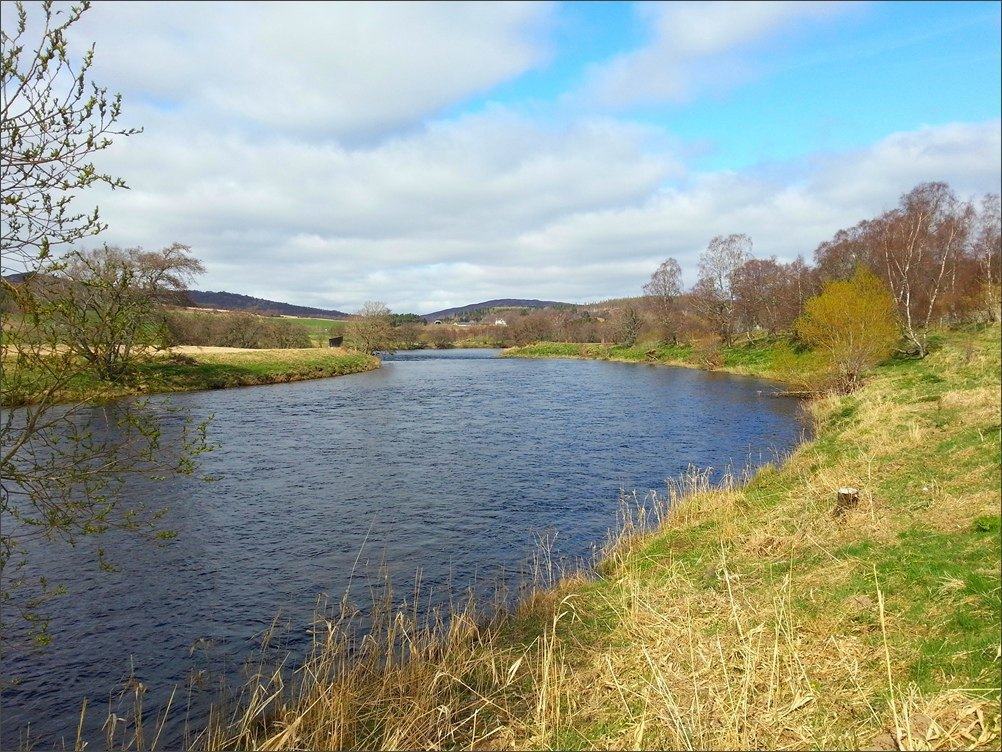
All these pools can be fished fairly comfortably from both banks, with careful wading in a few places, where a wading stick may be useful. Parking as for Poll Caich.
12 Tarric Mor
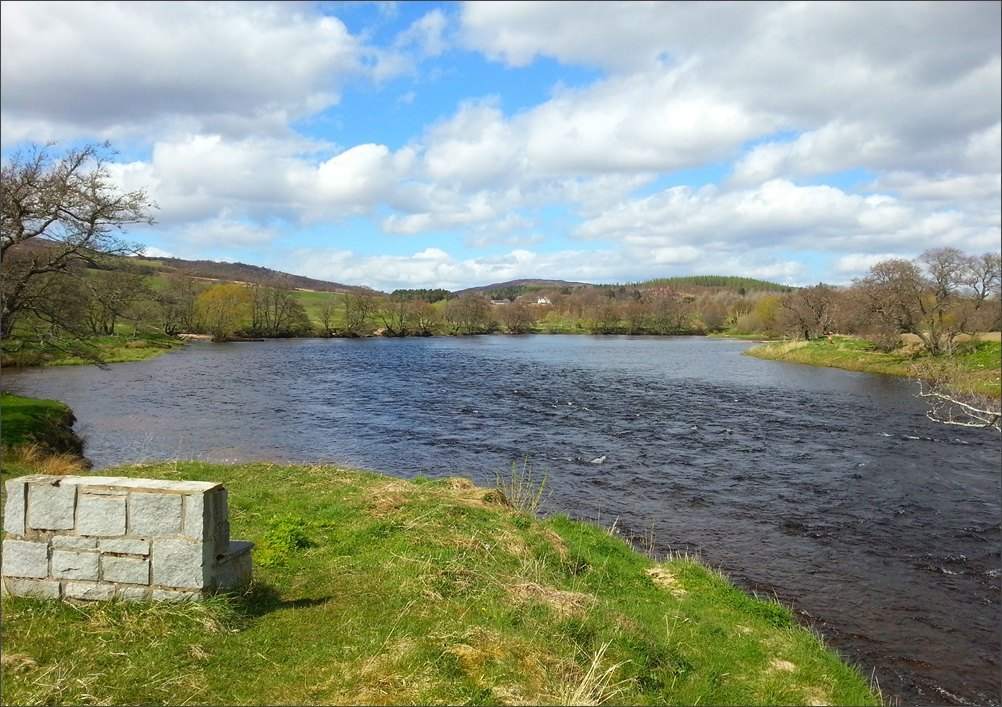
Tarric Mor is one of the biggest, best and most popular holding pools on the association water, producing a high proportion of both the salmon and sea trout yearly catch. It is best fished from the north side, with access on foot from the parking place at the entrance to Gaich farm on the A95 (Note: this access might alter with the completion of the new Craggan Distillery, currently under construction), or by walking up from Inverallan. Fish lie in this pool throughout the season.
13 Craggan Sands
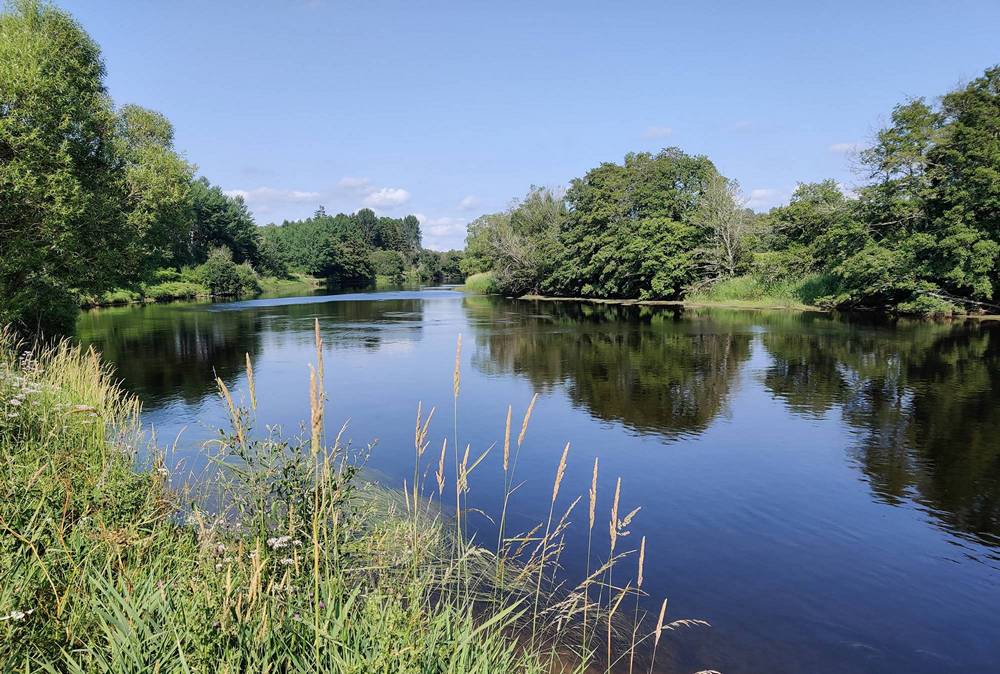
Craggan Sands, accessed by the riverside path from Inverallan, is fished from the north side only. Stretching for several hundred yards, heavily treed on the south bank, it consists mainly of deep water flowing sedately over a sandy bed and is more suited, in high water, to daytime spinning or worming. There is a short section with a decent flow below the island, which may be worth a cast at night. The tail end, just above Poll Scriodan, may also be fishable in low water.
The Lower Pools on the Association Water

For mapping convenience, I have included here in the lower beat quite a few of the pools above the New Bridge, which marks the upstream boundary of the Upper Castle Grant beat of the Strathspey Angling Improvement Association, which may only be fished on a weekly or season permit. Note, also, that night fishing for sea trout on the Grantown Association water is only permitted for weekly and season permit holders. All the pools on this lower section are generally easily accessed with convenient parking places nearby.
Pools 12 Tarric Mor and 13 Craggan Sands have been covered in the upper beat description.
14 Poll Scriodan, 15 Poll a Clachan, 16 Poll Clach, 17 Poll Clachan Lois
This is a very popular section for daytime salmon fishing, in all water heights, with convenient parking by the old Inverallan cemetery. Running sea trout may also be picked up at night.
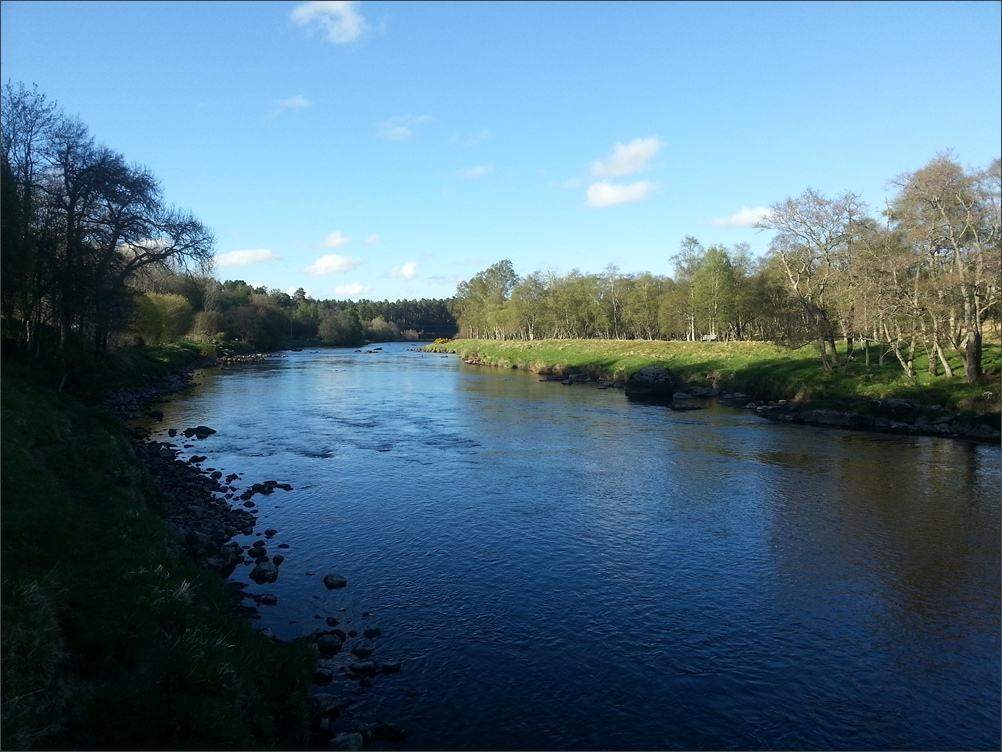
18 Finnock Pool, 19 Macleod’s Pool, 20 Poll a Cearan, 21 Polnagour, 22 Slop Aindrea
These pools are also easily accessed with nearby parking. They are generally fished in daytime only from the bank as the wading is very difficult, impossible in many places. The right bank of Poll a Cearan can be waded with care.
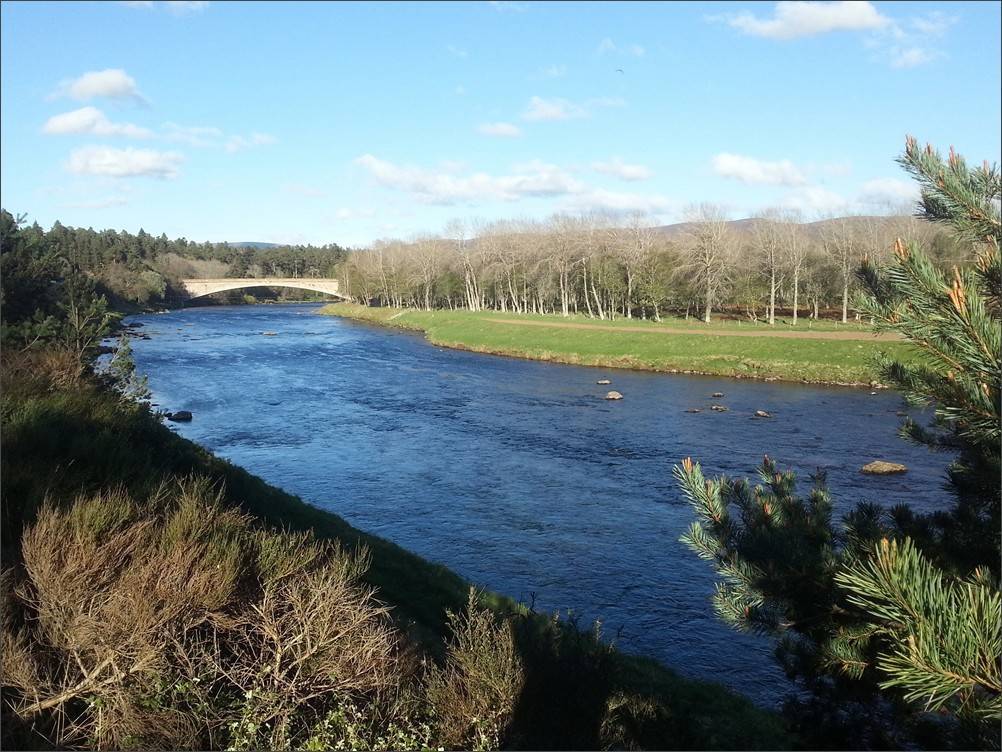
23 Clach na Strone
There is a convenient concrete casting platform on the left bank, which makes for easy fishing over a short section of the pool both by day and night. The right bank can also be productive but the wading is not easy.
24 Clach an Uaran, 25 Boinne Uaine, 26 Big Stream
These streams are fast, shallow and rocky but running sea trout may be picked up at night. The left bank is best fished from the bank, while wading is necessary but difficult from the right bank. A wading stick is essential here. Very challenging fishing!
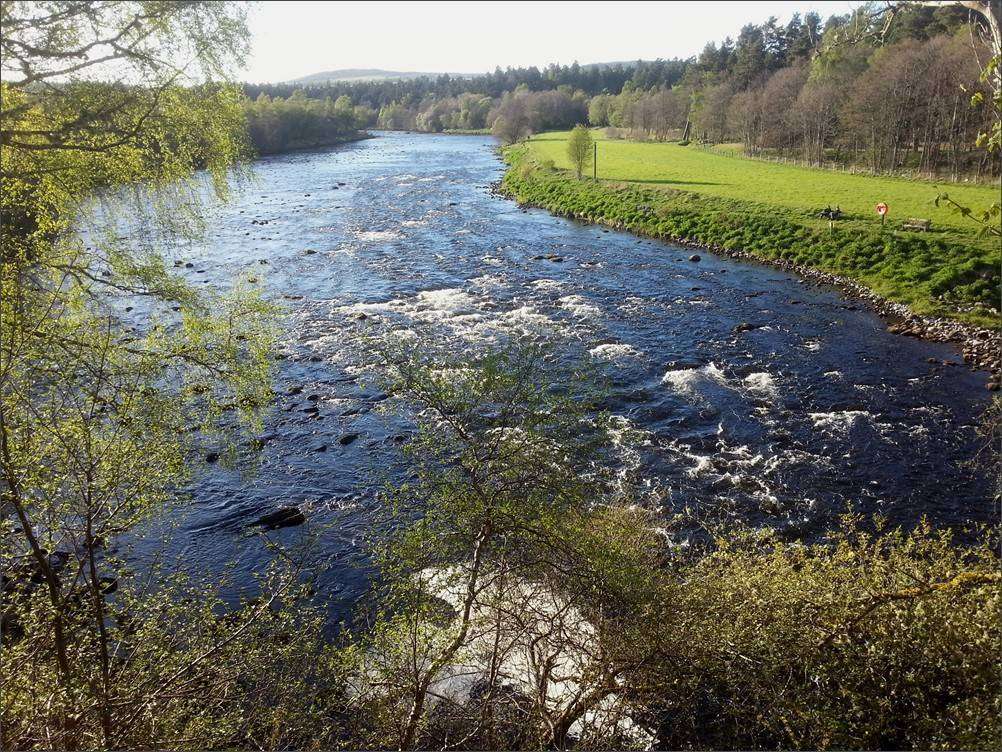
27 Bridge Pool
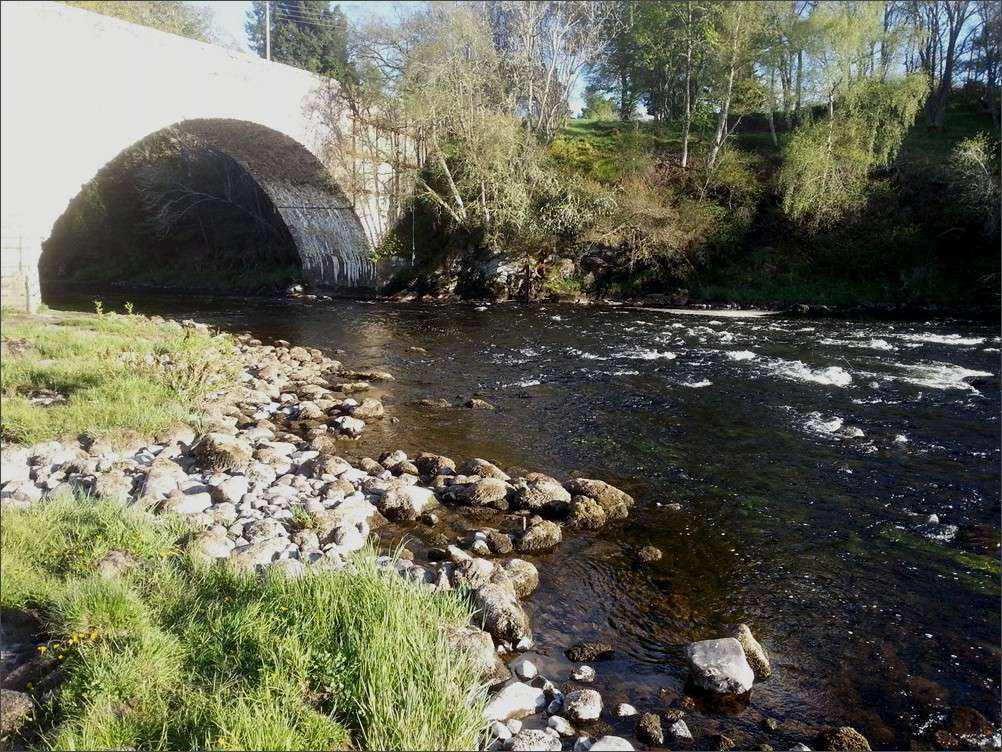
This can be very productive for both salmon in the daytime and sea trout at night. It may be fished at night by a single rod, casting from the central concrete footing of the Old Spey Bridge to sea trout lying in the deep pool tail immediately below the bridge.
28 Poll na Creice, 29 Lurg (see photograph above)
The Lurg is probably the most popular and productive pool on the entire length of the association water, both for salmon by day and sea trout by night. It can be waded from the left bank with care and a wading stick. It may also be fished from a low concrete platform running down part of the right hand bank. The tail end of the pool can be productive at night. On the right bank it can be fished with great care from the steep rocky edge of the Green Bank, not recommended for anyone less sure-footed than a mountain goat!
30 Bun a Bhord, 31 Long Pool
Bun a Bhord consists of a shallow rocky stream linking the Lurg and Long Pools. It is not usually fished at night. The Long Pool is one of the most popular and productive high water pools on the association beat, fished in daytime, from both banks, with both fly and spinner when the level is over two feet on the gauge at the New Bridge. It may also be fished productively for sea trout at night in low water, wading with care at the head and towards the tail of the pool.
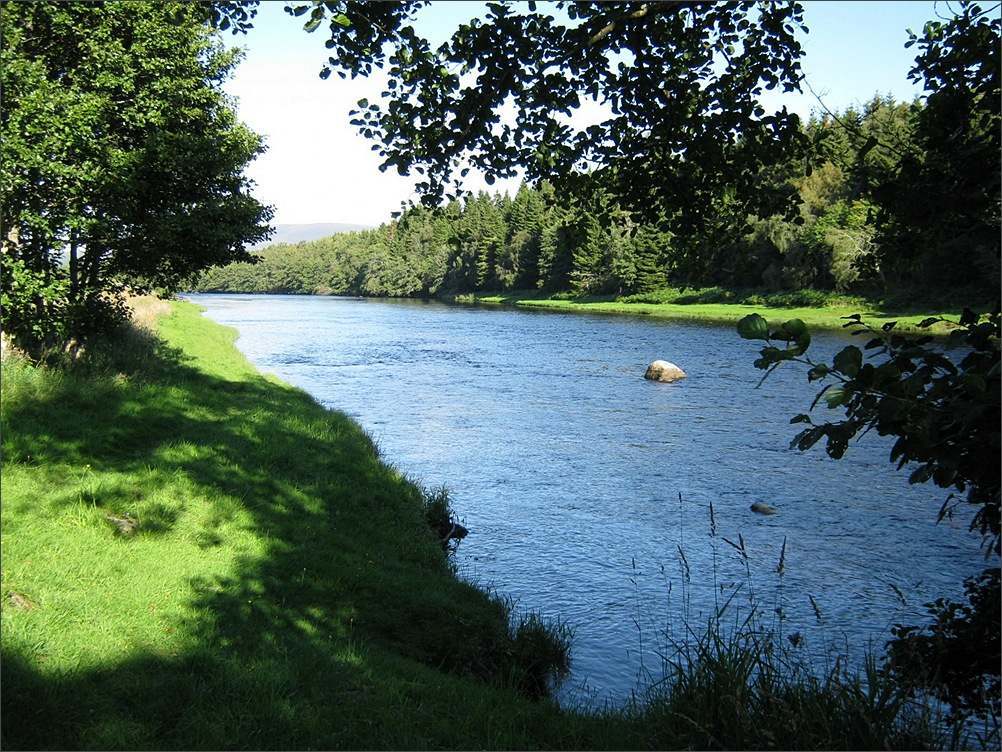
32 Slop Thomas
This is a fast rocky pool near the lower limit of the beat. It can produce salmon to daytime fly but is not normally fished at night.
In 2016 I was fortunate in gaining access, by way of membership of the Abernethy and Aviemore Angling Improvement Association, to a further ten miles of magnificent sea trout water. The association controls two beats. The most extensive and productive is the Abernethy beat, which runs from the Miller’s Pool above Boat of Garten for six miles down to Broomhill Bridge where it adjoins the Grantown Association water. The two associations have vied over the years for top spot in the Spey sea trout catch rankings.
The Abernethy beat includes some of the best sea trout night fishing pools on the river, rivalling the best of the Grantown pools downstream. Among the most productive of these are Ally’s Corner, Croftmore, Lackgie and the Nethy Pool.
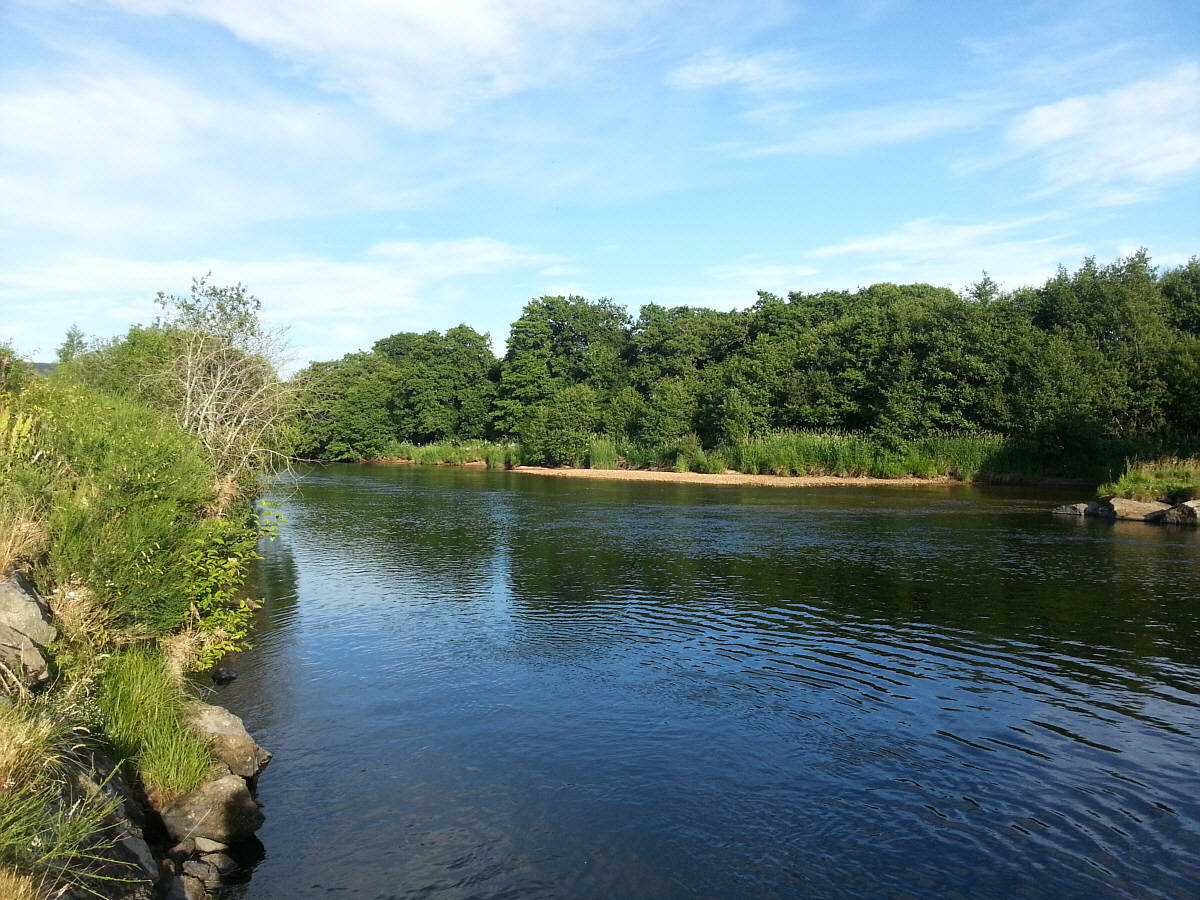
The Abernethy Association also manages a further four miles of left bank fishing around Aviemore, with several excellent night fishing pools. Daily or weekly permits are available for both beats at very reasonable cost. Separating the Aviemore and Abernethy Association beats is the Kinchurdy beat, which offers three miles of superb sea trout water, accommodating six rods, available by private let.
An Unforgettable Night
Season has followed season and time has passed so quickly. I have now fished for ten summers on the Spey, each bringing an endless bounty of rewards for my time spent on the river. One unforgettable night springs easily to mind, showing that the superb Spey sea trout fishing of yesteryear is not necessarily a thing of the past. It was the morning, the very early morning, of Monday 23rd June 2014. At the stroke of Sunday midnight, I was alone on a favourite pool on the Strathspey Angling Improvement Association water raring to go, even though my catches so far that season had been modest. There had been rain during the day but it had little effect on the river, which was running at about 3 inches above summer level. A fairly calm night with very good cloud cover made for perfect conditions.
My first cast was made just after midnight. The fly was a simple one inch black and silver Needle Tube, fished on a floating line. The Needle Tube Fly had now become my favourite sea trout lure, developed, as a successor to the Needle Fly, a few years earlier (for a full description, see the Flies and Fly Tying pages in Part Two). By two o’clock in the morning, I had brought eight sea trout to the net, all very fresh with an average weight of around two and a half pounds. Once again, I was in the right place at the right time with the right fly. All fish were returned except one kept for the table. I stopped fishing shortly after two. I might have fished on till daybreak and added to the total but I had caught enough.
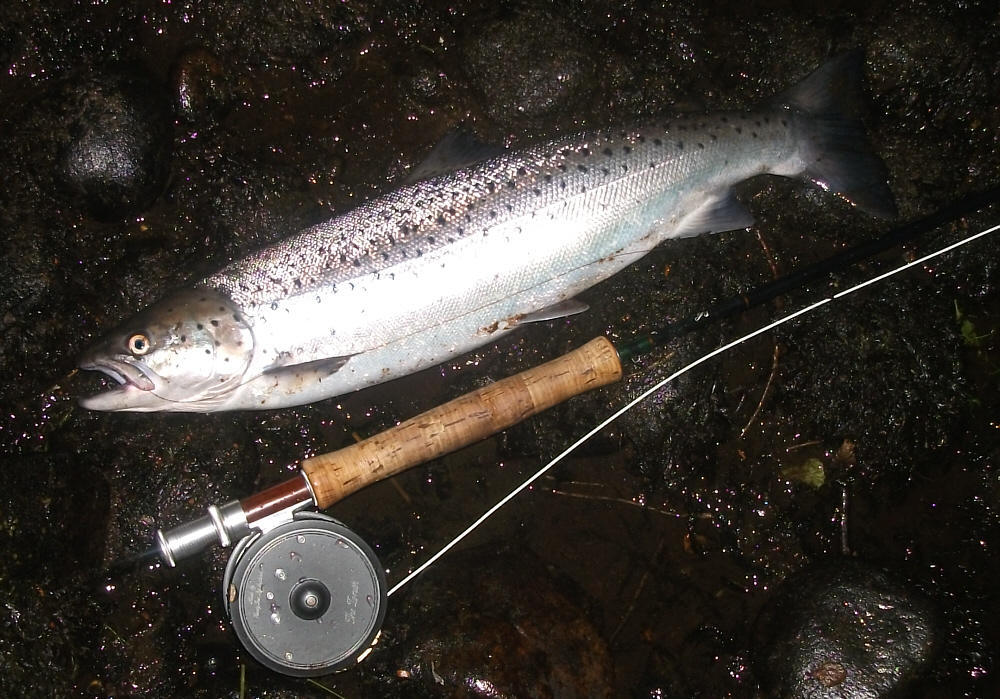
Two separate night visits to the Nethy Pool in early June, 2016, gave me the surprise bonus of a ten pound salmon on each visit, in addition to a few of the sea trout I was after. Both were taken on a simple one inch black and silver Needle Tube Fly.
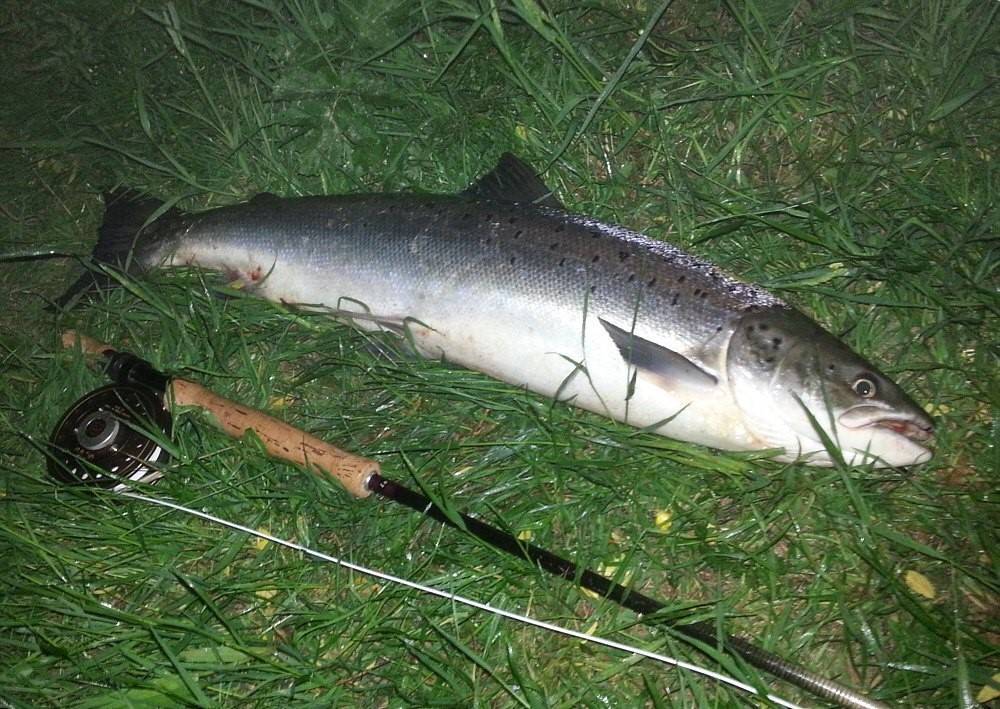
Salmon are rarely caught at night but I have had good numbers of sea trout, from the Spey association waters, between three and six pounds in weight, with a few over seven pounds. Anything over five pounds is a very good sea trout for the Spey, whose average weight has historically been close to or slightly above two and a half pounds, sea trout under two pounds being quite rare.
Recent years have seen an increase in the average size of Spey sea trout, which is today nearer three pounds. I suspect that this may be due to the fact that a large majority of sea trout caught on the association beats are now returned. Sea trout of all year classes, which at one time might have been killed for the table, are now making it back to sea after spawning and returning in succeeding years as even bigger specimens, to give us some thrilling nights on the river.
In a normal year, owing to high water levels combined with cool nights early on, I don’t really expect my sea trout season to get underway until June, but the 2017 season began unusually early, my first night caught sea trout coming, on 13th May, from the Grantown water. I divided my time fairly equally that season between the two association waters, spending some magical nights on a variety of their many superb pools. I fished on twenty two nights, a couple of hours each night, for a season’s catch of twenty four sea trout, averaging three pounds, with the biggest a super fish of 7 ½ pounds. All were taken on sparsely dressed Needle Tube Flies.
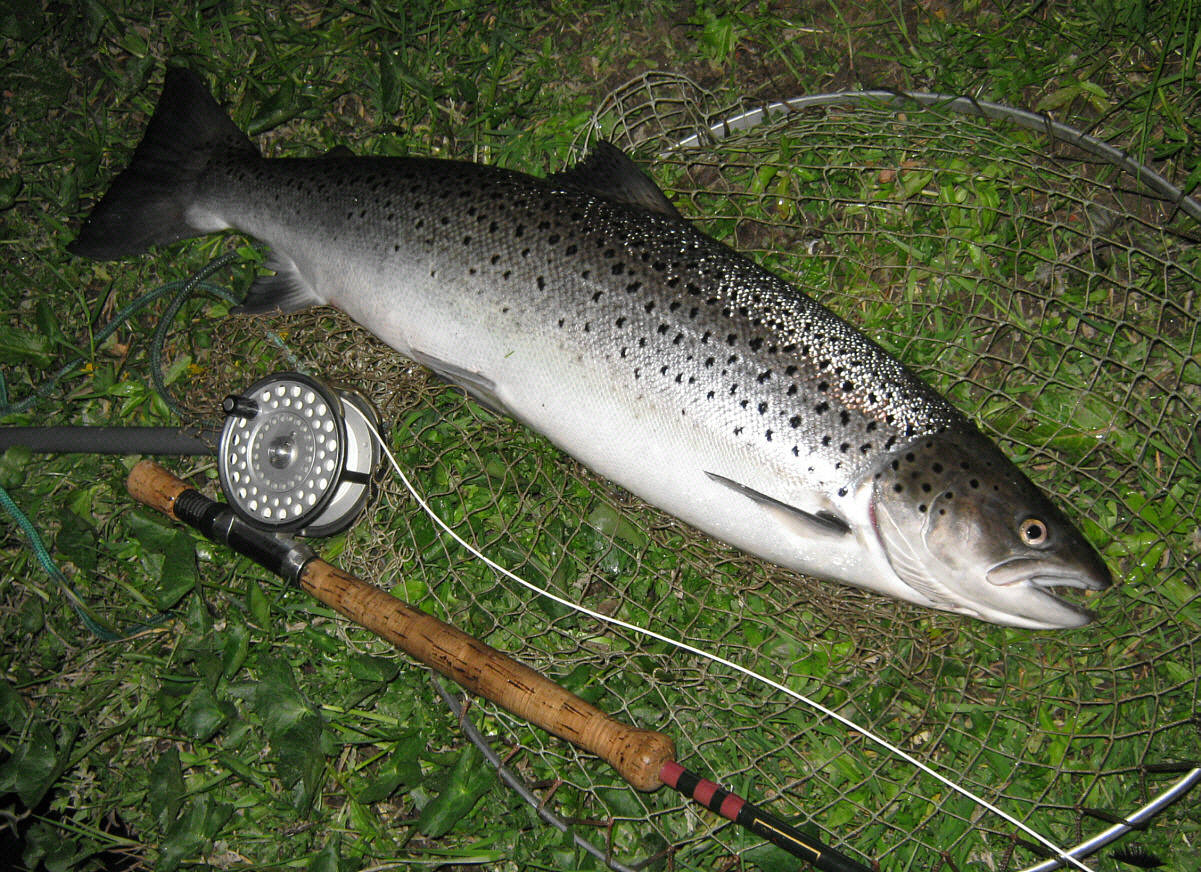
Despite the driest summer since 1976, and extremely low river levels at the height of the season, the sea trout run on the Spey held up reasonably well in 2018, and the Grantown Association recorded a season’s catch of 246. In contrast, 2019 was a particularly wet year, with an unsettled river for much of the summer. Catches suffered with another poor year’s total of 216. The river only really dropped to a good night level of 6 inches above summer low in late June and the nights were often clear and cold right to the end of the month. I had one or two good nights but I seemed to be missing or losing a greater proportion of fish than usual. I had habitually armed my small Needle Tube Flies with size 14 treble hooks but they were not holding on to the sea trout well at all that season. On the night of Monday 8th July, I had been fishing with a small Needle Tube Fly armed with the usually reliable Owner Stinger size 14 tube fly treble hook but I had lost one fish and missed a few others. I tied on a Sandeel Tingler*, armed with a size 8 Mustad single saltwater hook and almost immediately had a strong take as the fly swung out from under the trees.
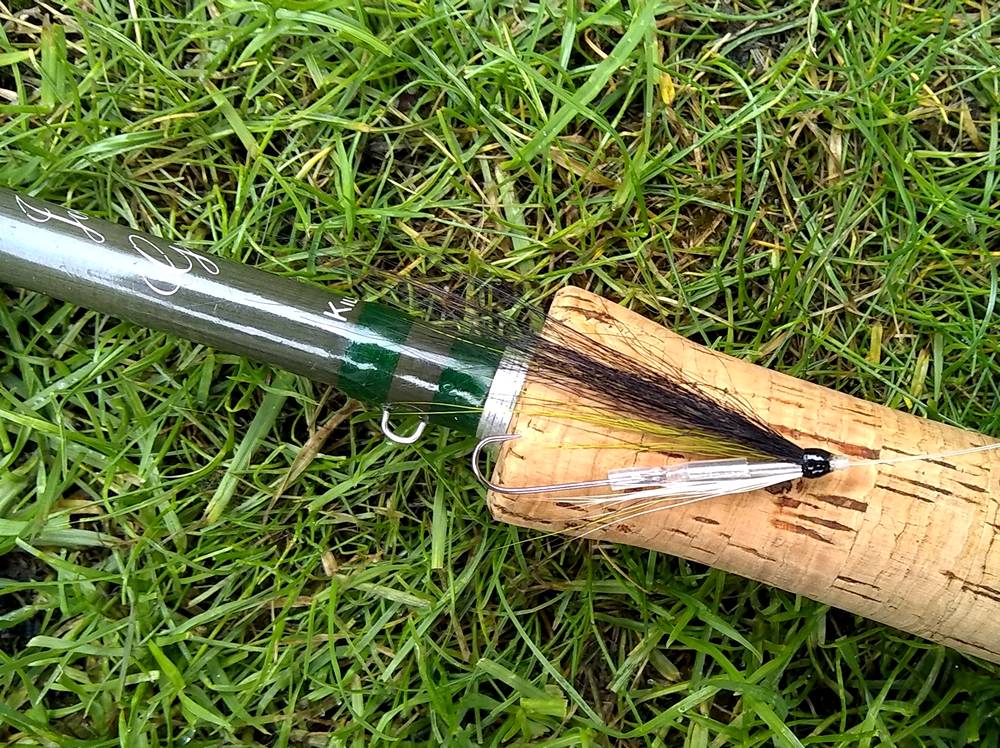
The sea trout ran towards me and even my most frantic winding of the reel could not keep up. The line went slack and I thought I’d lost it but the single hook held and, after a long and strongly contested battle, in the course of which the fish ran circles round me, leaping clear of the water three or four times, I managed to draw it over the net, my best Spey sea trout to date, 27 inches long and estimated at around 8lb. (*read more about the Tingler in the Flies and Fly Tying section in Part 2)
I am writing this in early May, 2020. As the sun blazes down on a deserted river, I sit indoors hoping that a new summer will exorcise the awful virus that has stopped the world in its tracks. The sea trout may go about their business unmolested, by anglers at least, for a while. Let us hope that they reach the redds in fine fettle and return in healthy numbers next year, by which time some semblance of normality will surely have returned to our rivers.
PART TWO – How to Catch a Sea Trout
First edition printed hardback copies of SEA TROUT NIGHTS may be purchased at Coch-y-Bonddu Books