X
Water and Weather
So we have done our homework and decided on a week on a prime sea trout river in, say, the second week in July, at the height of the season. As always in fishing, however, regardless of the statistics or the reputation of our chosen river, our success or failure will depend very much on the conditions of water and weather we experience throughout our week. There is always an element of luck in fishing. If that were not so, it would be a dull game indeed. We can only hope, and pray if so inclined, that we will have some luck and that conditions will be favourable. So what conditions should we hope for?
A prime requirement for success at night is that the river must be running low and clear, at or near summer low level. If there is any significant colour in the river, shortly after a spate for example, the chances of catching a sea trout in the dark will not be good. With the river running off after a spate, sea trout, much like salmon, may be caught during the day, either on fly or spinner. Only once the river has cleared, and fallen back to near summer low level, might we contemplate night fishing, with a good chance then of newly arrived fresh sea trout in our pools, keen to take an angler’s fly. Fishable heights will vary from river to river, but we might generally hope for a steady or slowly falling river with no more than about six to eight inches showing on the gauge. On the rivers I have fished, ten inches above summer level would be reaching the higher fishable limit. We will hope also that the weather during our visit will remain on the dry side, so that the river will remain at that crucial steady low level and continue to run clear.
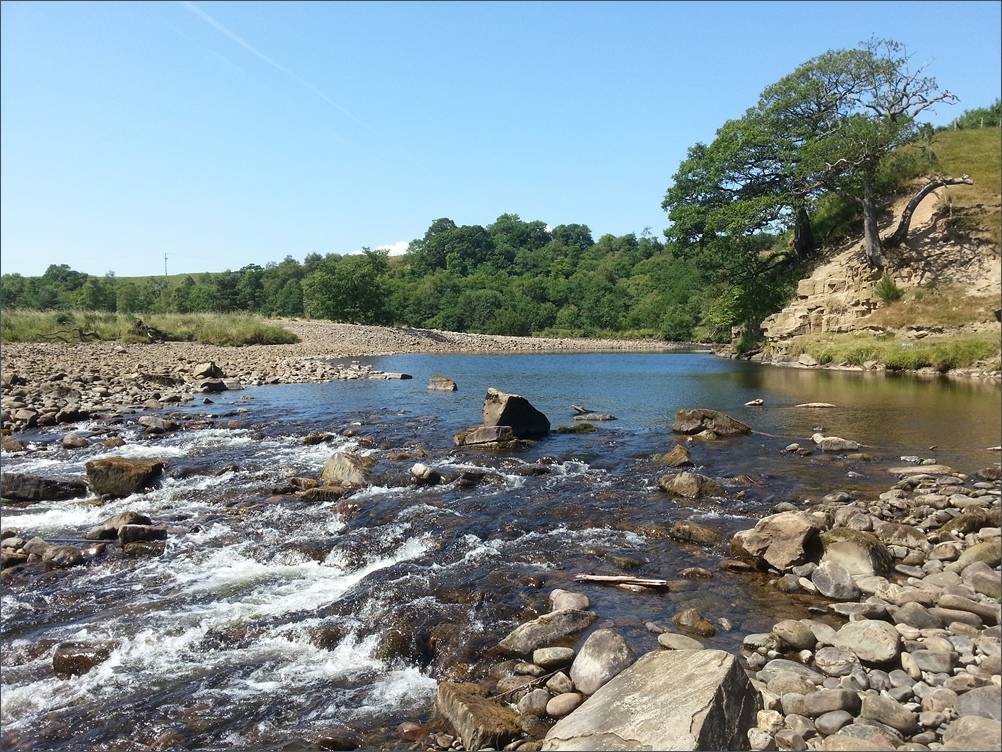
Of course, we all have to take what comes weather-wise, and make the best of it, but sea trout success often depends very much on nocturnal conditions. Generally, we will look for settled weather with temperatures remaining in double figures throughout the night, with a good bit of cloud cover. A little rain now and again will do no harm, provided that it does not cause the river to rise and colour. The chances of catching sea trout at night on a river running with any colour are very low. You may catch sea trout during the day, and maybe at dusk, in coloured water but, for successful night fishing with the fly, the river should be running as clear as crystal.
Some rivers run more clearly than others, depending primarily on the geological and ecological nature of their catchments. Some, like the Border Esk, run with particular clarity at normal levels. Others, like the Liddel and North Tyne, having adjacent sources in Kielder Forest, often carry a peaty stain even when running at or near summer low level. Such rivers can present a greater challenge for the night sea trout fisher.
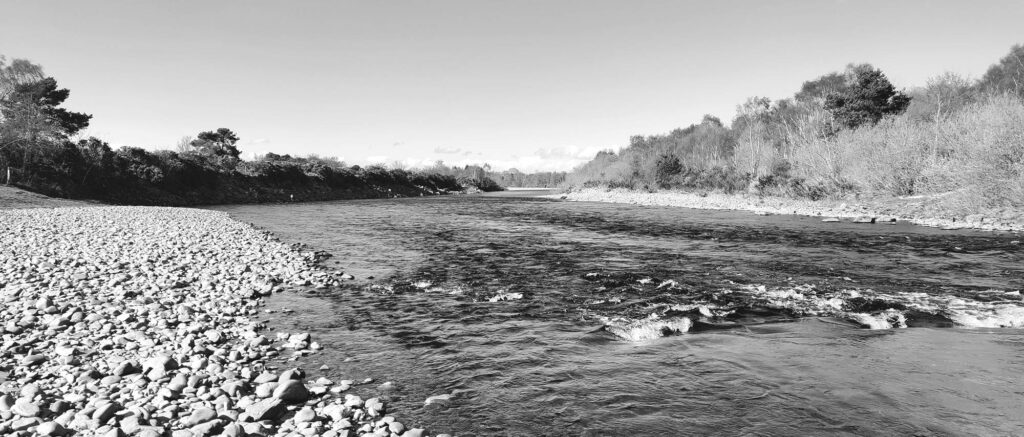
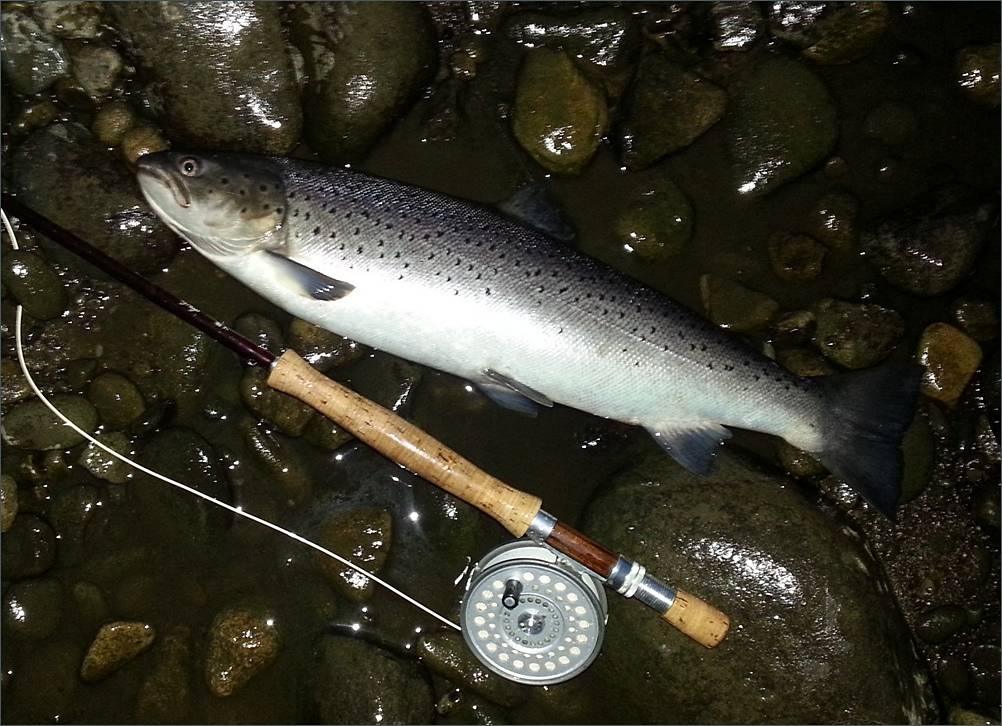
I was fortunate, through membership of Hexham Anglers Association, to spend a season or two exploring the varied waters of the River Tyne. I managed to catch a few salmon and sea trout by day and spent quite a few nights in search of sea trout. My only late evening successes came on or just after dusk, before true darkness had fallen, once on the Main Tyne below Hexham, and again on the South Tyne near Bardon Mill. Both were lovely fresh sea trout well in excess of three pounds. But I had no success fishing through the darkest part of the night.
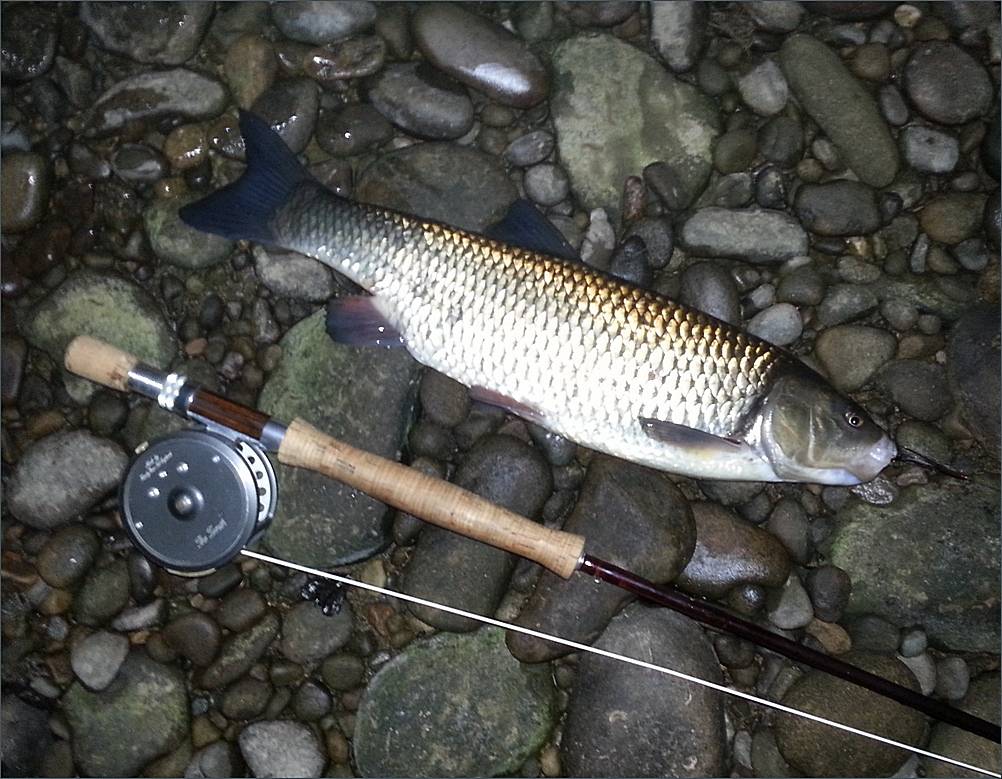
On another night, fishing the main Tyne, I caught six chub, all approaching two pounds in weight, on a one and a half inch Needle Tube Fly, but again no sea trout, my intended quarry. I do know, however, that sea trout are caught through the summer nights by Tyne anglers more expert than I, particularly on the South and Main Tyne.
In the low clear water of our summer rivers, sea trout tend to hide away during the day, seeking sanctuary in the deeper pools. Other than in spate conditions, they are very wary, easily alarmed and very difficult to catch during daylight hours. On a typical summer night, if there is such a thing in sea trout fishing, they will often emerge from their daytime lies. As darkness falls, fish may be seen and heard moving around the pools, perhaps jumping clear of the water or making bow waves as they swim in the shallow water of the pool tails. They seem suddenly to have woken from their daytime slumbers, to revel in the safety and security of the dark.
When at sea, this would have been a peak feeding time, searching out shrimps or sandeels with the ebb and flow of the tides. Now back in the river, although they have no need of food, the habit lingers. Their guard down, this is when the sea trout are most likely to take a well fished fly. This period of gay abandon can last an hour or, if we are very lucky, it may continue well into the night. Much depends on air temperature. If there is good cloud cover and the night remains warm, the period of activity will generally last longer. I am always happy to hear the weather man forecast night temperatures to drop no lower than 11 degrees and I will hope that the air temperature will remain at least a couple of degrees above that of the water throughout the night.
Sea trout seem particularly sensitive to changes in temperature. While water temperature is, of course, the most influential of all the elemental determinants of fish behaviour, controlling, as it does, their rate of metabolism and respiration, it is the temperature of the air which is subject to greater variation on a summer night by the river. On a clear, still night, the air temperature often drops dramatically with the fall of darkness, as the warmth of the day escapes into space. A chill mist creeps over the river surface. We dip a hand in the river to find that the water feels warm. Such conditions are never good for sea trout fishing.
Some believe that sea trout react appreciably to changes in pressure, even that a sudden rise of a few millibars at some point during the night will increase the likelihood of a take. The theory, as I understand it, is that high or rising air pressure allows the water to take in increased levels of oxygen from the air, making oxygen more available to the sea trout’s respiration, resulting in increased activity and mental alertness in the fish, although I suspect that temperature variation is likely to have a significantly greater influence on both fish metabolism and dissolved oxygen content.
It is thought that rises and falls in air pressure may also be felt in the fish’s swim bladder, prompting the fish to swim higher in the water under high pressure and deeper under the less comfortable low pressure, although the variation of depth at which the sea trout might choose to lie in a river would surely be inconsequential in its effect in this regard. I hasten to add, however, that I have no more than a very basic understanding of the many complex environmental variables affecting sea trout biology and behaviour. Nor have I myself measured pressure changes while fishing, so I am unable to offer a valid opinion on its effect on fishing success, although I have recently bought a wrist watch with a barometer function, which I intend to test over the coming season.
I would say, though, that my experience suggests that the settled weather conditions normally associated with slowly rising or steady air pressure are generally preferable to those associated with a rapidly falling barometer, which often signals imminent wind and rain brought by an incoming depression. A static anticyclone overhead, on the other hand, often brings with it the risk of clear skies and cool nights. A happy medium is what I look for, with a fair bit of cloud to keep temperatures steady and hide the moon, combined with a reasonable level of humidity to limit the cooling of the river’s surface through excessive evaporation.
Apart from the question of discomfort, I have never been very hopeful, and rarely successful, when fishing in heavy rain. I do not mind light rain or occasional showers, and I have had occasional success in thundery weather but feel ill at ease with the approach of lightning flashes. I do not like a strong or blustery wind which can’t make up its mind whether it is coming or going and changes direction by the minute, preferring instead a steady light breeze or a still, calm night, although the latter brings with it the unwanted attention of midgies. I do not like a bright moon in a clear starry sky, first because it makes our presence all too obvious and exposes our sometimes clumsy fly presentation and, second, because it is usually accompanied by a rapidly falling air temperature, probably the least favourable of all possible conditions. I generally do not like a particularly black night. Some light from an intermittently visible moon is often welcome, provided it is not shining high in the sky from behind.
Jeffery Bluett (Sea Trout and Occasional Salmon 1948) proposed the interesting theory that sea trout fishing is better on a growing moon than a waning moon, a theory perhaps worth bearing in mind when timing our visits to the river. The tides are also governed by the phases of the moon, the highest tides occurring with both the new and full moons, which encourage migratory fish to enter the river at corresponding times in the summer months. So we might expect the biggest runs of sea trout to enter our rivers on the June and July spring tides, i.e. high tides occurring with each new and full moon. Specific high tide times are perhaps of most relevance to those fishing on the lowest part of the river near the sea.
Sea trout may sometimes react favourably to a slight but noticeable change in conditions during the night (and no doubt also to small changes imperceptible to the angler), for example the sudden veiling of a bright moon by a bank of cloud; the late appearance on a dark night of a low moon above the far bank treeline; a warm breeze to disperse a low mist which has begun to settle on the tail of the pool; the passing of a heavy rain shower, or the easing of a cool, blustery wind. Such small changes might on occasion be enough to revive the sea trout’s flagging interest in our offerings.
We will rarely find ourselves on a sea trout river in perfect conditions. What is most important is that sea trout are present in our beat, preferably fresh fish newly arrived from the sea, and that the river is running low and clear. Some conditions, of light and weather, will be more productive than others, of course, but if we have fish present in a clear river, we are always in with a chance. If, to add to our good fortune, we arrive at the river on a warm night under a cloudy sky, we may begin with high hopes. If we are very lucky, temperatures will remain high and we may catch fish throughout the night.
At some point, though, things will usually go quiet. Suddenly, the sea trout will seem to have gone, the river lifeless. It is unlikely that they have gone, though. Most probably, they have simply gone down, settled comfortably in the deeper parts of the pools, where they are less vulnerable, harder to reach. They might still be caught but we will have to work a bit harder to tempt them than we did earlier. We may now have to fish our flies more deeply, perhaps more slowly, in the deeper pools. Such places are not so easily fished as the faster, shallower streams but might, on occasion, produce the best fish of the night.
I have stressed throughout that the secret, if there is one, in sea trout fishing, is in being in the right place at the right time. But even if we have arranged to be on a river well stocked with fresh run sea trout at the height of the season in what we judge to be perfect water and weather conditions, a nocturnal encounter with a willing sea trout is far from guaranteed and not simply a matter of chance. Nor is such an encounter likely to occur in any old pool on the river. Reliable taking places are sometimes few and far between and not always easily identified. Without the benefit of local advice, it may take many happy seasons of nocturnal exploration to find the best spots, and even then they may vary with the height of the river, time of night or time of the season.
Indeed, I would suggest that the greatest skill a sea trout fisher can hope to acquire is the ability to recognise potential taking places on a stretch of river, especially an unfamiliar one. By comparison, tackle selection is a trivial matter. Even the choice of fly is relatively unimportant. Such a skill, of course, is not an easy one to acquire. Even with a rich memory bank of past experience, many are the mistakes we are destined to make along the way in choosing a likely night cast for a sea trout, as I have demonstrated convincingly in earlier chapters. I have learned, usually the hard way, that not all pools are as productive as they might look.
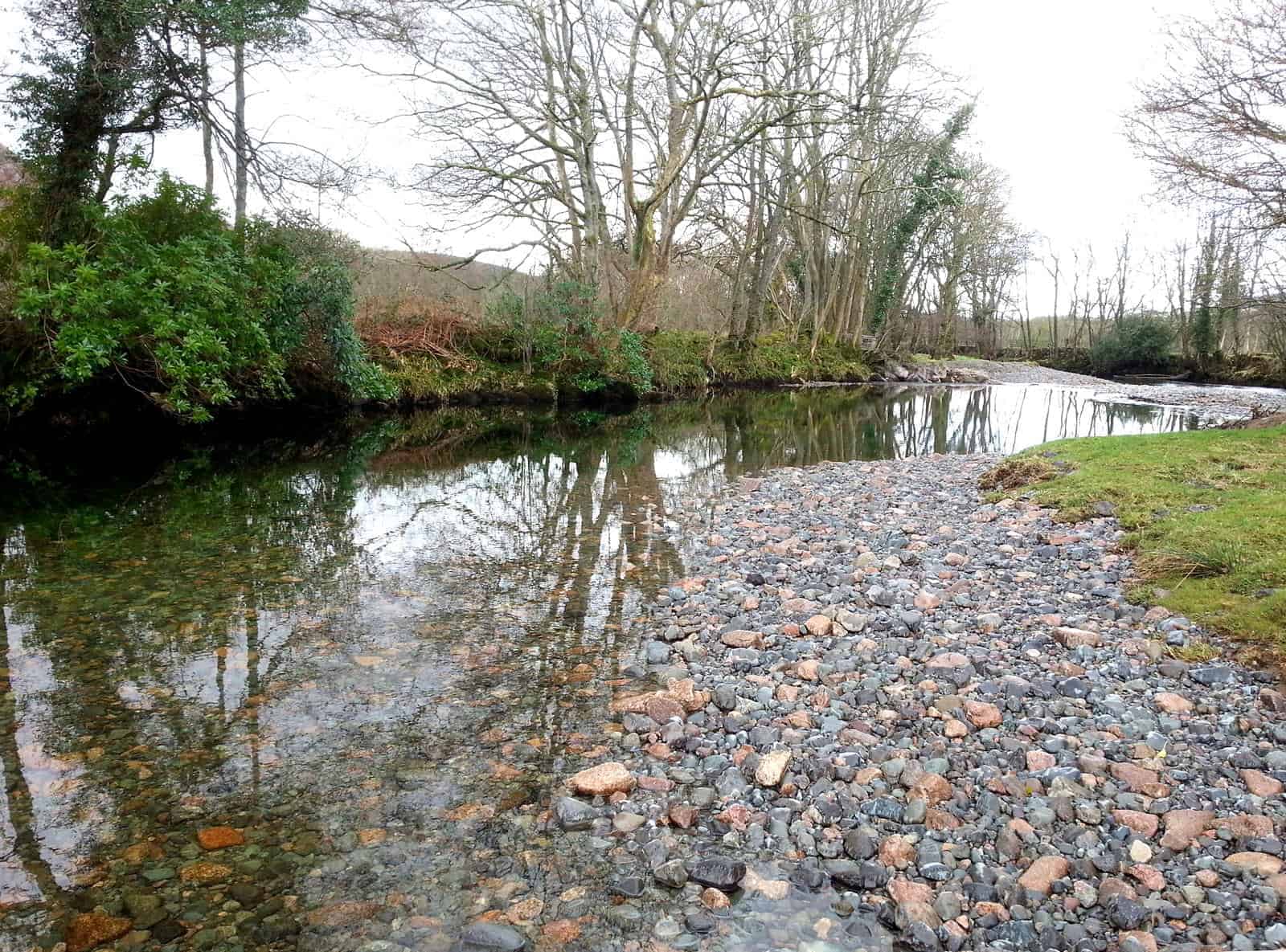
Both in the general sense of being on the right river in the right season, and in selecting a particular place on the river at night where a sea trout might be persuaded to take our fly, location is just about everything in sea trout fishing. Give me any old fly – a bit of black hair tied roughly to a hook – and the ability to read a sea trout river and I’ll be a happy man! So how do we select a good place on the river, a place where we will have a reasonable chance of hooking a sea trout? We will consider this in the next chapter, Ways and Means.
First edition printed hardback copies of SEA TROUT NIGHTS may be purchased at Coch-y-Bonddu Books