IV
On the River Earn at Crieff
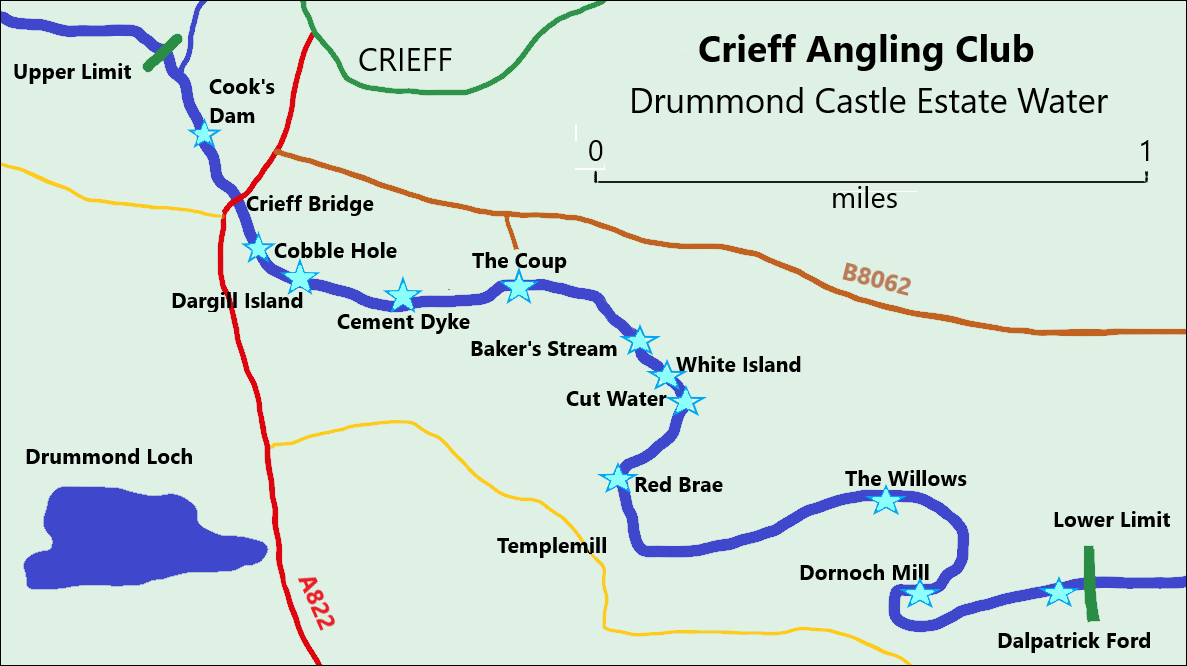
The Crieff Angling Club manages the fishing on two major beats of the River Earn: the Strowan Estate water, situated between Comrie and Crieff, and the Drummond Castle Estate water, the more extensive and productive beat, below Crieff bridge, with a shorter stretch at Braidhaugh immediately above Crieff Bridge
All of it is lovely water, and salmon and sea trout may be taken from any of its varied pools. Not all are, of course, equally productive and it takes a bit of time to get to know them, especially if, as I usually was, fishing in the dark. I did spend some time targeting salmon in daylight hours, with occasional success, but my main interest was always in the sea trout.
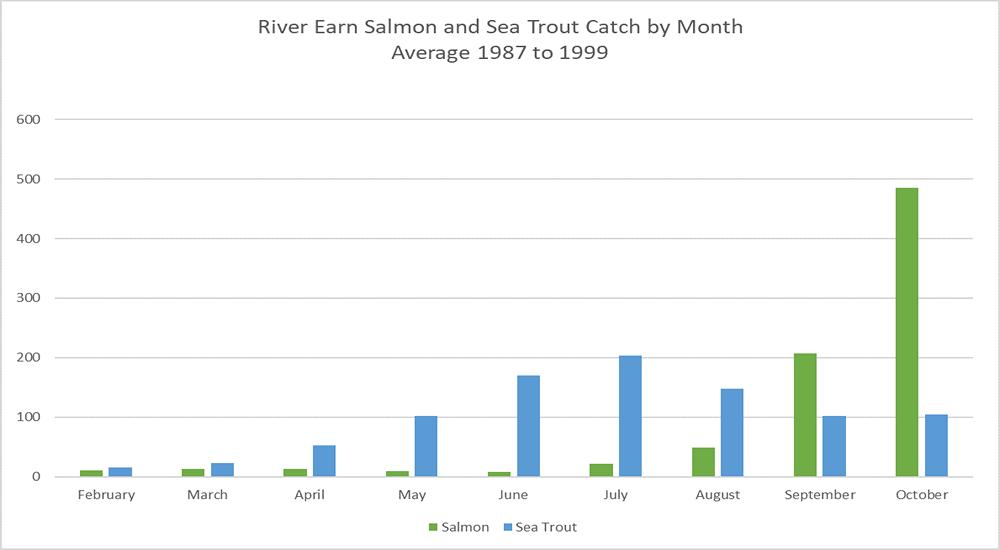
The graph above shows the pattern of monthly salmon and sea trout catches on the River Earn throughout the season. A typical year would follow this pattern, offering the prospect of worthwhile sea trout fishing from late April through to early August, by which time most sea trout would be starting to colour and past their best. It would then be time to prepare for the arrival of the main salmon run.
As can be seen from the graph below, sea trout catches on the River Earn, in the early eighties in particular, were very respectable indeed. Oh, to have been fishing for Earn sea trout in 1981, when a rod catch of 2418 was recorded!
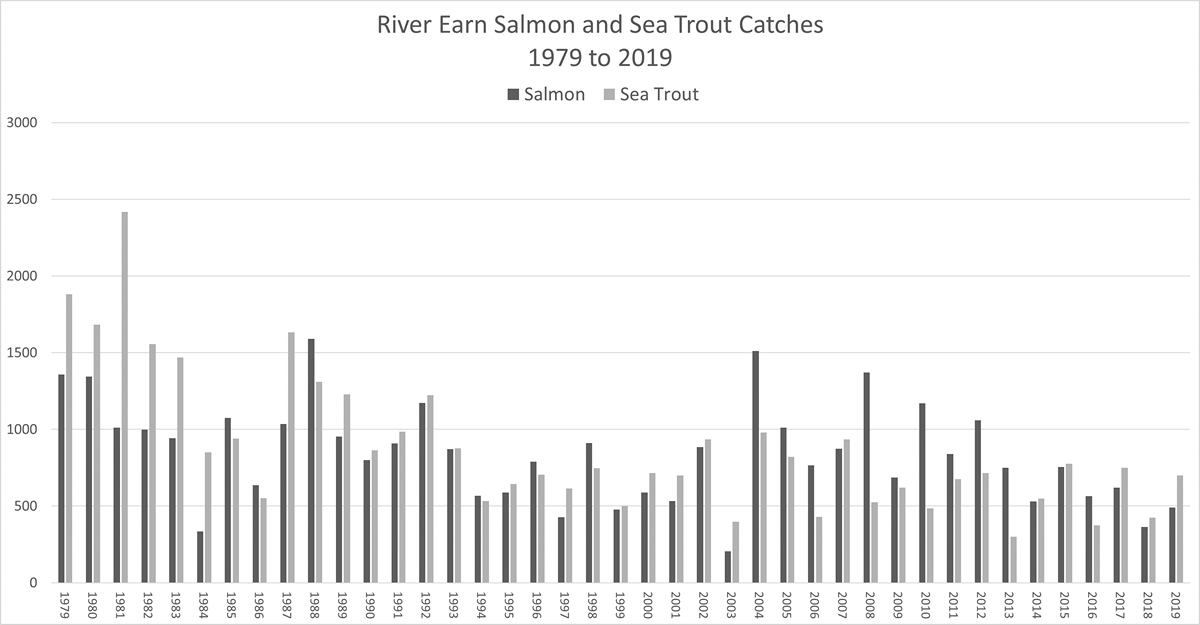
In common with many other sea trout rivers throughout the country, the early nineties saw the beginning of a decline in sea trout numbers on the River Earn, with catches today rarely reaching 1000 sea trout per season. A normal year would now see in the region of 600 to 700 sea trout caught throughout the river and a similar number of salmon, with the angling clubs often accounting for around a third of the total.
During my first season as a member of the Crieff Angling Club, in 1993, I spent the occasional June night exploring the sea trout potential of both the Upper Strowan beat and the Drummond Castle water below Crieff but, by early July, the fine dry weather had resulted in very low water on the Earn, with no sign of any worthwhile sea trout run, although I did lose one good sea trout at the Willows one night in late June and eventually succeeded in catching a solitary sea trout up at Strowan late in the season.
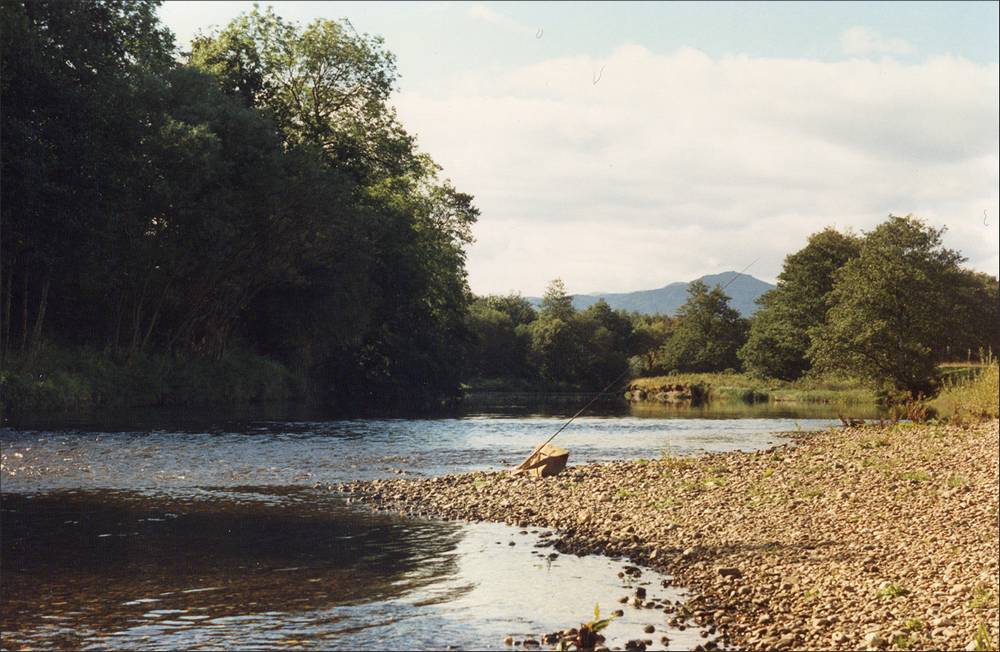
With little sign of sea trout in the Earn, I had focussed more on the Allan, where I had had some modest night time success. I had also enjoyed several very pleasant days trout fishing. Late season saw me catching a few salmon on the Allan before turning my attention to winter grayling on the Earn and Clyde.
I whiled away the early months of the 1994 season fishing for trout and had some enjoyable and rewarding days, particularly on Drummond Loch near Crieff, to which I had access as a member of Crieff Angling Club. Wednesday 1st June was one such day:
I had booked an evening boat on the loch. Only boat fishing was permitted, as fishing from the bank was virtually impossible owing to banks heavily overgrown with trees, rhododendrons, reeds and water lilies. There were three good sized fibreglass boats, however, moored at a convenient, well maintained jetty. Weather conditions were excellent between 4 p.m. and 7 p.m., before the wind died and the temperature dropped. I fished a cast of three, featuring a Kate McLaren, Greenwell’s Glory and Dunkeld, taking trout on all three over the course of the three hours. The trout were in lovely condition, with only one or two betraying their stock fish origins by slight imperfections in their tail fins. I had great sport in magnificent surroundings little more than a stone’s throw from Drummond Castle, with superb wildlife for company, including three dozen swans, a variety of ducks, herons, cormorants, divers and a pair of ospreys circling above. One even had a go at one of the loch trout in the early evening, apparently without success. I am pleased to report that, on this unique occasion, I outfished the ospreys, ending the day with five brown trout weighing seven pounds, the best a perfectly proportioned fish of 2lb. It made a pleasant change from fishless May evenings on the river.
Throughout June, the Earn ran a little high for night fishing. It also ran cold, perhaps due to extra water generated by the hydro power station upriver at Dalchonzie. I hoped, however, that the higher water might bring in a run of fresh sea trout. Indeed, the river did drop back to a perfect height for a short time in early July, but several extremely promising nights, in what appeared to be ideal conditions of water and weather, yet again yielded nothing in the way of sea trout. I had a few from the Allan but the Earn sea trout continued to elude me. I had concentrated my efforts, for much of the season, on one or two very attractive pools in the vicinity of Templemill but saw no sign of sea trout, let alone catch one. Either there were none in the river or I was fishing in the wrong place! I fear, with the benefit of hindsight, that the latter was the more likely.
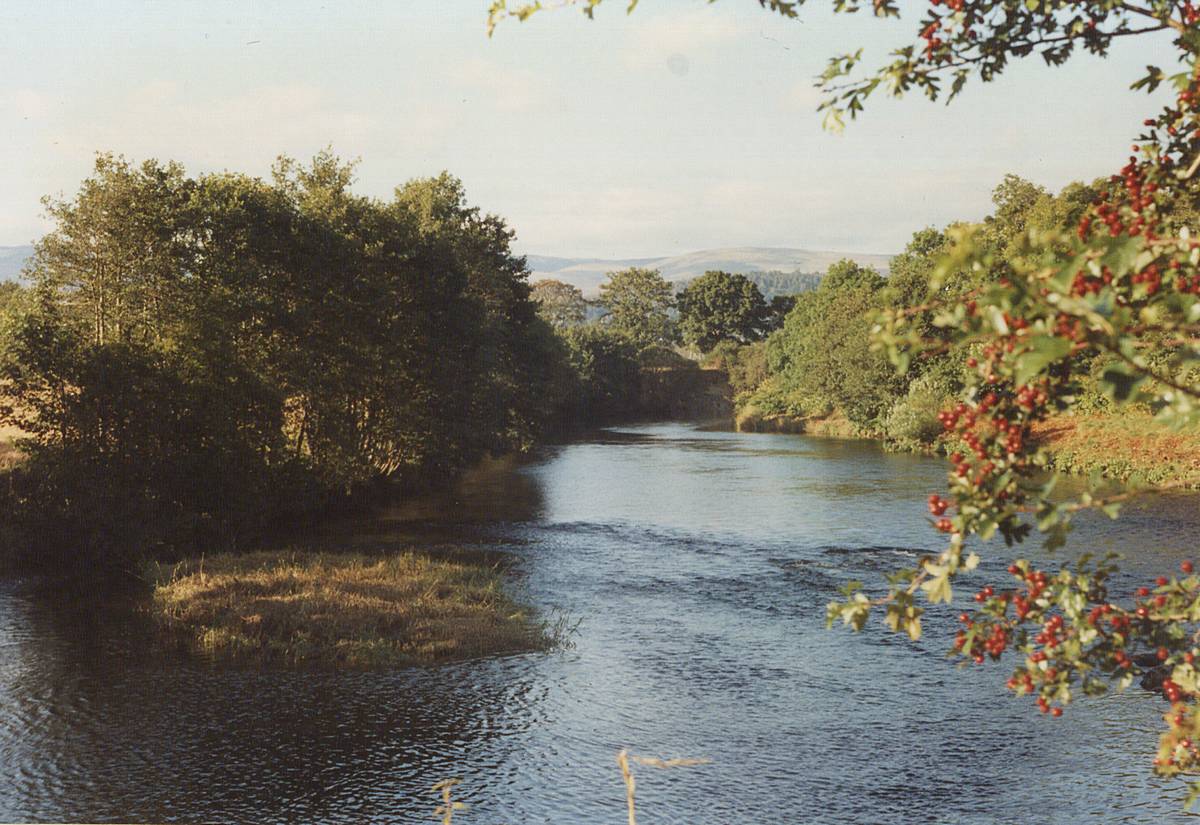
Some harsh realities of sea trout fishing were again being well and truly brought home to me. The realisation was all too slowly dawning that you don’t catch sea trout on just any old pool, even on the best of rivers. Reliable taking places at night are often few and far between, and not always obvious. There are, the length and breadth of the country, mile upon mile of what appears to be excellent fly water which will produce very few sea trout to the night fly in the low flows of summer. Time spent at night on a sea trout river is never wasted, of course, with lessons invariably learnt along the way and, if there is a more pleasant way of passing a summer night, I have yet to find it. I was destined to spend many supremely pleasant nights on the river over the next season or two before I even began to get to grips with the sea trout of the Earn.
With my disappointingly poor sea trout season having passed all too quickly and the rivers continuing to run low throughout much of September, Wednesday 14th September found me once again on Drummond Loch.
The Allan was running low and, although the River Earn was now at a better fly height, I decided on an afternoon on Drummond Loch. I arrived around 2 p.m. A fair wind was blowing from the east, making a steady ripple over most of the loch, just about perfect. Full cloud cover of varying density gave a reasonably bright light. I was the only boat out of the three on the loch and, as I rowed out from the jetty having set up the rod with three size 12 flies on a 5lb leader – Grouse & Green, Greenwell’s Glory and a Black Pennell on the tail – trout were rising well to a good hatch of fair size olives.
They rose well to my offerings, too, and on the first drift I had four lovely trout, averaging about 1¼lb, in the boat. They didn’t seem to be too selective, as I had fish on all three flies. The second drift produced another two trout of about the same weight, by which time I had changed the Grouse & Green for a Blae & Yellow with ginger hackle and a tippet tail. Things went quieter for a time, the peak of the rise having passed by 3 p.m., but between 4 and 5 p.m. I had a good response to a Pearly Wickham tail fly around the middle of the loch, which seemed to be the most productive drift. I added another two fish to my tally, which I released as I had reached my 6 fish limit. All in all, a great three hours fishing, with swans, geese, cormorants, ducks and coots for company. I had caught eight trout for a total weight of around ten pounds, with the best fish of the day a lovely well marked, full tailed brownie of around 2 pounds.
The sea trout catches on the River Earn for the 1994 season were published early in the following year. They showed that the catch was well down on recent years, as low as half the previous five year average. Salmon catches were similarly low. It seemed that I was not alone in my lack of success, bringing to mind a handy little rhyme.
Sometimes ower early, sometimes ower late
Sometimes nae water, sometimes in spate
Sometimes ower dirty, sometimes ower clear
There’s aye something wrang when I’m fishing here
I blamed the dry weather of the past season for my poor catch rate, and not simply incompetence. What would 1995 bring?
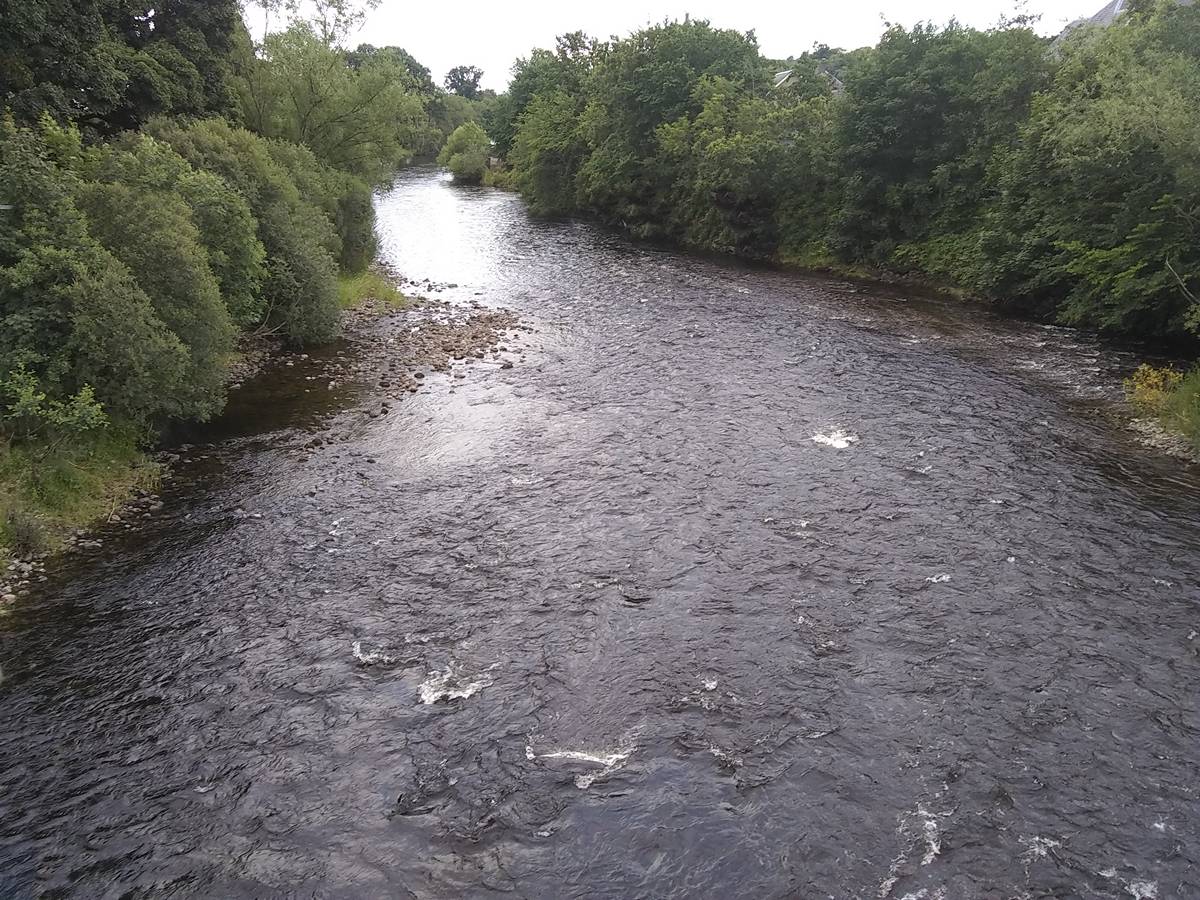
Early May was again cold and dry but heavy rain towards the end of the month resulted in good spates on both the Allan and Earn. My first outing for sea trout, on 30th May, was on Cook’s Dam, above Crieff road bridge.
I fished from 10 p.m. till 12.30 a.m. The river was running quite high and the water temperature was measured at 10°C, with the air temperature only a degree higher. I suspected that the river was running a little too high for night fishing, so was surprised to have four solid offers and managed to hook a cracking sea trout of about three pounds. It took just above the pool tail and stripped yards of line and backing in seconds, leapt well out in the stream then threw the hook. It had taken a long shank size 8 Ginger Pearl, fished on a DT8 Aircel floating line with a slow sinking braided leader. The rod, now a firm favourite, I had built myself a few years earlier on a 10½ foot Bruce and Walker Multitrout blank, rated 6/7, but matched at night to a number 8 line. The sea trout seemed most active between eleven thirty and midnight. A promising start, despite the leaky chest waders! I was again on the same pool a few nights later, when I managed to land a lovely fresh sea trout of 2¼lb.
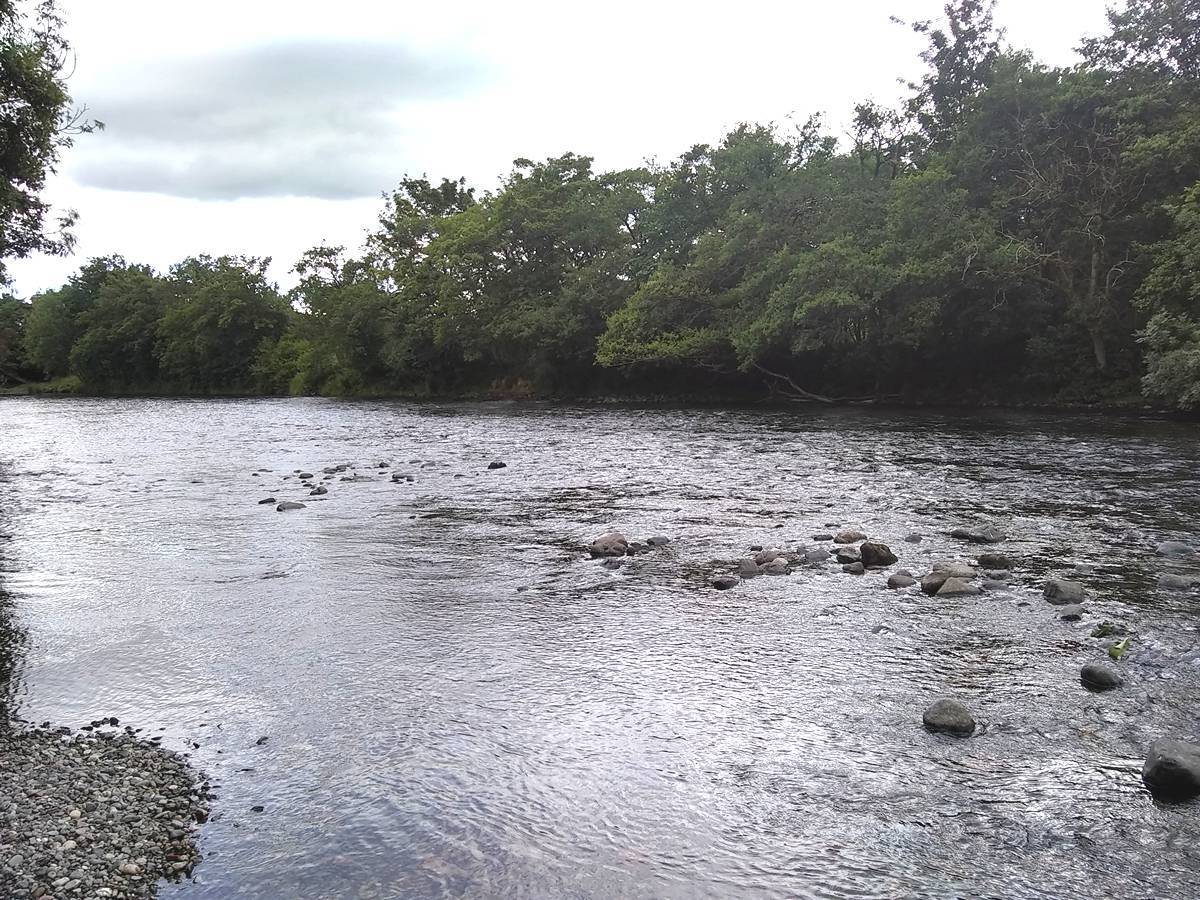
There was some more rain very early in June but this was followed by six weeks of the hottest driest weather imaginable, with temperatures reaching the low thirties. After a bit of welcome rain in late July, I had a few more sea trout from the Earn but the hot, dry weather returned and continued unabated throughout August. Another sea trout season had been lost to a long hot, dry summer.
1996 would be remembered for its dry, though not exceptionally hot, summer. We are in Scotland after all! But it was not until October that the rain came. Indeed, I think that the lack of rain that September might have broken some kind of record, while October was one of the wettest in memory.
With virtually no rain from mid-June to the end of September, the sea trout season had been very difficult, not unlike 1995. I had a little compensation in the form of some very good loch fishing early in the year but the sea trout fishing was, on the whole, best forgotten.
I did, however, have one memorable evening’s fishing for, of all things, tench. In mid-July, I took a night off from the poor sea trout fishing to try my hand at coarse fishing on the Forth and Clyde canal, near Twechar. The coarse fishing on the canal had been highly regarded in earlier times and was still popular among enthusiasts, who had mile upon mile of very accessible canal bank to choose from. I had been particularly intrigued by reports of an increasingly viable stock of tench over recent years. I set up my Daiwa 12 ft Phantom float rod and Leeds centrepin, more normally used for long trotting for winter grayling on the Earn or Clyde, and between 9 p.m. and 10.30 p.m., Monday 15th, fishing one or two maggots on a size 16 spade end hook, on a 2lb hook link, five feet below a lightly shotted waggler float, I netted three lovely tench between 1½ and 2½ pounds. Something completely different and a world away from sea trout nights on the Earn! I finished that season with about fifty brown trout, two salmon, five sea trout and three tench.
1997 was to mark a turning point in my sea trout fishing on the Earn. Following some excellent early season trout fishing on local lochs, by early June my attention had turned to the night fishing on the club water below Crieff. My first sea trout of the year came on the night of Monday 2nd June.
Having watched an episode of “Tales from the Riverbank” on television, which featured Moc Morgan catching a couple of sea trout from the River Teifi, I set off in anticipation of similar success on the Earn at Crieff. The river was running at summer low, clear and free of weed. I heard one or two hefty sploshes downriver but had not a touch until, on the stroke of midnight, I felt the heavy pull of a sea trout. It was a good fish which fought strongly in typical sea trout fashion, making a few strong runs, punctuated by a series of leaps well clear of the water. With no net, I managed to beach it on the shingle bank, exposed by the low water. It had taken the tail fly, a size 8 Mallard and Silver, and, during the playing and landing of the fish, a bat appeared to have hooked himself on the Ginger Pearl dropper, and who could blame him! Fortunately, after beaching and unhooking the fish, there was no sign of the bat, relieving me of the uncertain business of unhooking and releasing him. This first sea trout of the season was a very fresh hen fish of two pounds, as might be expected so early in the season, as bright as new silver.
That fish was caught at the Cement Dyke. Long days and nights of exploration up and down the river over recent seasons, mixed with trial and much error, illuminated by snippets of information from bankside conversation with fellow club members, had drawn me gradually but inevitably, almost fatefully, to this pool. At last, after many nights spent fishing water that seemed to be devoid of fish life, I had found a place where sea trout could be tempted, in the right conditions, to take a night fly.
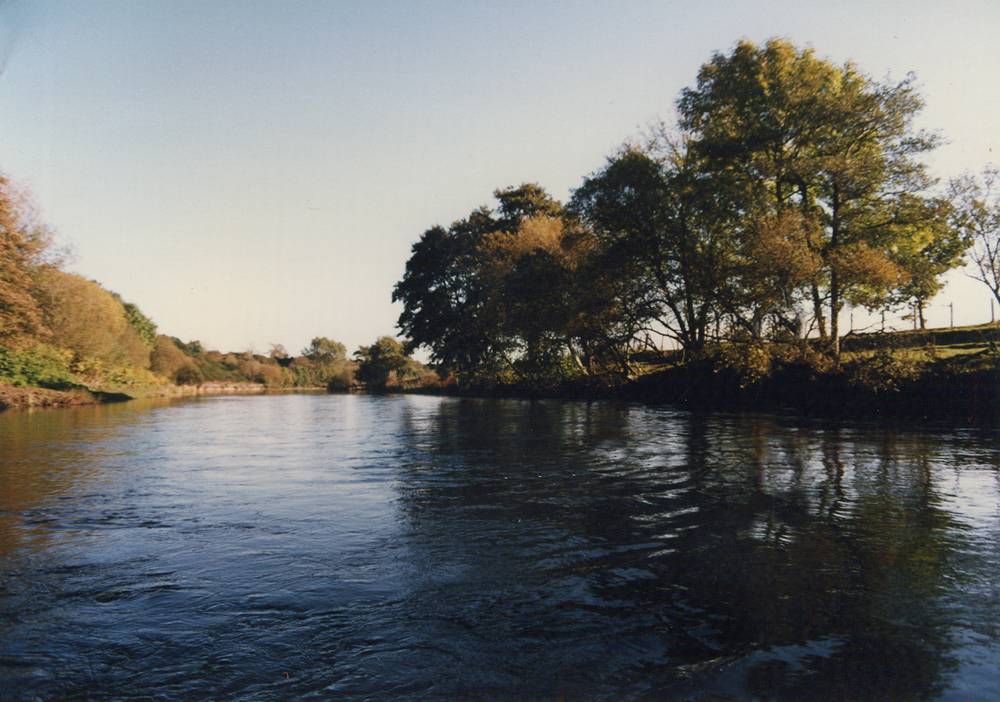
The pool, perhaps more accurately described as a glide, lies at the top end of a long pool above the Coup Stream. From a series of pools and flats upstream, also worthy of some attention at night, the river narrows slightly, with a gradually shelving bank of rounded stones and shingle, exposed in time of low water, on the left and a deeper stream, four or five feet deep, flowing steadily along the far right bank under a low cement wall, from which the pool takes its name, built to retain the riverbank. The glide flows ever more slowly as it enters a long deep section, heavily treed on the right bank for nearly 100 yards, then the trees thin. The river, now bordered by open pasture on the right bank, flows for a further hundred and fifty yards, gradually shallowing into a weedy tail before picking up pace and falling into the rapid flow of the Coup Stream below.
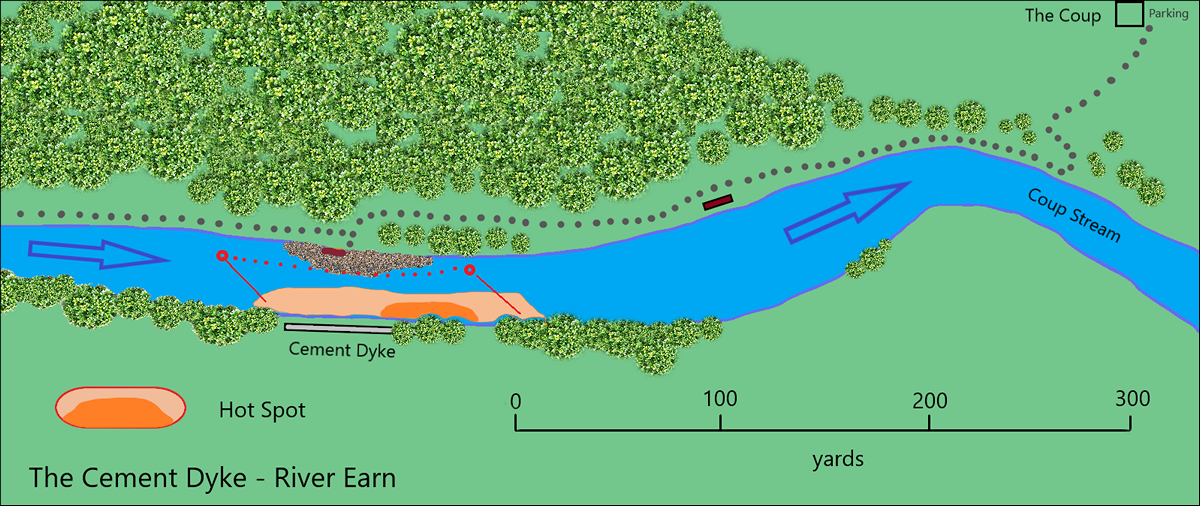
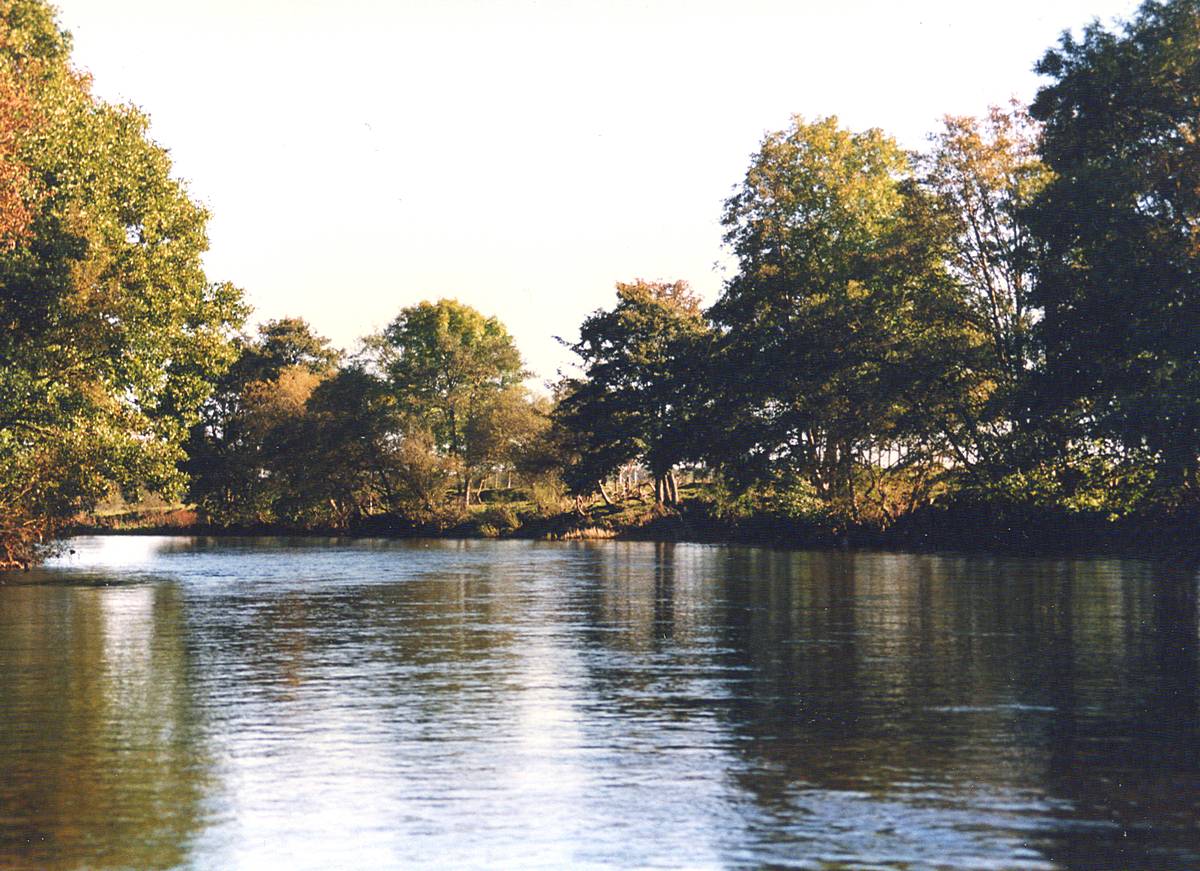
The most productive stretch, maybe 100 yards in length, lies between the easily waded exposed pebble shoreline of the left bank and the cement wall on the right, downstream to the point where the flow slows and deepens under the line of trees on the right bank. The sea trout, usually lying in the main flow towards the right hand bank, are easily covered by a cast of twenty yards or so. Over the next few seasons, I would get to know the Cement Dyke very well indeed.
June 1997 was a great month, with eight sea trout caught, all from the Cement Dyke. A few more good nights followed in July, with a further five lovely sea trout landed. I now found myself actually expecting to catch a fish or two on every visit. The average weight of Earn sea trout was around 2½ pounds, with occasional fish up to five pounds or so. One early July fish, just above average size, measured 20½ inches in length and weighed 3¼ pounds. I sent a scale sample off to Faskally Freshwater Fisheries Laboratory. The scale reading indicated that this was a five year old sea trout, on its second spawning run, having spent three years in the river as a parr.
Thursday, 10th July was a fairly typical night at the height of the 1997 season:
There was a threat of thundery rain to the west, with the night temperature forecast to remain above 11°C. I parked at the Coup and took the path which would lead me the half mile upstream to the Cement Dyke, now fast establishing itself as my favourite pool. I was pleased to note heavy cloud cover, with an upstream easterly wind, not strong enough to be troublesome but strong enough, if it persisted, to keep a late evening mist off the water, and help to disperse the midgies. Surprisingly, there were no other fishers to be seen, perhaps because the river level had dropped six inches since Tuesday and was now running very low, with a large area of pebble shoreline exposed on the left bank opposite the fence end. I had caught sea trout earlier last month in this height of water, though, and so was hopeful.
It was just about dark enough to begin, with care, at 11 p.m. Fishing a double tapered number eight floater and two size 8 flies – a Ginger Pearl on the dropper and a Pearly Dark Mackerel on the tail – I made a start in the streamy water at the head of the pool, wading carefully and casting into the shade of the bushes on the far bank. The first fish took on the far side just opposite the log, a good firm take as I had been employing a slow figure of eight retrieve, staying in touch with the flies and keeping them moving at a good pace. Now this fish, at just an ounce or two under two pounds, was probably the liveliest fish I have caught, leaping clear of the water about eight times and causing a great commotion in the now shallow stream before being drawn towards the net, at which point its lively acrobatics almost earned its freedom. Just as I was drawing it over the net, I felt the hook come out and, for a second, the fish was free. Fortunately, before the sea trout realised its temporary good fortune, I managed to scoop the net under it. An unlucky fish! It was 11.30 p.m.
Despite the disturbance, not wishing to miss the chance of another fish, I started in again just above where I had hooked the first fish. It was only a matter of minutes before I felt another strong pull but failed to make contact. At midnight, on reaching the overhanging trees on the far bank, as the flies began to swing across the current, I felt a tiny pluck, very like a bat touching the line. Moments later, the second sea trout of the night was on, stronger than the first fish but less acrobatic. After an early leap, it ran strongly up the far side of the stream. I kept firm pressure on to keep it out of the dense trailing weed, which now grew quite profusely near the far bank. The hook held, though, and the second fish of the night was eventually netted, another hen fish of 2lb 2oz. Like the first, it had taken the tail fly.
After a short break for a cup of tea from the flask, I fished on till 12.30 a.m. With no further offers and two fish on the bank, I decided to call it a night. I may have had the chance of a few more fish, perhaps even the bag of the season, but I was well satisfied. Two beautiful, fresh sea trout, 4lb between them, caught within an hour of each other, with a third fish missed, on a lovely river at the height of summer and not another fisherman in sight. A good night! In fact, if you were to imagine, to daydream of a perfect night’s fishing, it might be very like this.
My 1997 sea trout catches had shown a marked improvement on recent seasons and I was very happy to end the season with a total of 13 sea trout, 2 salmon and 77 brown trout.
The Cement Dyke would be fishable at night in a range of water heights, up to a maximum of about ten inches above summer low level. If the river was running below six inches, I would generally use a floating line. If the river ran high, often due to hydro power generation upstream at Dalchonzie, a neutral line or sink tip was useful just to keep the flies below the surface. The generated water would often be cold, requiring, I felt, a bigger fly fished a little deeper.
In 1998, the Earn ran high for much of June. The high water, combined with an almost total lack of sea trout, made for very difficult night fishing during the early part of the season. At last, in early July, the river level began to drop and I recorded my first sea trout of the year on 2nd July, a lovely hen fish of 2lb 10oz, and lost a second fish of about 2lb.
I paid another visit to the Earn on Monday 13th July, fishing the Cement Dyke from 10 p.m. till midnight.
After heavy rain the day before, the river was running lower than I had expected, approaching what seemed a perfect height for the floating line, just a few inches below the bottom of the old log, with a yard or so of pebbly shoreline exposed on the left bank. But it seemed to be carrying a touch of peaty colour and things didn’t look too promising with a strong, cool north west wind blowing high sparse cloud intermittently across a clear sky, indicating a cool night to come. The forecast was for night temperatures to drop to 8 or 9°C.
I arrived early to find that I had the pool to myself. I sat for an hour awaiting darkness. Small trout and parr were moving in a stream ruffled by a strong downstream wind, with the occasional bow wave indicating the presence of something larger, hopefully sea trout, although none had yet broken the surface. I began, perhaps a little too early, at 10 p.m., persuading myself that the tinge of colour in the river would provide some cover to my wading and casting.
It proved to be a good decision, as I hooked a strong cock sea trout at 10.20 p.m., under the first tree opposite the log. It fought more like a salmon, with a couple of head-shaking downstream runs, only leaping once. I was relieved to draw it over the net but it was unlikely to have escaped, being well hooked in the scissors on the Mallard and Silver, dressed on a size 8 Captain Hamilton hook. A lovely fish, again 2lb 10oz. At 10.35, I hooked a second sea trout, which came up slashing and rolling on the surface before seeming to settle to a more promising underwater battle, but the hook came out soon after and the fish was gone. I carried on hopefully, thinking that this might, after all, prove to be a good night. By now, though, it was dark, cool and increasingly windy. The fish went down and I had no more offers. Perhaps it was the cool wind that put the fish down or, as I suspect, there may have been just a wee bit too much colour in the water for good night fishing, the earlier fish having been hooked before true darkness had fallen. I gave up at midnight, well satisfied.
Unsettled weather returned and kept the rivers running high for the rest of July and much of August. I had the odd sea trout and salmon from the Allan and Earn during daylight hours, but had no further opportunities for night fishing until 25th August. The river was running high, near the upper limit for night fishing, almost touching the foot of the log. I managed a solitary sea trout from the Cement Dyke. It was hooked on a black hair wing fly dressed on a size 4 Aberdeen hook, really quite a big fly but finely dressed and very light in weight. This gave me something to think about over the coming close season.
NEEDLES FOR SEWIN
My fishing diary for November 1998 records: “I have an idea for the design of a long, slim, lightweight sea trout fly, especially for early season on the River Earn, say in late May or early June, and more generally for late in the night when the fish go down, when a larger fly may be required.” Until now, traditional sea trout flies such as Butcher, Mallard & Claret, Teal & Silver, Dark Mackerel, Silver Invicta, Mallard and Silver etc. had served me well enough most of the time but when I wanted something larger, or more precisely longer, for later in the night, or when the river was running that bit higher and colder, the choice of lure available seemed limited.
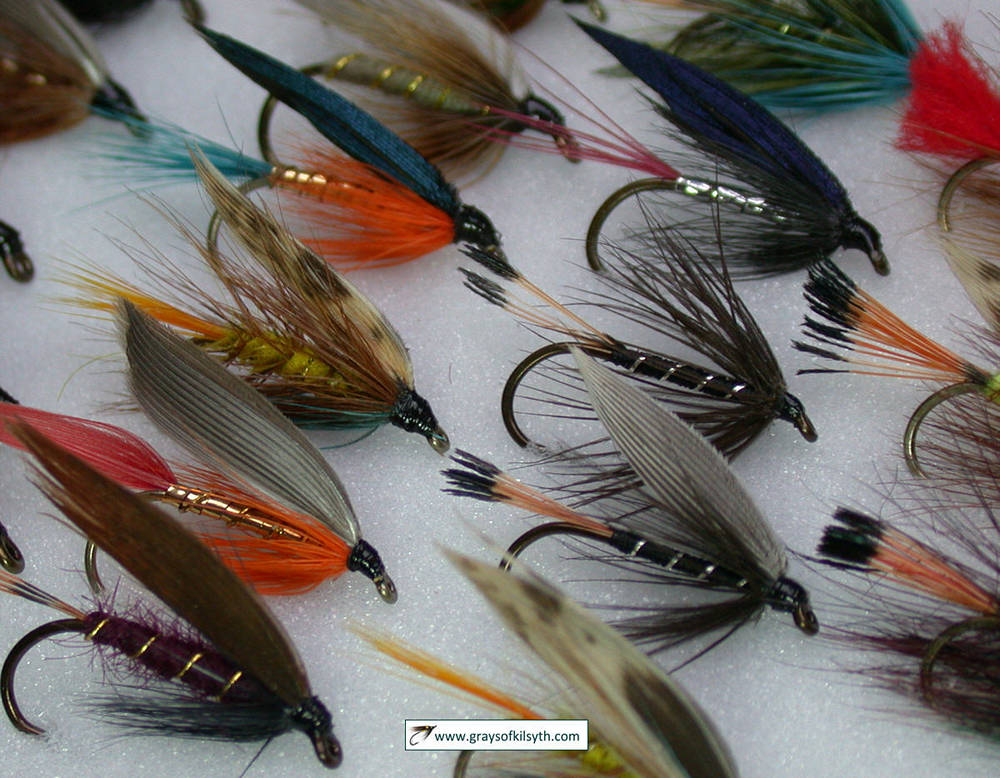
Fairly large lures could be dressed on large single hooks but a hook larger than about a size 4 felt just too big and heavy. Conventional tubes seemed generally rather bulky, whether dressed on lightweight plastic and aluminium tubes or on heavy copper and brass tubes, which were too heavy for sea trout fishing in the low flows of summer. The Waddington lure could be tied on a variety of gauges and lengths of wire but the attachment of the treble hook could be problematical. Should the treble hook be damaged the fly may have to be discarded or, at the very least, partially retied. Sunk lures, as popularised by Hugh Falkus, had the advantage of being very slim and well balanced. However, whether tied using singles, doubles, trebles or a combination, all involved considerable time and care in their construction and, when damaged, would probably have to be discarded.
What I was looking for in a sea trout lure was something slim, to give the impression of a little fish; something that would be easily constructed in a variety of weights and lengths, using inexpensive and readily available materials and components; which would be generally light in weight, even in longer sizes, so it would be easily cast and fished effectively on both floating and sunk lines; something that would sink readily, but not too deeply, and swim in line with the leader; with a hook easily changed when damaged without having to discard the lure. So, to while away the long dark days of that close season, I set about devising such a lure, one which would overcome the shortcomings of those earlier, however ingenious, designs, while retaining some of their best features. The result, after much experimentation, was the Needle Fly (see more about the development and construction of the Needle Fly in the later chapter on Flies and Fly Tying in Part Two).
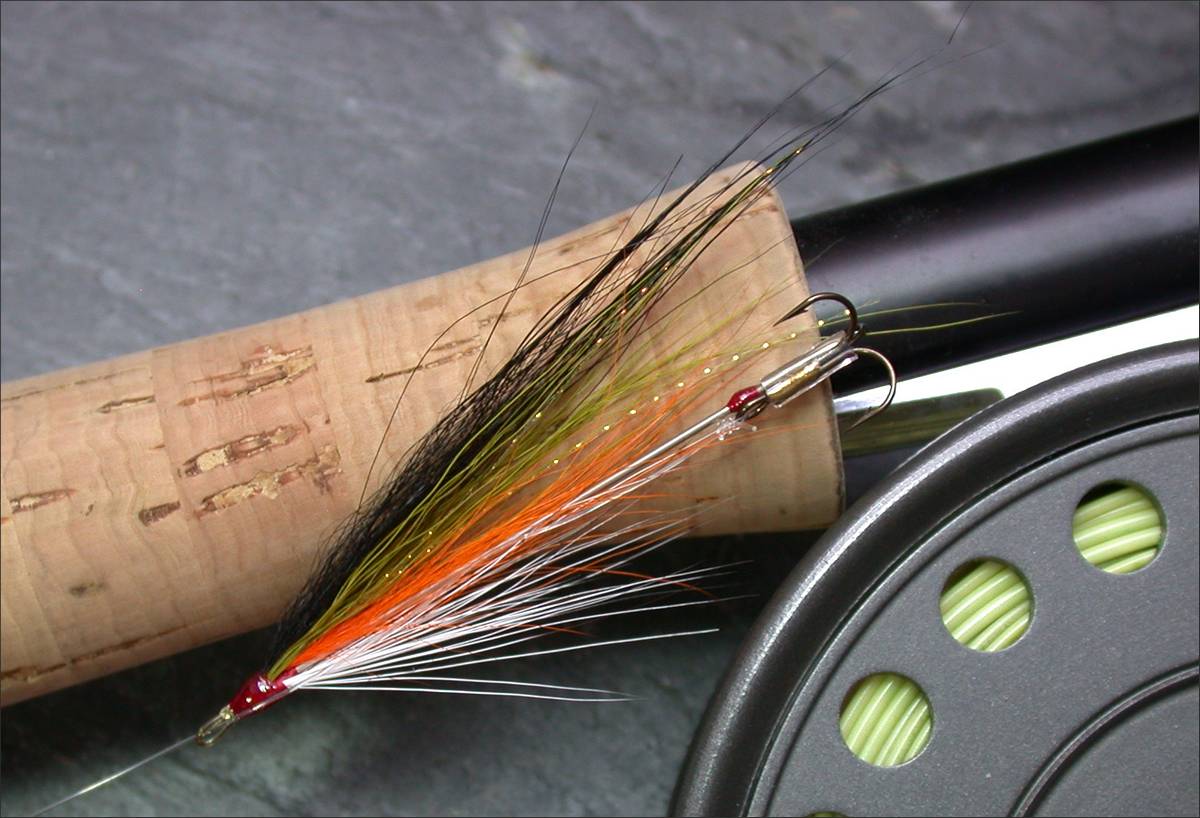
By the start of the 1999 sea trout season, I had the prototypes all ready to go. “All dressed up and nowhere to go” would more accurately describe the situation, as things turned out. It was a wet start to the season and the River Earn ran high for the whole of May, too high for night fishing. The high water continued for most of June and the night fishing was challenging. Things began to improve towards the end of the month, when I had my first sea trout of the year, a lovely fish of 2½lb. This was a very significant catch, as it was the first sea trout to fall for the charms of the Needle Fly.
More were to follow, as noted in my diary for July: “In eighteen hours of night fly fishing on the Crieff Angling Club stretch of the River Earn, between 25th June and 7th July, I caught seven sea trout. The Needle Fly accounted for six of these, weighing between 2 pounds and 4½ pounds.”
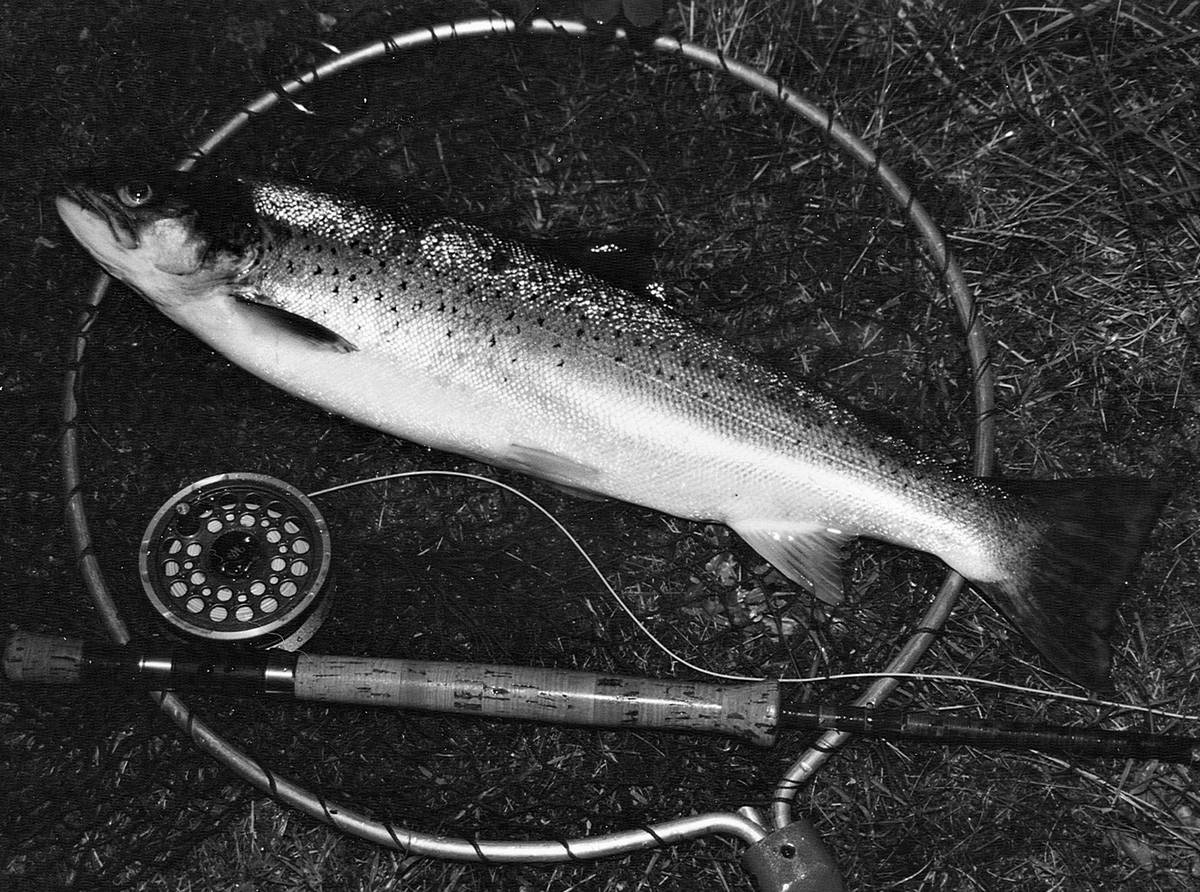
Through the following decade, the Needle Fly was to become my favourite lure for late night sea trout, taking the majority of the fish I caught on rivers as varied as the Earn, Allan, Spey and Border Esk. It also proved useful earlier in the night, when the rivers were running high or cold, particularly in early season. In addition, it accounted for a few salmon in daylight hours. Its great advantage lies in its extremely slim profile. It is also simple and quick to tie. Most usefully, needles are conveniently available in a great variety of lengths and weights, and a silver needle requires no body dressing. I prefer to dress mine very sparsely, aiming to create that tenuous, tantalising, impressionistic lure so favoured by Falkus.
My diary records one of many successful nights on the Earn that season:
It was Friday 2nd July, the day after the historic opening of the new Scottish Parliament in Edinburgh. Heavy rain on my way up to Crieff nearly had me turning back, fearing that I would find a river running, yet again, too high for night fishing. Much to my surprise, when stopping to look over the bridge at Crieff, I noted that the Earn was at its lowest level since the start of the season. I arrived at the parking place at the Coup to find no other cars, not even a bike parked among the bushes behind the wall. It seemed that I might have the pool to myself and, with the rain easing to a steady drizzle, I was very hopeful, particularly as the temperature was forecast to remain around 12°C throughout the night. Ideally, I like night temperatures to fall no lower than 11°C.
The river at the Cement Dyke was indeed at a perfect height for the floating line, with about a yard of stones exposed at the log. Impatient to get started, I began a little early at 10 p.m., wading carefully, casting under the trees well above the top end of the dyke. I had no response until 10.45, when, nearing the lower end of the dyke, I had a sudden, solid take from a good fish which at first slashed worryingly on the surface before settling down to a sub-surface tug o’ war. After a while, the fish seemed to be cooperating and allowed me to draw it towards the net … until it saw me and had a new lease of life. Although the sea trout never left the water, the fight was lively and prolonged. I played it carefully. I didn’t want to lose this one. Eventually it tired and turned on its side, gleaming silver in the half light as I drew it over the net. At 3lb 10oz, this had to be one of the most perfect sea trout, both in shape and colour, I had seen. I was a little disappointed, though, to note that it had taken the dropper fly, a size 8 Mallard and Orange, with palmered ginger hackle, and not the one inch Needle Fly on the tail. The rain had stopped by now and stayed off until 1.30 a.m. It had turned out to be a perfect sea trout night – calm, overcast and very mild. I was encouraged by the continuing activity of the trout and parr, although no sea trout were seen moving.
But it is a mistake to be pessimistic simply because sea trout are not showing and I have often caught fish on nights when hardly a fin seemed to stir. In due course, perseverance had its reward and, at 12.30, having replaced the smaller Needle Fly on the tail of the cast with a longer one, an inch and a half in length, with a sparse dressing of black squirrel tail hair and a couple of strands of Krystal Flash, I had a strong take just opposite the log. This proved to be a smaller but livelier fish, leaping clear of the water several times in its efforts to shake the hook. But again, it came safely to the net, a second stunningly fresh sea trout of 2lb 2oz. Another success for the Needle Fly! I fished on for a while and caught two brown trout, both over half a pound, one of them on the Needle Fly. The sea trout caught tonight were so fresh they must have come into the river on the recent high tide, with the full moon just two days ago, encouraged to move upriver by the recent high water. If the river level remains low and steady, the next week or two could be the best of the season.
And so it proved. I fished the Cement Dyke again on the nights of 5th, 6th and 7th July, taking a further four sea trout of 2½lb, 3lb, 3lb and 4½lb, all on the Needle Fly. Several more sea trout were added in the following weeks and I ended that season with 13 sea trout. The Needle Fly also accounted for two salmon, several brown trout and, unexpectedly, a few good sized grayling.
The season of 2000 again got off to a slow start and early days in April and through May were spent trout fishing. I had many enjoyable days on Loch Coulter, which was managed, together with the much improved fishing on the River Carron, by the Larbert & Stenhousemuir Angling Club. The evening of Sunday 14th May, is recalled in my diary:
The best two hours fishing I’ve had in a long time! The loch had been stocked the day before with some first class trout. The wind was from the south so I walked round to the west bank, making a start at the willow tree. Within a few casts I had a strong take and a two pounder took off like a train before the cast broke just above the tail fly. In the next hour and a half, I caught nine brown trout averaging 1¼lb, keeping four fish for 5lb. Stock fish, yes, but they were all perfectly conditioned trout, indistinguishable from wild fish. Just for something a bit different, I had brought a nine foot Clan cane rod, an old Young’s Beaudex reel loaded with an even older level silk line. The silk line did not shoot easily and the cane rod was, of course, very heavy compared to a modern carbon rod but it flexed right down to the handle and bent double playing these very strong and lively trout. The verdict – hard work but a worthwhile reminder of the good old days, before my time, if only for an occasional short session. The successful flies were a green and ginger spider and red and black spider, both with body dressings of sparkly pearly material marketed by Gordon Griffiths.
I was up on the loch again the following evening:
I had another great evening’s fishing along the west bank of Loch Coulter, this time beyond the willow tree. Using a nine foot fibre glass rod, built some years ago on a Fibatube blank, matched to an Aircel DT5 floating line and two size 10 spiders on a cast of 4lb Drennan Specimen Plus nylon, I had some great sport. Between 7 p.m. and 10 p.m., I caught fourteen trout for a total of 16 pounds, keeping six of the best for the table. Most were stocked brown trout, with the tell-tale blue dot on their bellies. My best fish of the evening, however, was a beautiful fat, hard fighting brownie weighing over 1½lb. It had no blue dot and may have been a trout from an earlier year’s stocking. Most of the trout took the green pearly spider, similar to a Greenwell’s spider but with a brighter green pearly body, with a few caught on a black spider with red pearly body.
Throughout much of June the River Earn ran a little higher than I would have liked and sea trout were conspicuous by their absence, although I did manage to net a lovely fish of 2¾lb on the 28th.
By early July, the weed growth at the Cement Dyke was beginning to make fishing impossible. Over recent seasons, there had been a steady increase in the amount of crowfoot/ranunculus weed in this part of the Earn. The river appeared now to be over-rich in nutrients, whether from the water treatment plants above and below Crieff, trout fish farms on loch and river or from the over-use of farm fertiliser on fields bordering the river. The result was extensive weed thriving in streams where it never had before. It had become well established, growing steadily throughout the early summer, choking many streams to the extent that fly fishing became impossible. To allow fishing at the Cement Dyke from late June on, it had become necessary to wade the width of the stream in order to cut or pull out the long trailing clumps of weed firmly anchored to the riverbed. It grew particularly densely towards the far right bank, where the sea trout liked to lie at night. It was quite a job but, if done thoroughly, allowed the stream to be fished for a few more weeks before the weed built up again. The sea trout were, however, few and far between that July. My impression was of a worrying decline in Earn sea trout stocks and I finished with only five for the season.
During the early months of the 2001 season, fishing was at a standstill due to the Foot & Mouth outbreak. The worst effects were felt, it seemed, in Cumbria but restrictions on movement and activity were imposed over much of the British countryside. During that difficult period, I suffered a marked fall off in tackle sales, as did many other tackle shops and rural based businesses up and down the country. By May, the worst of the outbreak appeared to be over and restrictions, in central Scotland, began to be eased. By mid-May both the Earn and Allan had been reopened to fishing. From late May, I made the most of my club fishing opportunities and the sea trout, very obligingly, appeared early. In twenty two hours of night fishing over ten visits to the River Earn, between 28th May and 2nd July, I caught six sea trout. An improvement on last season!
2002 was to be a year of great change. In June I closed the doors of my tackle shop in Kilsyth for the last time, to begin a new life online, offering fishing flies and related items via a new website, which I had been developing over the previous year or two. To mark the closure of the shop, my wife, Kathy, and I had organised a fortnight’s holiday, the longest we’d had in twenty years, south of the border. The first week of our long awaited break was to be spent in Blaenwern cottage, in Talley, Carmarthenshire, chosen for its proximity to the Rivers Cothi and Towy, where I planned to fish the Llandeilo Angling Association water on a weekly permit.
First edition printed hardback copies of SEA TROUT NIGHTS may be purchased at Coch-y-Bonddu Books