VIII
The Sea Trout
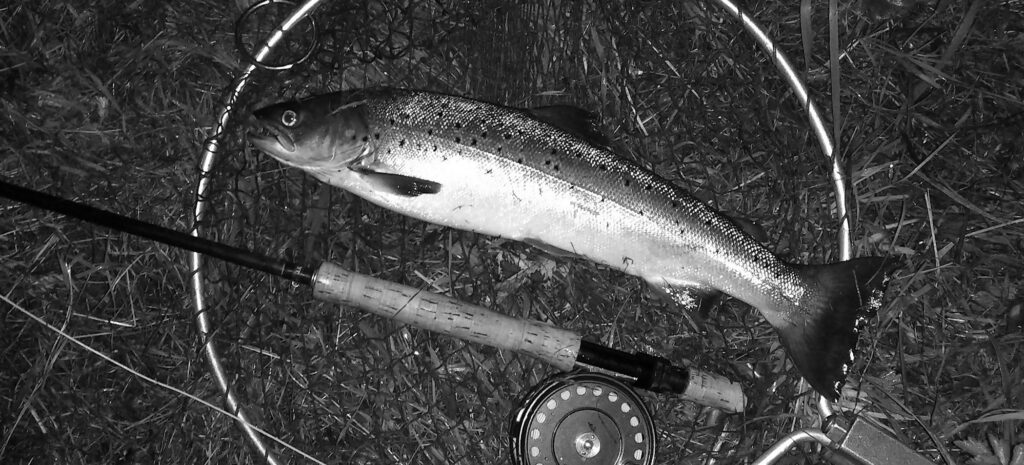
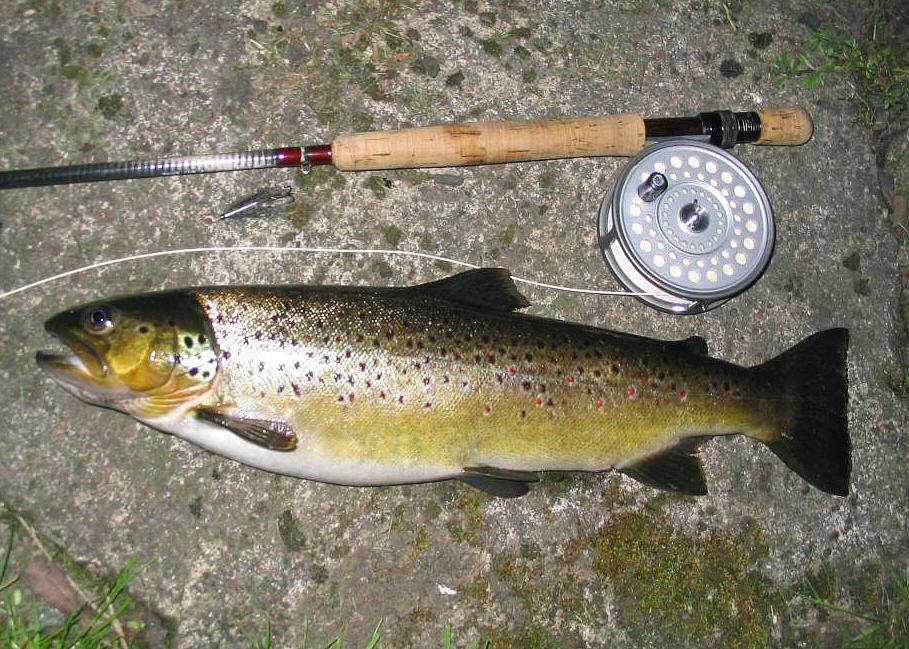
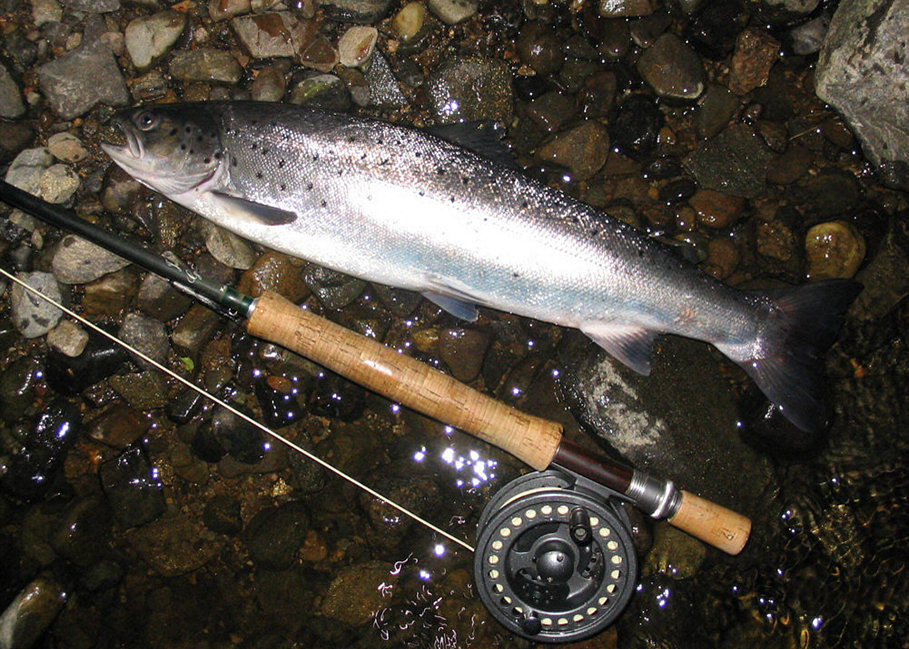
The sea trout and the brown trout, although appearing to be genetically identical, differ greatly in habit and behaviour. They breed together, indeed interbreed, in the same freshwater streams. Some trout, which we know as brown trout (or Salmo trutta), spend their whole lives in the freshwater streams of their birth, while others, which we know as sea trout (or Salmo trutta trutta), become anadromous, migrating to sea after spending two or three years in freshwater, to grow on relatively rich marine feeding before returning to their native rivers to spawn after a year or two at sea. The sea trout, then, is a migratory brown trout. But why should some brown trout migrate while others do not? The answer most probably lies essentially in the nature of the home rivers and their varying capacity to support a trout population.
SHOULD I STAY OR SHOULD I GO?
The young trout must consider very carefully the pros and cons of migration. Should I stay or should I go? A serious question indeed! So much so that an adolescent trout may, on some rivers, go through a bit of an identity crisis. “Am I a brown trout or a sea trout?”, she will ask. “Will I emigrate or stay at home?” The answer will generally depend, as it so often does, on the home environment and parental expectation.
On the short, rocky, acidic streams of the west coast, there will be little to keep the ambitious young female at home and the general expectation will be that she will go to sea as soon as she is old enough, there to make something of herself, to mature into a beautiful sea trout, who will have many suitors when she returns for her annual summer holiday. Indeed, she will, in all probability, have to fight them off. She’ll have a bit of work to do in digging out the redd before her chosen mate, rather belatedly, joins in the fun, which seems all too brief. Then more solitary work covering up the redd. Not exactly an equal partnership! Still, she likes the attention and that seems to make all the travel worthwhile – and it’s always very satisfying to see the young fry when she comes home. There will always be some, however, who are just not cut out for adventure, or who are perhaps expected to follow the perfectly respectable, if slightly boring, family tradition of keeping the home fires burning, but the majority of the young females will elect to get out as soon as they can.
Most of the males, on the other hand, are pretty lazy and can’t be bothered with all the hassle of moving away. They are sexually precocious and generally have their minds on only one thing. They can only get that at home, so they may as well hang around until the chance comes. It may be only once a year but, boy, is the Great October Orgy worth waiting for! It’s not much fun for the rest of the year, though. Things are hard at home and all their energy is needed to keep body and soul together. Some young males will follow the young females to sea, thinking they might be missing out on something. They will eventually return, with the females, as impressive specimens, to while away their time over the long summer holiday, relaxing in the deep shady pools with the beautiful mature females. When the time comes, they will have no trouble seeing off the small brownies and will have their pick of the crop of female sea trout … but they will often wonder if the long courtship and all that sea travel was really worthwhile. Size isn’t everything, after all.
On the richer rivers of the south and east, the expectations are entirely different. Here, the brown trout are the aristocrats, the establishment. Life here is very civilised. There is plenty of everything to go round and order is maintained by a strict hierarchy based on seniority. The younger trout are very respectful and almost always give way to their elders. The young males, however, like young males everywhere, generally think of only one thing – well, two things, really … food and sex – and can be a bit of a handful at times, especially at the back end of the year. The females are brought up to stay at home. Broadening of the horizons through travel is discouraged, although there will always be a few rebellious youngsters, usually female, often with unconventional family backgrounds, who leave home to go to sea – a case of “like mother, like daughter”. They will return for the summer holidays and the Great October Orgy but will generally be shunned by the brown trout community, especially the local females, who resent all the attention they get from the young males.
The wise old trout, though, are happy to see the comings and goings of these “silver tourists”, as they are known locally. They remember the time of the Great Pollution when the whole river trout population was almost wiped out and only recovered through the valiant spawning effort of a few returning sea trout. They now see the emigration of the few young rebels as an insurance against any possible future domestic catastrophe.
Sea trout are to be found primarily in the rivers and coastal waters of northern Europe, ranging from as far south as Spain and Portugal, throughout northern and western France, Great Britain and Ireland, the Baltic and Scandinavian countries and as far north as Iceland. The sea trout is one of our most precious game fish and is known to anglers throughout the British Isles by various names, e.g. as sewin in Wales, peal in the West Country, white trout in Ireland, mort in North West England. The smaller sea trout, returning to their home rivers in their first year of migration, are known by various local names, such as finnock, herling, whitling and smelt. Some of these early returning sea trout may spawn but it is thought that the majority of sea trout spawn only after spending at least a full year at sea, when they will generally have reached a weight in excess of one and a half pounds. Sea trout size varies from river to river and from one region to another, and is largely dependent on the richness of the marine feeding in the local estuaries and along nearby coastlines. The Environment Agency collects information on migratory fish catches every year and provides, on its own website, detailed statistics for all rivers in England and Wales.
Average weight of sea trout caught in British sea trout rivers
(2010 to 2017)
| Wear | Spey | Towy | Dovey | Tavy | Lune | Border Esk | Teifi |
| 4lb | 2.8 lb* | 2.4lb | 2.2lb | 1.7lb | 1.6lb | 1.6lb | 1.5lb |
*Average weight of Spey sea trout reported by anglers fishing the Strathspey Angling Improvement Association water at Grantown on Spey from 2010 to 2017.
In addition to showing the average weights of sea trout caught in rivers in England and Wales, the Environment Agency statistics include further analysis of the weights of rod caught sea trout as reported by anglers, from which we can judge our chances of catching a larger than average fish, or perhaps even a fish of a lifetime. I have to say, however, that size is not, for me, the be all and end all in sea trout fishing. A two or three pounder, hooked on appropriate tackle, is likely to be every bit as athletic and acrobatic as a fish twice the size.
Although all sea trout rivers can produce the occasional whopper, some are more likely to do so than others. The Towy, Dovey, Tyne and Wear, for example, are known for their large sea trout, many in double figures, these large sea trout having made repeated annual spawning runs, migrating to sea each winter after spawning to gain weight before returning again to their home rivers the following summer.
Number of rod caught sea trout in weight categories 2017
| River | 0 – 1 pound | 1 – 4 pounds | Over 4 pounds |
| Tyne | 2 (.1%) | 527 (38%) | 862 (62%) |
| Wear | 0 (0%) | 366 (39%) | 580 (61%) |
| Towy | 296 (34%) | 396 (45%) | 185 (21%) |
| Dovey | 1052 (56%) | 514 (27%) | 315 (17%) |
| Tavy | 96 (52%) | 78 (43%) | 9 (5%) |
| Teign | 166 (52%) | 134 (42%) | 17 (6%) |
| Fowey | 585 (75%) | 161 (21%) | 33 (4%) |
| Lune | 417 (57%) | 268 (37%) | 44 (6%) |
| Border Esk | 203 (34%) | 373 (62%) | 23 (4%) |
| Teifi | 784 (67%) | 310 (26%) | 80 (7%) |
| Spey * | 0 (0%) | (86%) | (14%) |
*Approximate figures for the River Spey based on the author’s sea trout catches over ten seasons fishing on Spey angling association waters. 13% of the total weighed between 1 and 2 pounds, with only 2% less than 1.5 pounds. 73% of the total weighed between 2 and 4 pounds. 87 % of the total were over two pounds. 14% were heavier than four pounds. The author’s heaviest sea trout weighed 8 pounds. The total Spey rod catch of sea trout in 2017 was 1874.
On their return to freshwater, adult sea trout, like salmon, generally cease to feed, subsisting on reserves of energy stored up during months of rich sea feeding. Yet they will, on occasion, take items of food, or an angler’s bait, whether through habit, aggression, curiosity, playfulness or whatever. The task of the angler is to figure out where and when they may be persuaded to do so. He has found that, except in conditions of high water, when sea trout may be taken on fly, bait or spinner in much the same way as salmon, his best chance of catching sea trout will be during the hours of darkness, particularly shortly after dusk and sometimes later, especially when the nights remain warm.
The sea trout, then, presents a unique sporting challenge, drawing many of us irresistibly to the river through the all-too-short summer nights. In some ways, the sea trout is like both the salmon and the brown trout; in others, like neither. A difficult fish to lure during the light of a summer’s day, in all but spate conditions, the sea trout will sometimes play the angler’s game under the cover of darkness. If the salmon is the king of fish, then the sea trout is more akin to the prince of darkness, shunning the bright sunlight of a summer’s day and waking only at nightfall. The sea trout fisher must then be, like the sea trout, a nocturnal creature, venturing out at dusk and fishing through the wee sma’ oors of the night on a river running at or near summer low level, often shrunken by summer drought.
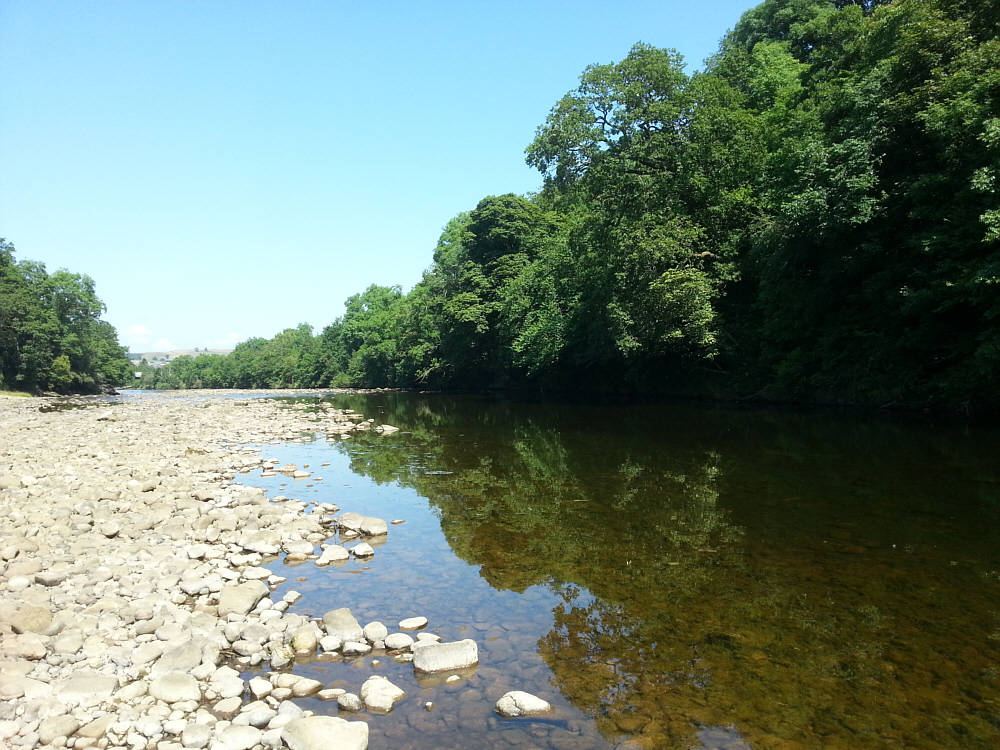
In such low water conditions, the wary sea trout lies inactive during the day but often comes alive with the fall of darkness. Some may move upriver to a new pool; others may sport for a time in the shallower streams before returning later in the night to the security of their earlier lies. It is now that we have our best chance of a fish, especially on a mild night when a good cover of cloud keeps the night temperature in double figures, often extending the period of sea trout activity. But even then, the sea trout seldom plays by the rules. There will be times and places where sea trout come readily to a well fished fly but it is not always easy to predict when and where that might be. The questions “where and when” are of the essence. In the formula for success with sea trout, they make up more than half the equation. I have a feeling I have said it before but it bears repetition – being in the right place at the right time is almost everything. So our first decision must be made. Where are we to fish? What are the right places?
First edition printed hardback copies of SEA TROUT NIGHTS may be purchased at Coch-y-Bonddu Books