IX
Where and When
Few rivers in the British Isles are devoid of sea trout. On the other hand, not all can be reasonably classed as sea trout rivers in the fishing sense, i.e. rivers where a sea trout angler’s efforts might be realistically worthwhile. We might begin by asking, then, “What makes a good sea trout river?” This question may be taken in two ways. Does it relate to a river’s suitability as a sea trout producing river or as a sea trout fishing river? Naturally, to be a good sea trout river, in any sense, a river must have the capacity to produce a good stock of sea trout but not all sea trout producing rivers make good sea trout fishing rivers. Let us examine this further.
Looking first at the characteristics likely to produce sea trout, I would think that a good sea trout river would meet the following criteria:
- To allow the easy passage of returning sea trout, it would be free of any major obstacles, e.g. barriers, nets, estuary pollution.
- It would likely be a fairly acidic, barren water, but with an extensive system of accessible nursery streams, with suitable spawning gravel and clean water, able to sustain a large number of juvenile trout but, importantly, unable to support a similarly large stock of good sized brown trout, thus providing an incentive for the majority of young fish, particularly the females, to run to sea in order to find food. It would have a steady supply of clean, unpolluted water not prone to excessive winter flooding. It would be preferable if the spawning beds were less suited to salmon so that the young trout/sea trout would face less competition for space on the spawning and nursery streams.
- It would be relatively free from predators, e.g. seals, mergansers, goosanders, cormorants, mink, poachers etc.
- The sea trout smolts would have a free, unhindered passage on their seaward migration, with a minimum of predation, pollution and obstruction. There would be no salmon farms within a hundred miles of the river mouth.
- There would be rich marine feeding in the vicinity of the river mouth with a minimum of exploitation of the sea trout’s prey species, in particular there would be no netting of sandeels.
As to what makes a river a good sea trout fishing river, that is perhaps more difficult to define. In addition to the above qualities, I like a river with the following characteristics:
- It would be generally accessible to all and reasonably priced.
- It would be well managed, maintained and policed, preferably by well qualified keepers.
- It would have a good number of deep holding pools, throughout its length, with plenty of tree cover, not so much for fishing but to provide sanctuary for the sea trout, particularly during daylight hours.
- Even at summer low levels, it would have frequent stretches of streamy water suitable for fly fishing – not rough water but with enough flow to fish a fly without the need for hand-lining. This streamy water may be quite shallow – even a foot of water can hold fish at night – and would ideally lie near some deeper holding water.
- The river would not be subject to flash floods, all too common nowadays with the afforestation of the upper catchments of many rivers. It would clear reasonably quickly after summer spates and would have a minimum of weed growth of the kind now common in rivers where an excess of agricultural fertiliser leaches into the river.
- Ideally, the river would have an entirely natural flow, with no man-made obstructions, no hydro-electric schemes and no water abstraction of any kind, allowing sea trout easy access, crucially, during the main months of the fishing season.
Few, if any, rivers are likely to meet all of the above criteria but there are many rivers throughout the British Isles which meet enough of them to qualify as good sea trout fishing rivers. So where are they?
In England, there are many excellent sea trout rivers. The South West, in particular, has its share, the most productive being the Teign, Fowey, Taw, Camel, Dart, Tamar, Tavy, Avon (Devon), Axe and Lynher. In the North West, the Lune, Ribble, Hodder, Kent, Cumbrian Esk and Ehen are worthy of mention and, historically the most productive of all, the Border Esk, although most of its sea trout fishing lies in Scotland. The North East can boast of several first class sea trout rivers, in particular the Tyne and Wear, with the Coquet and Yorkshire Esk having smaller, but worthwhile, runs. The River Till, a major Tweed tributary, is also worthy of attention, known for its particularly early run of sea trout.
Next we come to Wales, long famed for the quality of its sea trout fishing. There are numerous superb sea trout rivers in all parts of Wales, the most productive being the Towy (Tywi), Teifi, Dovey (Dyfi), Clwyd, Conway (Conwy), Nevern, East and West Cleddau, Rheidol, Mawddach, Glaslyn, Taf and Ogmore. All are generally very accessible to both local and visiting anglers, often through the many excellent Welsh angling clubs and associations.
In Ireland, sea trout are taken in the Currane/Waterville system, Kerry; the Casla and Ballynahinch, Connemara; the Feale, Limerick; the Owenduff and Owenmore, Bangor; the Slaney, Wexford; the Bundorragha, Erriff and Dawros, Ballinakill; the Munster Blackwater, Lismore; the Boyne, Drogheda; the Bandon, Cork, to name only a few of the main rivers. In Northern Ireland, we have the Bush, Bann, Faughan, Roe, Derg, Finn and Foyle, all with runs of sea trout.
Last but not least, there are the Scottish rivers. Many of the rivers and lochs to the north and west of the Great Glen were once noted sea trout fisheries – the Rivers Beauly, Conon, Helmsdale, Brora, Naver, Dionard, Laxford, Gruinard, Ewe, Torridon, Shiel, Ailort and Lochy, together with Lochs Maree, Stack, More, Shiel, Eilt and Hope, to name but a few. Sadly, the runs, particularly into our north western rivers and lochs, have declined with the growth of the salmon farms. Further south and east, we have the Findhorn, Nairn, Deveron and, perhaps best of all, the Spey; in the East, there are the Ugie, Ythan, Dee, North and South Esk, Earn, Teith and Allan; in the south, we have the rivers running into the Solway Firth – the Border Esk, Nith, Annan and Cree; A little further up the coast, we have the River Clyde, with its ever improving runs of migratory fish, and the Loch Lomond system, including the Rivers Leven and Endrick; There is also good sea trout fishing to be had on the Islands, particularly in Lewis, Harris, the Uists, Orkney and Shetland.
All of these rivers will, undoubtedly, be worth a cast or two. But a choice must be made. Our first sea trout fishing trip is imminent. The season is fast approaching and our planning has become a matter of some urgency. We will first need up to date information on the sea trout rivers to which we might be able to gain access, perhaps for a week’s holiday or maybe for occasional shorter visits throughout the season. In order to make an informed judgement of the fishing possibilities on the wide variety of British sea trout rivers, what we need ideally are comparative statistics of recent catches.
A useful start can be made by the perusal of all the Trout & Salmon Magazine river reports, both current and historical, we can lay our hands on, together with occasional articles on sea trout topics. More comprehensive detailed statistics, although not always readily available for rivers in all parts of the British Isles, are collected each year by the Environment Agency for rivers in England and Wales and are conveniently made available online through the statistical pages of the Environment Agency website, under the title “Salmonid and Freshwater Fisheries Statistics”. This is perhaps the most useful source of data we have.
Each Environment Agency annual report shows the salmon and sea trout catches for all the major rivers in England and Wales. Each report also gives detailed information, as noted earlier, on the average weights of fish caught and in which months of the season. Also shown are the number of migratory rod fishing licences sold and the number of days spent fishing on the rivers by each licence holder, and much more. For instance, comparative figures are given also for catches in previous years. A study of these statistics will pay dividends when deciding where and when to go fishing for sea trout. We should pay close attention, then, not only to the total yearly sea trout catches for each river but also to the reported rod effort, the number of days fished on each river, the average weight of the sea trout, the most productive months etc. in order to gain a more complete picture of the potential of each river.
Sea Trout Catches Scotland, England & Wales 2010 – 2018
| RIVER | 2010 | 2011 | 2012 | 2013 | 2014 | 2015 | 2016 | 2017 | 2018 |
| Tywi | 2770 | 2609 | 2034 | 1792 | 1479 | 2567 | 1743 | 1079 | 760 |
| Dyfi | 2093 | 2646 | 2134 | 1840 | 1703 | 1836 | 1696 | 1906 | 565 |
| Teifi | 2186 | 2981 | 1945 | 1493 | 2098 | 2247 | 1543 | 1174 | 704 |
| Lune | 1009 | 1090 | 1137 | 1476 | 2037 | 1823 | 1461 | 839 | 490 |
| Ribble | 1584 | 1838 | 1601 | 1153 | 1676 | 1423 | 1365 | 855 | 487 |
| Wear | 1911 | 1843 | 1427 | 1523 | 1323 | 1034 | 976 | 946 | 415 |
| Tyne | 2687 | 1663 | 1379 | 1393 | 1177 | 899 | 1214 | 1419 | 1143 |
| Border Esk | 905 | 1059 | 1199 | 650 | 1033 | 1079 | 1111 | 708 | 944 |
| Spey | 2996 | 1947 | 1170 | 918 | 2660 | 1814 | 1269 | 1874 | 1792 |
| Dee-Aberdeen | 3027 | 1723 | 1396 | 907 | 1437 | 1062 | 975 | 1418 | 975 |
| Clyde/Lomond | 564 | 570 | 538 | 1209 | 1126 | 1626 | 1444 | 1587 | 1329 |
| Nith | 865 | 489 | 742 | 462 | 824 | 730 | 693 | 649 | 376 |
| Earn | 485 | 675 | 715 | 300 | 550 | 775 | 375 | 750 | 425 |
| Annan | 467 | 447 | 485 | 489 | 546 | 380 | 307 | 459 | 264 |
| South Esk | 876 | 593 | 542 | 237 | 611 | 836 | 387 | 649 | 225 |
The table above, based on combined statistics from both the Environment Agency and Scottish Government, shows the sea trout catches on some of the most productive sea trout rivers in Scotland, England and Wales from 2010 to 2018. Note that I have included no reference here to Irish sea trout rivers, as I have inadequate knowledge of, or information on, the rich variety of sea trout rivers and loughs to be found throughout both Northern Ireland and the Republic of Ireland.
As can be seen in the table, catches have fluctuated widely over the period, with some rivers doing better than others. Note the sharp drop in catches on most of the major sea trout rivers in 2018, due, in large part, to the particularly high temperatures and extended drought conditions experienced over much of the country throughout most of that summer, i.e. during the main sea trout fishing months. The Clyde and Lomond catchment has shown an encouraging improvement in sea trout catches from 2013 on, due in part no doubt to the continuing improvement in water quality and habitat of the River Clyde, allied to the good work of the various local angling clubs and associations. There is still a long way to go, however, on the Clyde and Loch Lomond, to get back to anything approaching the catches made in the late nineteen eighties. Indeed, it should be noted that catches on almost all British sea trout rivers are well down on what they were in the nineteen seventies and eighties, possible causes having been discussed earlier in Part One. The angler setting out in search of sea trout today must, therefore, leave no stone unturned in his planning, preparation and approach, if he is to achieve anything like the success of those fortunate to have fished in better times.
Following on from the above table, the graph below shows how the catches on six of the most famous British sea trout rivers have compared over recent years.
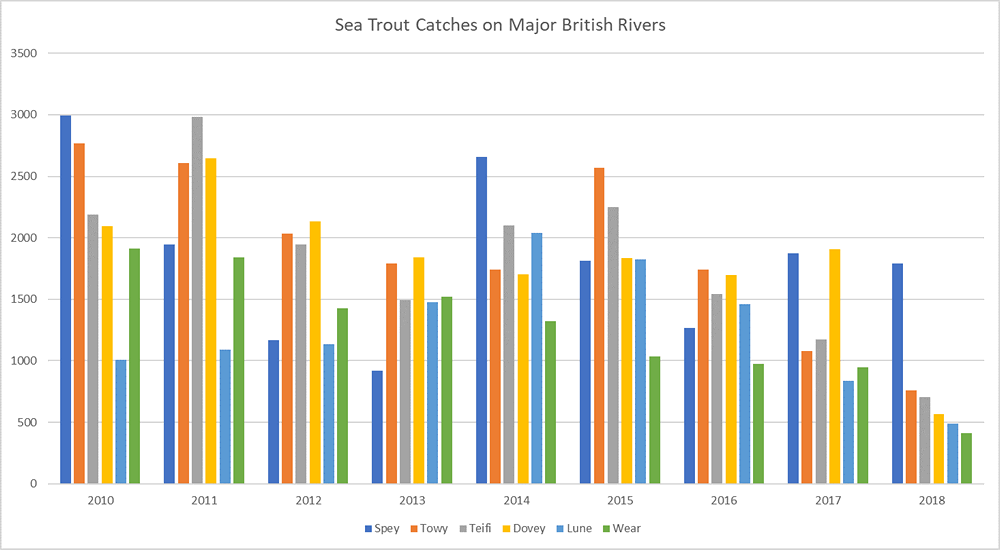
Our sampled catch statistics have focussed specifically on the most famous and historically most productive sea trout rivers in Scotland, England and Wales. As outlined earlier, sea trout may be caught on many more, both north and south of the border, giving the sea trout fisher a wide choice. In addition to the information gleaned from national statistics and angling publications such as Trout & Salmon Magazine, the fisheries we are to consider, be they privately let beats or club/association waters, should have catch records to assist in planning our sea trout fishing trip.
Having reviewed the available catch statistics and records for a variety of sea trout rivers and, after lengthy deliberation, shortlisted a few prime candidates, our final decision may rest on questions of cost and accessibility. We might, for example, book our fishing on an estate or hotel beat, which may give us exclusive access to a particular stretch of river. Alternatively, we might be able to gain access, often to a greater length and variety of fishing, by either joining or buying a visitor’s permit to fish on the water managed by one of the many angling clubs and associations throughout the country.
Good sea trout fishing, while not generally as exclusive or expensive as the best of the salmon fishing, is not always easy to come by. On the top salmon fishing beats, sea trout night fishing may not be available at all, while rods on the more exclusive beats of the most famous sea trout rivers, in the most productive months, may be scarce and will have to be booked well in advance, often at not inconsiderable cost. The inexperienced, occasional or itinerant angler looking for sea trout fishing on rivers throughout the British Isles will often find that local angling associations and clubs offer the best opportunity to gain access to quality fishing at reasonable cost and often at short notice.
Almost all of my sea trout fishing has been done on such association waters, primarily on Scottish rivers. Some of those I have fished, and still do, offer some of the very best sea trout fishing in the country. These are included below, along with others which I have yet to fish and know only by reputation, but I have a little list which I hope to work my way through in the coming seasons.
British angling associations the length and breadth of the country do a great job in managing, maintaining and improving the fishing on our rivers and lochs. Many of these associations offer permits, at very reasonable cost, for prime fishing on some of the best sea trout rivers in the country. Here I list just some of these Scottish, English and Welsh clubs and associations. Let’s begin with a brief summary of a few of the main Scottish angling associations, all offering good sea trout fishing opportunities to the visiting angler, and with which I am most familiar. Many angling clubs and associations now have dedicated websites, which may be found by a quick search online. These sites will provide full information about the fishing and how to obtain permits etc.
ANGLING ASSOCIATIONS IN SCOTLAND
The River Spey, as described in Part One, Chapter VII, is one of the very best sea trout rivers in the UK and some of the most productive summer sea trout fishing on the Spey is to be had on the beats managed by the two main angling associations, which manage between them approximately 17 miles of prime sea trout fishing on the upper middle river above Grantown on Spey, i.e. the Strathspey Angling Improvement Association, based in Grantown on Spey, and the Abernethy and Aviemore Angling Improvement Association, based at Boat of Garten and Aviemore.
Abernethy and Aviemore Angling Improvement Association
The association here controls two prime sea trout beats.
The Aviemore Fishing Beat
The upper beat, the Aviemore fishing, stretches for more than three miles of the left bank of the Spey in and around Aviemore. There are sixteen named pools, suited to a mix of fishing methods.
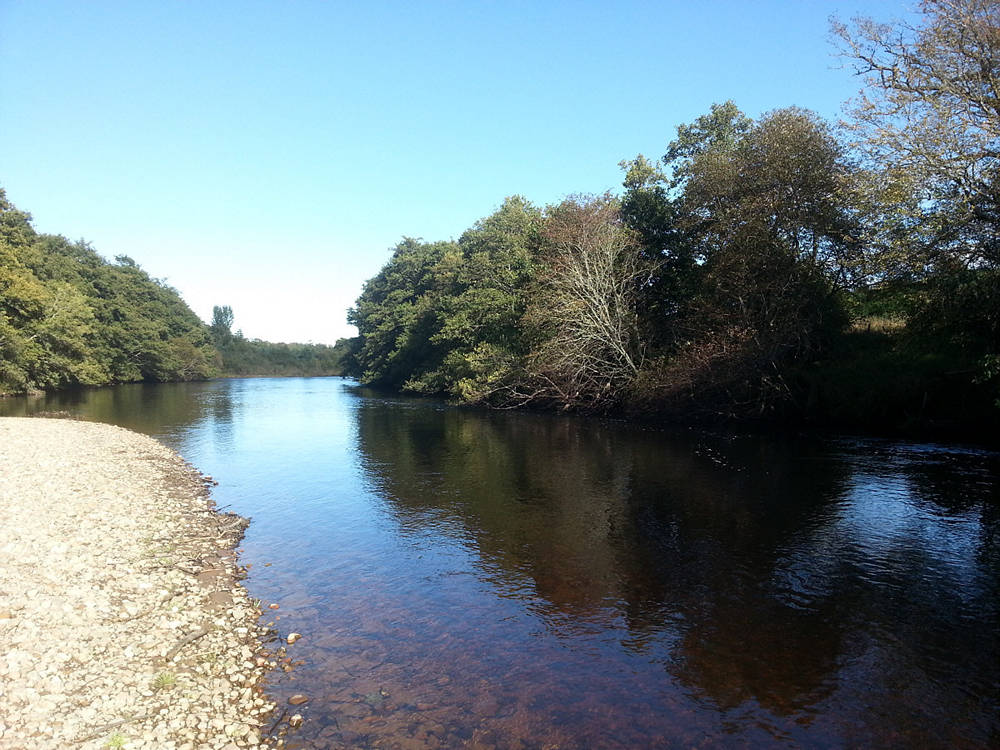
Much of the river here is slow flowing with heavy tree cover along much of the riverbank. Many pools are best suited to worming or spinning but there are also some fine pools eminently suited to night time fly fishing. Night fly fishing begins in earnest once night temperatures begin to rise and the river level has settled to a reasonable night height, usually sometime in June, although sea trout may be present from late May. The most productive months for sea trout are June and July. Day and weekly permits are available in Aviemore.
The Abernethy Fishing Beat
The lower Abernethy beat stretches for six miles, from the Miller’s Pool above the village of Boat of Garten down to Broomhill Bridge, below the outflow of the River Nethy. There are fifteen named pools, suited to all methods, with many excellent night fly fishing pools. Like the Aviemore beat further upriver, the best of the night sea trout fishing is throughout June and July.
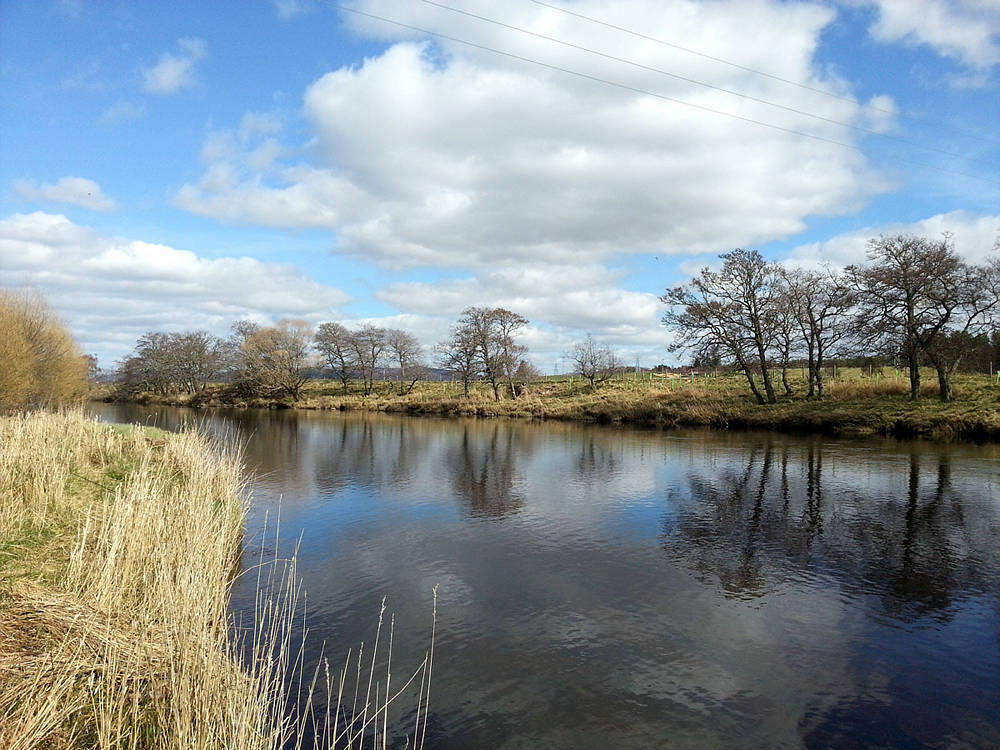
Historically, sea trout catches, on this beat alone, of around 1000 per season were not uncommon, with an average size of about two and a half pounds. Catches have fallen away in recent years but I suspect that this is due in large part to the much reduced fishing effort during the short summer nights, with fewer visiting anglers than in earlier times. The sea trout night fishing here can still be superb. The same applies to the Grantown Association beats described below. Permits for the Abernethy Association water are available at Boat of Garten Post Office.
Strathspey Angling Improvement Association
See Photographs Chapter 7
The association, based in Grantown on Spey, controls seven miles of prime sea trout and salmon fishing on the River Spey, both above and below Grantown. The best of the salmon fishing on this part of the river is from April through May and June and again in September. The sea trout appear in May, with the best of the sea trout fishing in June and July, night catches peaking in late June and continuing through July.
A good year now would see around 500 sea trout caught, averaging around two and a half pounds but, like the Abernethy beats upstream, the number of visiting anglers has declined in recent years, so the fishing effort is much reduced. This can be seen as a bonus for both local and visiting anglers, who often find themselves all alone at night on prime sea trout pools.
Kyle of Sutherland Angling Association
The Kyle of Sutherland Angling Association provides affordable salmon and sea trout fishing on the Kyle of Sutherland, and wild brown trout fishing on the surrounding hill lochs for local and visiting anglers. Anglers may apply for membership of the association. In addition, a range of visitor’s permits are available locally.
Dingwall Angling Club
Dingwall & District Angling Club controls the Estuary Beat of the River Conon, which extends for approximately 2.5 miles (4 km) from below the railway bridge at Conon Bridge down to the start of the Cromarty Firth. The best salmon fishing tends to be in summer/low water conditions and salmon tend to travel through the beat quickly when the water is high, so salmon & grilse catches tend to be modest in the spring, and peak between June and August. In the 2006 season, 103 salmon & grilse were caught on the club waters, but the catch return for 2007 was just 24 as high water prevailed for much of the season. The Estuary Beat is entirely tidal and is best fished in the hours either side of low tide, when access is much easier. The angling club have divided their water into 2 beats – a top and bottom beat – with the boundary being below the anchor pool.
Top Beat
The top beat can be fished for salmon, grilse or sea trout with the pools immediately below Conon Bridge being the most productive.
Bottom Beat
Fishing on the Bottom Beat is for sea trout and finnock only. Because the fishings are tidal they benefit from sea trout and finnock being present from April through to September. The angling club beat can still produce large numbers of sea trout, and as recently as 2002, 321 sea trout and 254 finnock were caught. These figures exclude finnock of 12″ (30.5cm) or less.
Beauly Angling Club
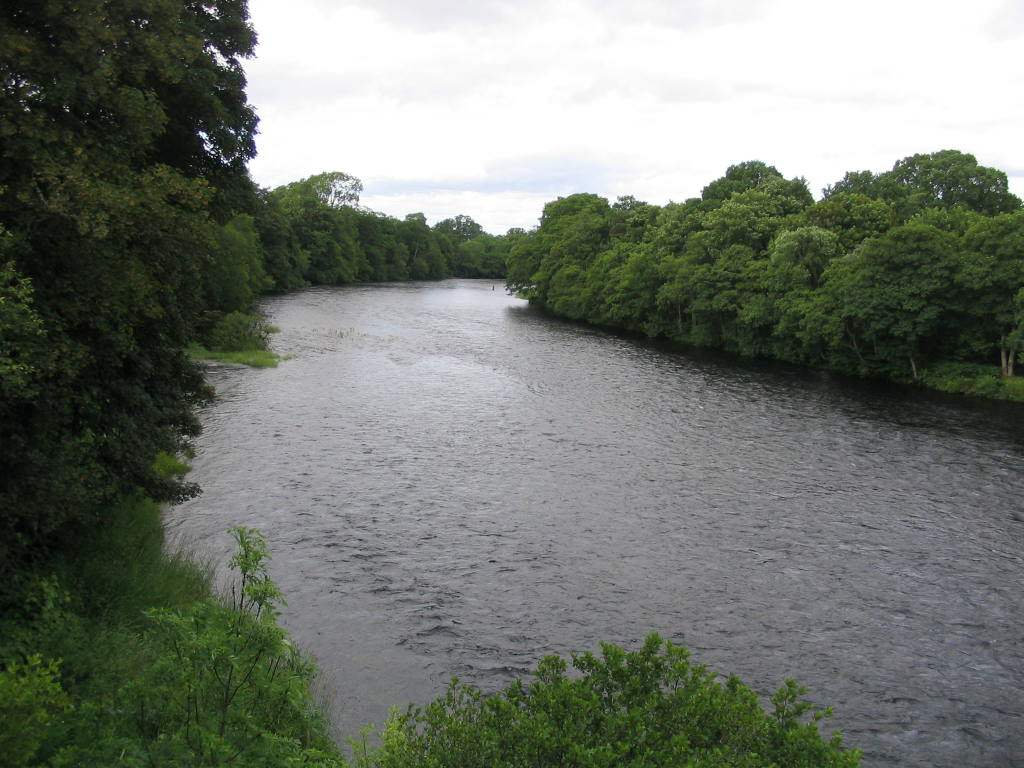
Beauly Angling Club provides members with affordable access to the River Beauly and the firth for salmon and sea trout. The fishing on the River Beauly extends downstream from Lovat Bridge to Wester Lovat; this equates to around 7 miles of bank fishing with ten named pools. The fishing on the inner half of the Beauly Firth is also included in club membership offering saltwater fly fishing, spinning and bait fishing predominately for sea trout. The club is open to potential members from all over the Highlands & Islands. Associate membership is available for other UK residents, and permits are available for visitors.
Inverness Angling Club
Inverness Angling Club (IAC) offers angling for salmon, grilse and sea trout on some three miles of double bank fishing on the River Ness, where there is always a chance of a fish.
The five year average up to 2016 was 185 salmon and grilse. An estuary only permit is offered for sea trout fishing. Permits are available from Graham’s of Inverness, the leading tackle dealer located in Castle Street.
Nairn Angling Association
The Nairn Angling Association holds 8 miles of fishing offering the local and visiting angler some of the best association water in Scotland. The fishings are over some 7 beats and include some excellent fly water. The Nairn season runs from 1st March to 7th October and day or weekly tickets are available to visiting anglers. Methods are fly and worm, with spinning also allowed when water levels are above the spinning marks. For a relatively small river it can be very productive, with salmon caught from the start of the season in March. Sea trout, as in most other Moray Firth rivers, are perhaps less abundant than they once were.
Forres Angling Association
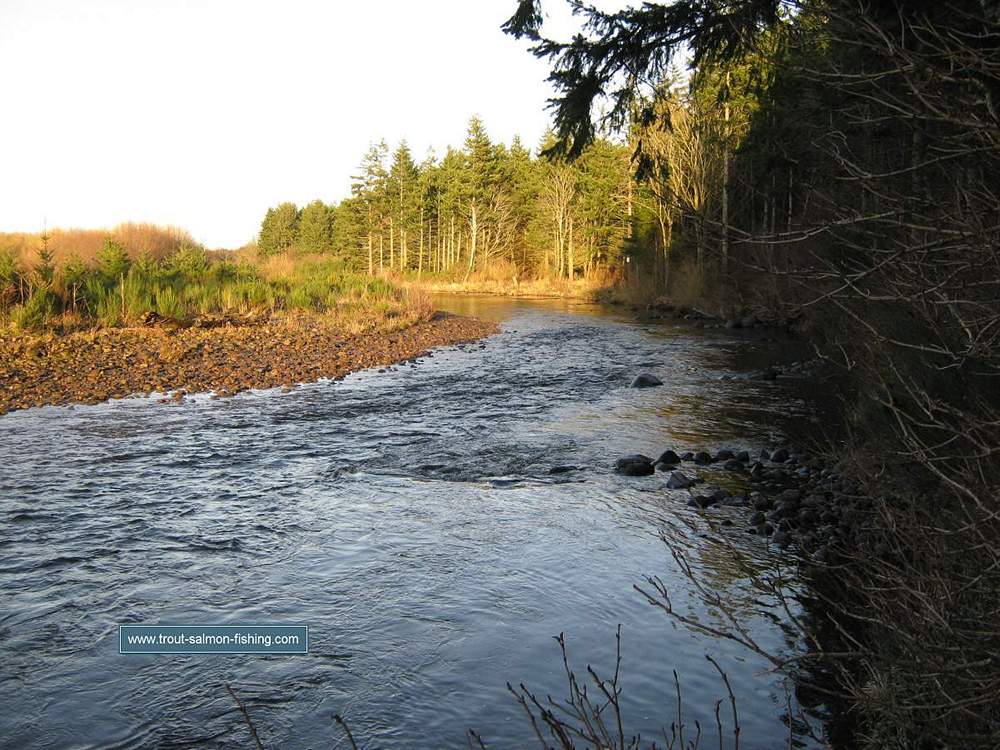
Forres Angling Association controls four miles of double bank salmon and sea trout fishing on the lower River Findhorn. Some pools are fly only and have high and low bank fishing. The best of the sea trout fishing is on the lower tidal pools. Day and weekly permits are available to visiting anglers throughout the season, available from the local tackle shop in Forres.
Turriff Angling Association
Turriff Angling Association have ¾ mile of fishing on the River Deveron just outside Turriff. The association caters for visiting anglers with both daily and weekly tickets, boasting eight pools which will fish in all heights of water. Although mainly fly fishing, spinning and worming are allowed in periods of high water. Salmon of 15lb are not uncommon whilst a 30lb fish was landed and returned in October 2002. Sea-trout arrive in June and average 2 to 3lb but the Deveron does yield a number around 7lb each season. Despite its limited length (although the bottom half is double bank) it can be a prolific beat in higher water. In the year 2002 it came in the top five beats on the river in the number of fish caught. From May until 31st October, four rods are available by weekly or daily visitor permit.
River Ugie Angling Association
The River Ugie is a small spate river which enters the sea at Peterhead in Aberdeenshire. At one time the Ugie was one of the most productive sea trout rivers in Scotland, with huge numbers of sea trout and finnock recorded. Today, around 300 sea trout and 100 salmon are caught each season. Full season, weekly and day permits are available to all.
Aberdeen and District Angling Association
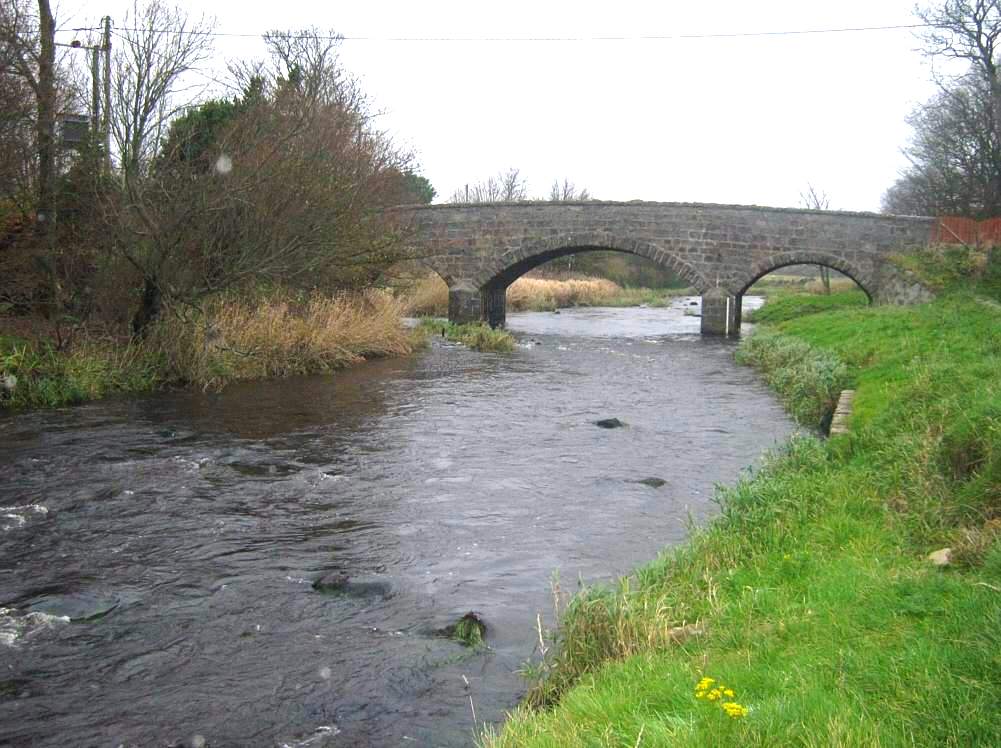
Aberdeen Angling Association offer salmon and sea trout fishing permits for 30 miles of fishing on the River Dee, River Don and River Ythan in Aberdeenshire, north east Scotland. In addition to day and weekly visitor permits, association membership is available to all at most reasonable rates.
Kirriemuir Angling Club
Founded in 1919, the Kirriemuir Angling Club provides salmon and sea trout fishing on the Rivers South Esk, Prosen (both fly only) and Isla. The club fishings are located in Glen Clova, Glen Prosen and Glen Isla, around 14 miles in total, in the foothills of the Grampian Mountains and provide excellent angling for members and day/weekly permit holders. Full club membership is available, with weekly and day permits available from local outlets.
Crieff Angling Club
See photograpgs Chapter 4
Crieff Angling Club, as we have seen in Part One, Chapter IV, controls some five miles of prime sea trout fishing on the River Earn in Perthshire. There are two main beats: Upper Strowan and Drummond Castle, both of which have nice pools for night fly fishing. Club country membership is available to all, at reasonable cost, although there may be a wait for a place, and daily and weekly permits are available at reasonable rates for the sea trout fishing through the prime summer months of June, July and August, with the sea trout catches usually peaking in July.
The best salmon fishing months are usually September and October. A normal year would see something between 100 and 200 sea trout recorded on the club beats.
Comrie Angling Club
See photograpgs Chapter 2
As described in Part One, Chapter II, the Comrie Angling Club manages the fishing on the River Earn above and below Comrie, with season, weekly and day permits available.
The club also controls the fishing on much of the River Ruchill, a major Earn tributary, in Glen Artney.
Allan Water Angling Association
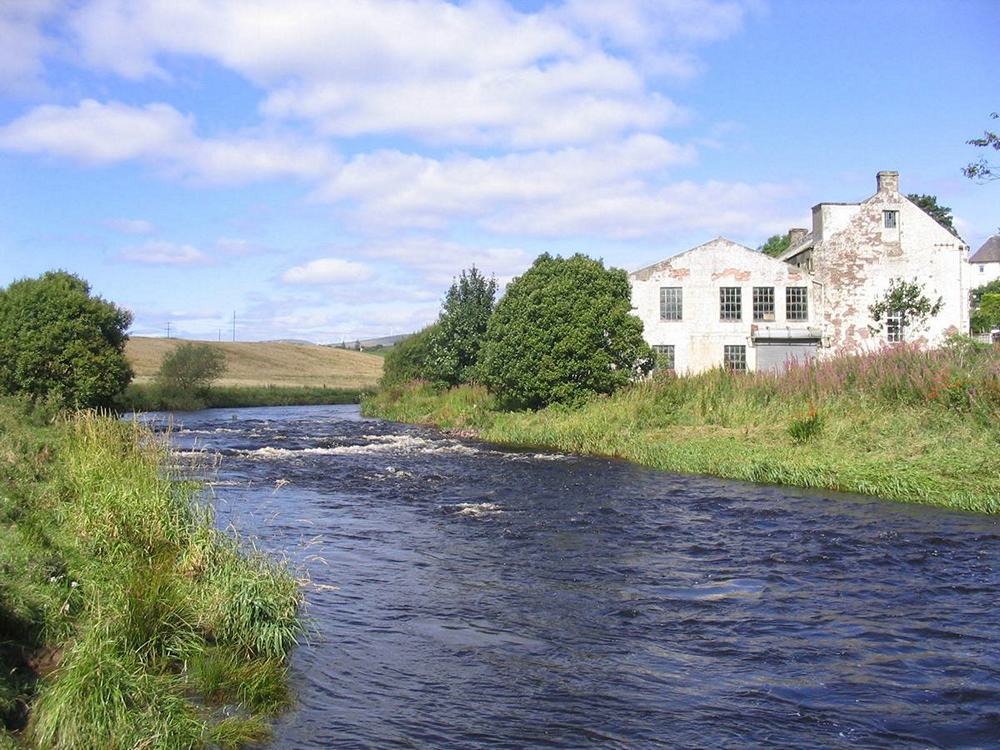
The Allan Water Angling Improvement Association controls approximately 15 miles of mostly double bank fishing on this major tributary of the River Forth. The association offers affordable brown trout, sea trout, and salmon fishing, with visitor permits readily available to all. The season runs from 15th March to 6th October for trout and 31st October for salmon and sea trout. See chapter III in Part One.
Border Esk and Liddel Angling Club
The Border Esk, as described in Part One, Chapter IV, is one of the best sea trout rivers in the south of Scotland. Most of the fishing lies in Scotland but with the outflow into the Solway on the English side of the border, a situation which has been the cause of serious administrative and jurisdictional difficulties in recent years. In common with other rivers flowing into the Solway Firth, sea trout catches are significantly lower than in earlier decades. A normal year would now see something between 500 and 1000 sea trout recorded on the whole river.
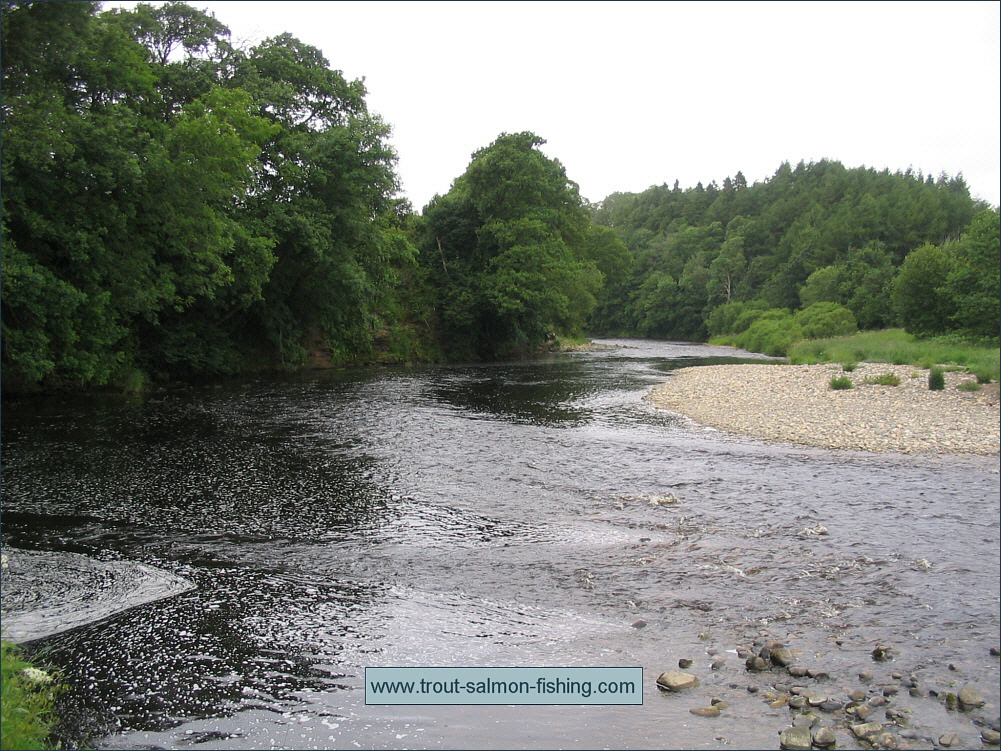
Much of the fishing on the Scottish side of the border, previously managed directly by Buccluech Estates, is now controlled by the Esk and Liddel Angling Club, formed in 2011. The club offers day, week and season permits on a variety of beats, covering around twenty miles of fishing, on both the main river around Langholm and Canonbie and on the upper and lower beats of the main tributary, the River Liddel.
Upper Annan Angling Association
The Upper Annandale Angling Association offers excellent fishing for salmon, sea trout, wild brown trout and grayling on eight miles of the River Annan.
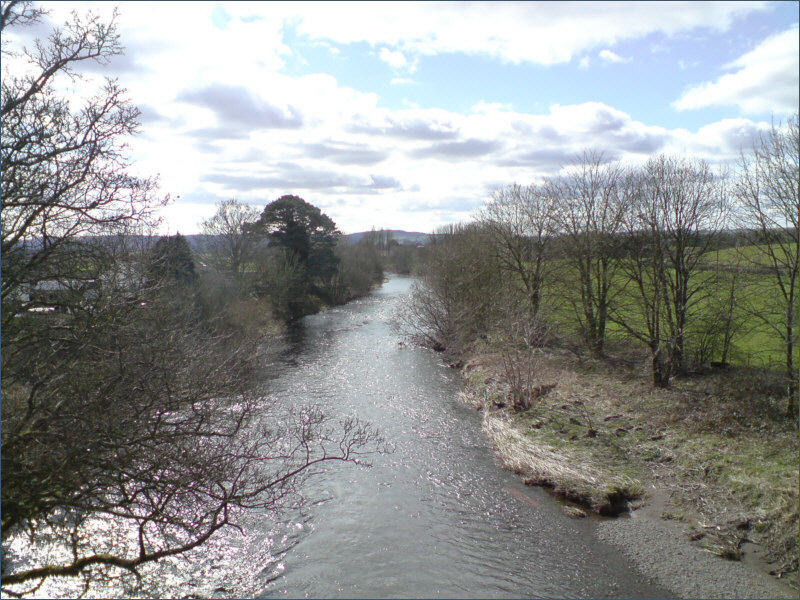
The association controls the fishing on two stretches of the Annan – the Applegarth Beat, a 4 mile beat north of Lockerbie and the Upper Beat, another 4 mile beat south of Moffat, mostly both banks. Day and weekly permits are available at affordable prices throughout the season.
Dumfries and Galloway Angling Association
DGAA control the fishing, for all species, on a 2.5 mile double bank stretch of the lower River Nith. Being at the lower end of the river, fresh fish can be encountered throughout the season, from the first day to the last. The season runs from the 25th of February until the 30th of November for migratory fish, one of the longest open seasons in the country. Season, weekly and day permits are available to visiting anglers.
Newton Stewart Angling Association
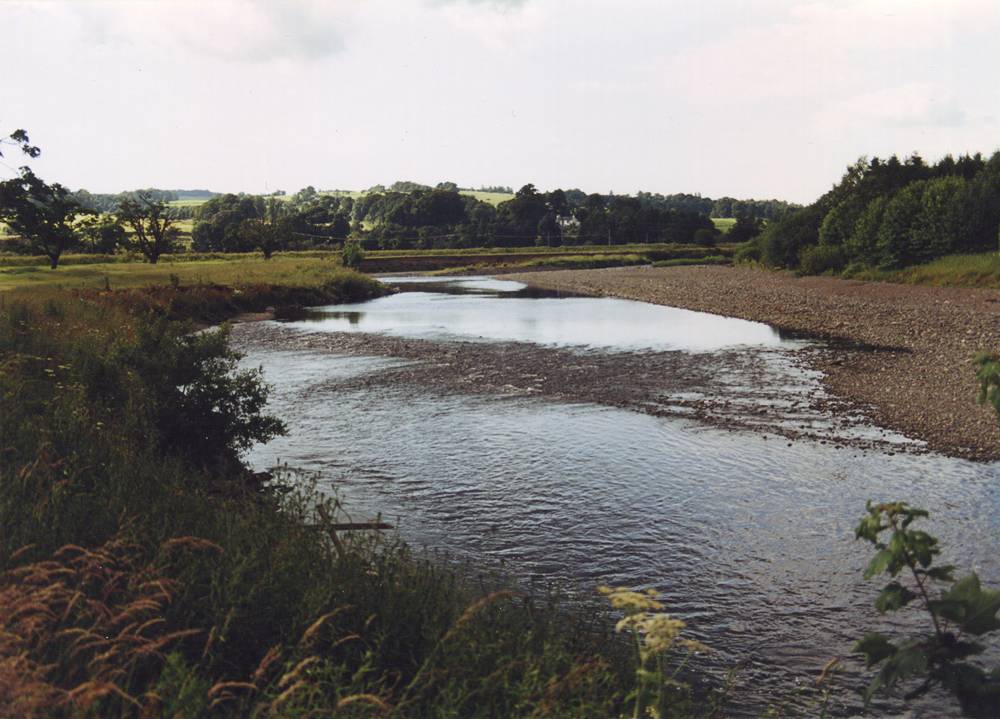
Salmon and sea trout fishing is available on the River Cree on a daily or weekly basis for visitors, through association membership for local permanent residents, or through associate membership for non-residents. All options represent excellent value for money.
Loch Lomond Angling Improvement Association
See photographs Chapter 1
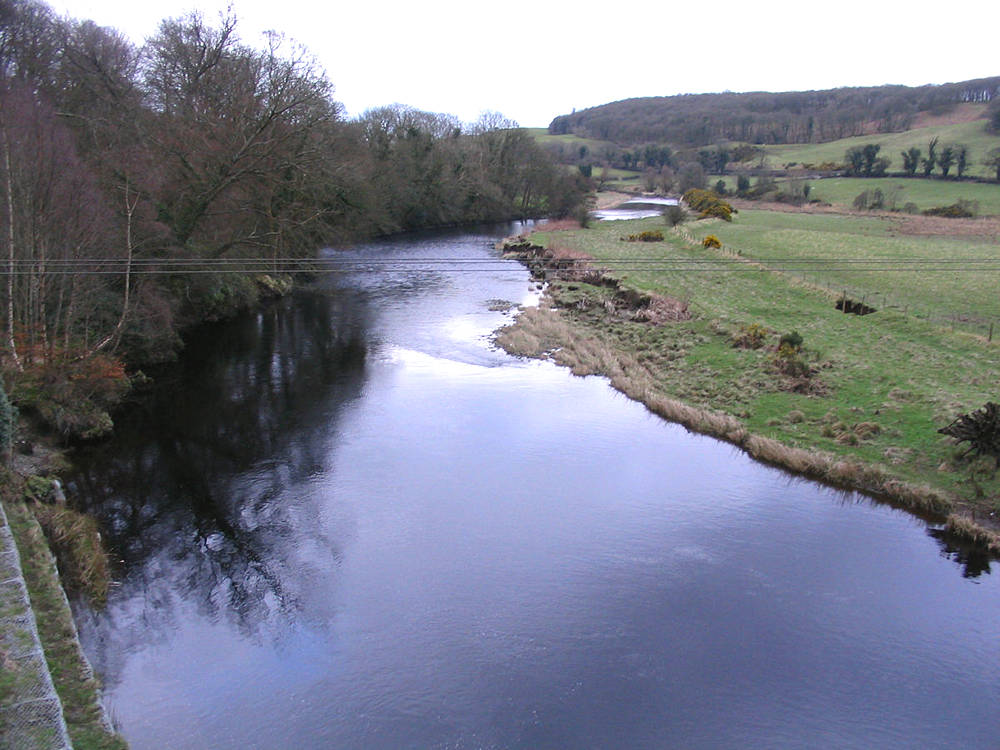
The Lomond system offers some excellent sea trout fishing with day, weekly and season tickets available. Sea trout, fresh off the tide, are caught from early in the season on the River Leven, then on Loch Lomond and, later in the summer, in the tributaries, the main interest being in the River Endrick, which, given water, has good runs of both sea trout and salmon from around July onwards to the end of the season in October. Both salmon and sea trout can be taken on the fly on a falling spate and, when the spate has run off and the river clears, sea trout can be taken in one of the many likely pools at night on the fly. The sea trout fishing on the Endrick may not be as good as in earlier decades, when fabulous catches of sea trout were once commonplace, but good catches are still made by those who find themselves in the right place at the right time. See Chapter I.
Orkney Trout Fishing Association
The Orkney Trout Fishing Association manages the fishing on Orkney. In addition to its superb brown trout loch fishing, on famous lochs like Harray, Swannay, Boardhouse and Stenness, there are excellent opportunities to catch sea trout in the saltwater around the many miles of the Orkney coastline. The best of the sea trout fishing is to be had in the spring months of March and April and again in the autumn months. Membership of the OTFA is the most active way for the individual angler to support the essential work of conservation and preservation of the trout fishing in Orkney. For a nominal sum, visiting anglers may use all the facilities of the association and also ensure the future of some of the best wild trout fishing available.
ANGLING ASSOCIATIONS IN ENGLAND
Bishop Auckland Angling Club
The River Wear is one of England’s top sea trout rivers, vying for top spot in recent years with the Lune, Tyne and Ribble. Catches over the last ten years or so have fairly consistently been in excess of 1000 per season. There are many angling clubs, associations and syndicates managing the fishing on the River Wear, one of the foremost being the Bishop Auckland District Angling Club. The Bishop Auckland club is one of the longest established game angling clubs in the north east of England, offering 17 miles of excellent fishing on the middle reaches of the Wear and a further four miles on the upper reaches of the Tees.
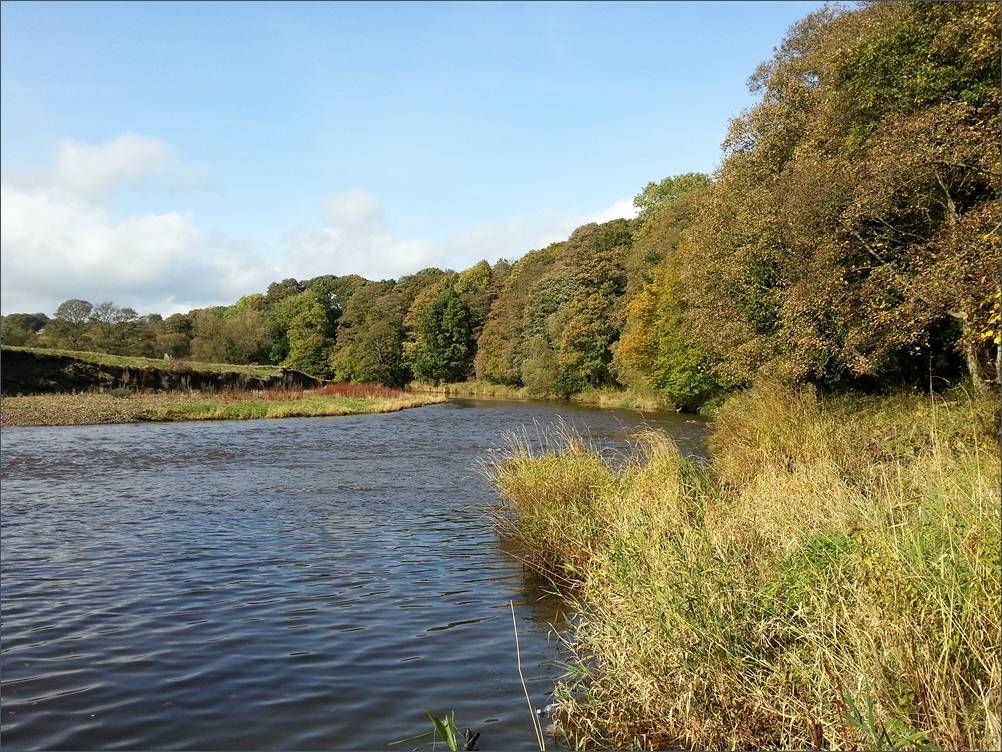
The Wear has a spring run of large sea trout but the main run occurs from early summer onwards, with catches peaking in late summer and autumn. Sea trout are of a good average size with fish over five pounds appearing regularly in catch reports and double figure fish not uncommon. Membership of the club is open to all at reasonable rates with day permits also available. The club runs an excellent website.
Wear Sea Trout Catch 2007 to 2018
| 2007 | 2008 | 2009 | 2010 | 2011 | 2012 | 2013 | 2014 | 2015 | 2016 | 2017 | 2018 |
| 1356 | 2080 | 1271 | 1911 | 1843 | 1427 | 1523 | 1323 | 1034 | 976 | 946 | 415 |
Tebay Anglers
Tebay Anglers, founded in 1944, manage some 15 miles of brown trout, sea trout and salmon fishing along the River Lune and its tributaries, from Kelleth to the Sedburgh end of the Fairmile. The migratory trout normally reach the area sometime in June and salmon generally appear from August. Season, weekly and day permits are available.
Lune Sea Trout Catch 2007 to 2018
| 2007 | 2008 | 2009 | 2010 | 2011 | 2012 | 2013 | 2014 | 2015 | 2016 | 2017 | 2018 |
| 1120 | 1068 | 1262 | 1009 | 1090 | 1137 | 1476 | 2037 | 1823 | 1461 | 839 | 490 |
Lancaster and District Angling Association
LDAA control five miles of salmon and sea trout fishing on the lower River Lune and offer reasonably priced membership, i.e. local membership for anglers living within a 12 mile radius of Lancaster and associate membership for anglers outside of that area. You can expect a wait, however, for an associate membership. Day permits are available on weekdays only, valid from 8 a.m. to 10 p.m.
Kent Angling Association
The River Kent, which flows through the Cumbrian town of Kendal in the Lake District, is an excellent sea trout river, regularly recording in the region of 500 sea trout in a season, with a good average size of between two and four pounds. Sea trout begin to run the lower river in May with the best of the sea trout sport on the association beats in July and August. The association, founded in 1848, controls the sea trout and salmon fishing on around eight miles of river, both above and below Kendal, and is open to both local and visiting anglers, with very reasonably priced day and weekly permits available also.
Kent Sea Trout Catch 2007 to 2018
| 2007 | 2008 | 2009 | 2010 | 2011 | 2012 | 2013 | 2014 | 2015 | 2016 | 2017 | 2018 |
| 456 | 335 | 469 | 731 | 494 | 534 | 527 | 472 | 419 | 620 | 274 | 294 |
Upper Teign Angling Association
The Upper Teign Angling Association offers around twelve miles of trout, salmon and sea trout fishing on the upper reaches of the river Teign in the Dartmoor National Park. Membership (if places available) is open to visiting anglers and day permits are always available. Almost all sea trout are caught at night and the sea trout fishing is restricted to fly only. The night fishing usually gets underway in May and continues through the summer months. Average weights in early season, May and June, range from two to four pounds. The average size drops in July and August with the arrival of increasing numbers of school peal. Larger fish make an appearance again in September, though sea trout tend to be colouring up by that time.
Teign Sea Trout Catch 2007 to 2018
| 2007 | 2008 | 2009 | 2010 | 2011 | 2012 | 2013 | 2014 | 2015 | 2016 | 2017 | 2018 |
| 530 | 589 | 833 | 801 | 514 | 717 | 807 | 676 | 463 | 277 | 364 | 352 |
Dart Angling Association
The Dart Angling Association manage nine miles of salmon, trout and sea trout fishing on Devon’s River Dart. Membership is open for application, although membership is limited to 120 members. A limited number of day and weekly permits are available for salmon and sea trout fishing. The larger sea trout, averaging 2 to 4 pounds but among them double figure fish, arrive in early season. They are joined later in the season by the smaller school peal. A good year would see a recorded sea trout catch of around 300 sea trout for the river.
Dart Sea Trout Catch 2007 to 2018
| 2007 | 2008 | 2009 | 2010 | 2011 | 2012 | 2013 | 2014 | 2015 | 2016 | 2017 | 2018 |
| 334 | 242 | 486 | 519 | 553 | 261 | 611 | 292 | 123 | 167 | 197 | 132 |
Liskeard and District Angling Club
The club controls the game fishing on stretches of several rivers, including the Fowey, Camel, Lynher and Inny in south east Cornwall. The club offers reasonably priced membership (limited to 250) and visitor permits are available in local shops. The rivers offer excellent sea trout fishing opportunities, with the Fowey recording an annual catch of around 500 sea trout.
Fowey Sea Trout Catch 2007 to 2018
| 2007 | 2008 | 2009 | 2010 | 2011 | 2012 | 2013 | 2014 | 2015 | 2016 | 2017 | 2018 |
| 752 | 519 | 1073 | 1174 | 866 | 725 | 911 | 662 | 741 | 452 | 779 | 292 |
Launceston Anglers Association
Established in 1958 as an affordable option for game fishermen in the Launceston area, the association currently have access to more than thirteen miles of fishing on the rivers Tamar, Carey, Ottery and Inny. Membership of the association is limited to 100 members but places may be available. Day and weekly permits are also readily available through local outlets. The River Tamar is a decent sea trout river with an annual catch of around 300 sea trout.
Tamar Sea Trout Catch 2007 to 2018
| 2007 | 2008 | 2009 | 2010 | 2011 | 2012 | 2013 | 2014 | 2015 | 2016 | 2017 | 2018 |
| 252 | 298 | 608 | 580 | 430 | 365 | 488 | 356 | 324 | 353 | 393 | 205 |
Bodmin Anglers Association
Set up to provide reasonably priced fishing for local anglers on the River Camel, the club now accepts members from outwith the local area and also sell temporary memberships (day and weekly permits) at very reasonable rates. The club controls the game fishing on several miles of the River Camel with beats on the lower, middle and upper reaches of the river. The River Camel has a good run of sea trout, with annual catches often in excess of 300.
Camel Sea Trout Catch 2007 to 2018
| 2007 | 2008 | 2009 | 2010 | 2011 | 2012 | 2013 | 2014 | 2015 | 2016 | 2017 | 2018 |
| 441 | 333 | 581 | 903 | 611 | 530 | 401 | 356 | 356 | 283 | 508 | 145 |
The Plymouth and District Freshwater Angling Association
The River Tavy has a good run of sea trout, with a catch of 313 recorded in 2016. The PDFAA offers fishing for trout, sea trout and salmon on three beats of the Rivers Plym and Tavy. Options include full membership and day tickets, offered at reasonable rates.
Tavy Sea Trout Catch 2007 to 2018
| 2007 | 2008 | 2009 | 2010 | 2011 | 2012 | 2013 | 2014 | 2015 | 2016 | 2017 | 2018 |
| 122 | 285 | 296 | 642 | 480 | 228 | 329 | 236 | 249 | 313 | 196 | 185 |
Tavy Walkham and Plym Fishing Club
The Tavy Walkham and Plym Fishing Club manages some of the fishing on those rivers and, although some beats are reserved for members, day and weekly permits are available to visiting anglers for much of their waters. Spinning is permitted for sea trout and this can be the most productive method when the rivers are in spate but when the rivers are running low and clear, wet fly fishing in the day, or even better at night, can produce good bags and these are the methods preferred by locals.
Prince Albert Angling Society
PAAS is one of the largest clubs in Europe with a membership approaching 10,000. Members have access to more than 200 game and coarse fishing waters throughout the North of England and Wales at very low cost. Sea trout fishing on various river beats include the Ribble, Border Esk, Liddel, Cumbrian Esk, Lune, Mawddach and many more. Membership is open to all, although there may be a wait for a place. Fishing is available only to members.
Felling Fly Fishers
Based in the north east of England, club members have access to varied salmon and sea trout beats on the Rivers North Tyne, Wear, Coquet, Till and Tweed, in addition to lake trout fishing. Membership is by application.
Tyneside Anglers Syndicate
TAS offers access through membership to game fishing on a variety of rivers throughout the north of England and southern Scotland, such as the Tyne, Rede, Wear, Tweed, Whiteadder, Border Esk and Ettrick.
ANGLING ASSOCIATIONS IN WALES
Teifi Trout Association
The Teifi Trout Association manages the fishing on the lower thirty miles of the River Teifi in west Wales. Larger sea trout, some in double figures enter the river as early as late March, when some are taken in high water, mainly by spinning. It is not until May and June that night fly fishing begins in earnest. Sea trout numbers increase through early summer, peaking in mid-July. A good year on the association water would see catches of more than 1000 sea trout and a few hundred salmon. Season, weekly and day permits are available to all at reasonable rates.
Teifi Sea Trout Catch 2007 to 2018
| 2007 | 2008 | 2009 | 2010 | 2011 | 2012 | 2013 | 2014 | 2015 | 2016 | 2017 | 2018 |
| 1774 | 1746 | 2076 | 2186 | 2981 | 1945 | 1493 | 2098 | 2247 | 1543 | 1174 | 704 |
Llandysul Angling Club
Llandysul Angling Club manages the fishing on thirty miles of the middle and upper Teifi. As on the TTA waters downstream, the largest sea trout tend to run early in the season and some are taken in April and May. Night fly fishing is the preferred method in the lower flows of summer, the main run of fish in the one to four pound class being taken from June to August, with larger fish again appearing towards the end of the season in mid-October. The club offers season, weekly and day permits to the visiting angler and limited full membership places are also available.
Llandovery Angling Association
The association controls ten miles of salmon and sea trout fishing on the River Towy (or Tywi) – seven miles on the upper beat above the town and three miles on the lower beat below the town. The upper river channel is predominantly narrower, and runs through rocky gorges interspersed by deep holding pools. This water is perhaps more suited to worming and spinning, while the water below the town is classic sewin fly water well suited to night fly fishing. Given a wet spring, early run large sewin may be caught as early as April and May, with the main run of sewin in the two to four pound class arriving from mid-June onwards. Late summer might see the arrival of smaller shoal sewin and salmon become targeted towards the end of the season. Full membership is available at reasonable rates, in addition to weekly and day permits.
The Llandovery Angling Association is just one of many clubs and associations controlling the sea trout fishing on the Towy.
Towy Sea Trout Catch 2007 to 2018
| 2007 | 2008 | 2009 | 2010 | 2011 | 2012 | 2013 | 2014 | 2015 | 2016 | 2017 | 2018 |
| 3271 | 2570 | 2845 | 2770 | 2609 | 2034 | 1792 | 1479 | 2567 | 1743 | 1079 | 670 |
Llandeilo Angling Association
The Llandeilo Association controls the sea trout fishing on nine miles of the middle River Towy (or Tywi) and offer membership, day and weekly permits to all at very reasonable rates. The club also has one and a half miles of the River Cothi, the main tributary.
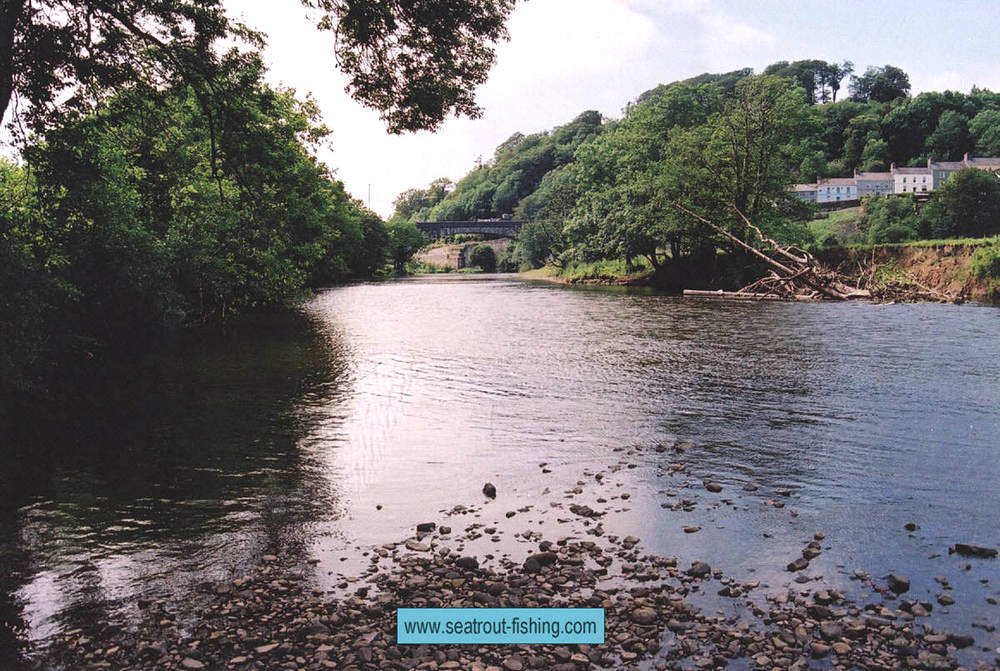
The Towy is renowned for its large sea trout or sewin, which can be taken from early in the season, followed from June onwards by the main run of sea trout, with smaller shoalies of up to around two pounds in weight appearing increasingly among them as the summer progresses, although double figure sea trout might be caught throughout the season on the association water. In high water sea trout and a few salmon are taken during the day on both spinner and fly, while night fly fishing is the most productive method in the lower flows of summer. See Chapter V.
Cross Hands and District Angling Association
The association, formed some fifty years ago by retired miners and based in Cross Hands Workingmen’s Club, also offers very affordable fishing on the River Towy. The association controls some twelve miles of salmon and sea trout fishing on the Rivers Towy, Cothi and Teifi. Waters stretch from above Henllys Fach beats between Llandovery and Rhandirmwyn at the top of the system to the Pump House beat just off the tide below Capel Dewi.
Other waters include Abermarlais Waters stretching for two miles between the road bridge at Llangadog and the Llanwrda railway bridge. The old beat 5 of the Golden Grove fishery is the newest club water and Typicca beat 6 is presently rented. Next downstream is the Glantowi waters (layby beat) and the Llwynfortune (Dai Boots beat). On the Cothi there are the Glancothi Waters at The Cresselly Arms, the Dyffryn Uchaf waters above Yniswen bridges and Cwmcothi water. The Teifi can also be fished at Brynteifi Waters for 2 miles single bank at Pentracwrt from Allt y Cafan Bridge through Cwmisdwr farm. Fishing is through club membership and by daily and weekly permit.
New Dovey Angling Association
The River Dovey (or Dyfi) is one of the best sea trout rivers in Wales, with an annual catch in the region of 1500 sea trout, many of them in double figure weights. Much of the best of the fishing is controlled by the New Dovey Association, which has about 15 miles of the fishing. It offers weekly permits on the lower river and day and season permits for the upper river, above Cemmaes Road.
Dovey Sea Trout Catch 2007 to 2018
| 2007 | 2008 | 2009 | 2010 | 2011 | 2012 | 2013 | 2014 | 2015 | 2016 | 2017 | 2018 |
| 1459 | 1215 | 1425 | 2093 | 2646 | 2134 | 1840 | 1703 | 1836 | 1696 | 1906 | 565 |
Aberystwyth Angling Association
Aberystwyth Angling Association controls 16 miles of sea trout fishing on the Rivers Rheidol and Ystwyth in west Wales. The Rheidol is one of the top Welsh sea trout, or sewin, rivers now with a variable annual catch, but many of them in double figures. The association offers season, weekly and day permits at reasonable rates. The permit also covers trout fishing on local lakes.
Rheidol Sea Trout Catch 2007 to 2018
| 2007 | 2008 | 2009 | 2010 | 2011 | 2012 | 2013 | 2014 | 2015 | 2016 | 2017 | 2018 |
| 587 | 231 | 238 | 197 | 354 | 428 | 355 | 283 | 240 | 181 | 126 | 152 |
Nevern Angling Association
The River Nevern is an excellent sea trout river with an annual catch in excess of 500 sea trout in a good year. The Nevern Angling Association manage the salmon and sea trout fishing on many miles of the River Nevern in Pembrokeshire. They have fishing on the upper, middle and lower river and offer reasonably priced permits to both local and visiting anglers. The sea trout run normally peaks in July with excellent night fly fishing opportunities.
Nevern Sea Trout Catch 2007 to 2018
| 2007 | 2008 | 2009 | 2010 | 2011 | 2012 | 2013 | 2014 | 2015 | 2016 | 2017 | 2018 |
| 415 | 674 | 488 | 755 | 500 | 573 | 345 | 505 | 481 | 330 | 278 | 181 |
Ogmore Angling Association
The River Ogmore, in South Wales, is a good sea trout river with a catch that can exceed 500 sea trout in a good season. Established in 1891, the Association offers affordable game fishing on the River Ogmore and its tributaries. Sea trout fishing is available through both club membership and visitor permits at reasonable rates.
Ogmore Sea Trout Catch 2007 to 2018
| 2007 | 2008 | 2009 | 2010 | 2011 | 2012 | 2013 | 2014 | 2015 | 2016 | 2017 | 2018 |
| 386 | 418 | 468 | 232 | 586 | 686 | 275 | 378 | 462 | 425 | 277 | 126 |
Pembrokeshire Anglers Association
The Pembrokeshire Anglers Association manages the sea trout fishing on fifteen miles of the Western Cleddau and its tributaries, with additional beats on the Eastern Cleddau. Through club membership and very reasonably priced visitors permits, anglers have access to many productive pools on the main river, which has often recorded annual catches in excess of 500 sea trout, although recent years have seen a general decline in numbers caught. Sea trout enter the river from May on and all methods are permitted. Disabled anglers are especially well catered for with a superb purpose-built pool and fishing platform at the Angling Centre in Treffgarne, with easy vehicular access and picnic facilities.
Cleddau Sea Trout catch 2007 to 2018
| 2007 | 2008 | 2009 | 2010 | 2011 | 2012 | 2013 | 2014 | 2015 | 2016 | 2017 | 2018 |
| 511 | 681 | 499 | 564 | 530 | 356 | 277 | 272 | 246 | 176 | 167 | 70 |
Dolgellau Angling Association
Dolgellau Angling Association has thirteen miles of prime sea trout fishing on the Rivers Mawddach and Wnion in the Snowdonia National Park. Both rivers offer excellent sea trout fishing during the summer months, with the annual sea trout catch often in excess of 500, and permits are reasonably priced.
Mawddach Sea Trout Catch 2007 to 2018
| 2007 | 2008 | 2009 | 2010 | 2011 | 2012 | 2013 | 2014 | 2015 | 2016 | 2017 | 2018 |
| 594 | 325 | 411 | 704 | 858 | 522 | 475 | 483 | 341 | 660 | 367 | 244 |
Vale of Clwyd Angling Club
The Vale of Clwyd Angling Club controls much of the sea trout fishing on the River Clwyd, on the upper, middle and lower river. Full membership (limited number) is available through online application and a limited number of visitor permits are issued. The Clwyd records excellent sea trout catches in the region of 900 fish per year.
Clwyd Sea Trout Catch 2007 to 2018
| 2007 | 2008 | 2009 | 2010 | 2011 | 2012 | 2013 | 2014 | 2015 | 2016 | 2017 | 2018 |
| 728 | 949 | 880 | 1498 | 968 | 1410 | 759 | 1159 | 1097 | 777 | 1063 | 324 |
Rhyl and St Asaph Angling Association
The association controls 20 miles of game fishing on the Rivers Cwyd, Elwy and Aled. The association has 19 beats, several of which it owns. The main run of sea trout starts in June with the best of the night fly fishing in July and August. There are usually vacancies each year for new club members and a limited number of one day and five day permits are available to non-club members.
Dwyfor Angling Association
The River Dwyfor is an excellent small sea trout river located in north west Wales. The annual catch is variable with recent years, as on many other sea trout rivers, seeing a bit of a downturn. The sea trout fishing is managed by the Dwyfor Angling Association, formed in 1927, which owns or leases the fishing rights on ten miles of the Rivers Dwyfor and Dwyfach. To cater for visiting anglers the association issue day, week and season permits at reasonable rates, with concessionary permits for senior citizens and full time students.
Dwyfor Sea Trout Catch 2007 to 2018
| 2007 | 2008 | 2009 | 2010 | 2011 | 2012 | 2013 | 2014 | 2015 | 2016 | 2017 | 2018 |
| 455 | 145 | 187 | 557 | 295 | 248 | 909 | 411 | 222 | 531 | 195 | 109 |
Betws-y-Coed Anglers Club
Betws-y-Coed Anglers Club offers club membership and day permits on a stretch of the River Conway at reasonable rates. The sea trout catch on the river has fluctuated, with the best of recent years a total of 961 in 2016.
Conway Sea Trout Catch 2007 to 2018
| 2007 | 2008 | 2009 | 2010 | 2011 | 2012 | 2013 | 2014 | 2015 | 2016 | 2017 | 2018 |
| 585 | 434 | 423 | 498 | 482 | 392 | 521 | 482 | 272 | 961 | 774 | 402 |
Llanrwst Fishing Club
With fishing on the prime lower section of the River Conwy, Llanrwst Anglers offers affordable fishing for local and visiting anglers.
WHEN TO FISH
Having spent a pleasant few weeks or months gathering all the information we could find on the most productive, accessible and affordable sea trout rivers and having looked at various options for travel, accommodation, permits etc., we now have a pretty good idea where our first sea trout trip will take us. But the precise timing of our trip will likely be every bit as important as the destination. So let us now consider when we should go.
The best months for night sea trout fishing on British rivers are June, July and August, firstly because these are the months in which we can expect the sea trout to run upriver from the sea in the greatest numbers and, secondly, because we are likely to meet then the most suitable fishing conditions of warm nights and low river levels. Peak runs and catches will vary from river to river and with weather conditions throughout the season, but close examination of the Environment Agency statistics should give us a good indication of the most propitious times, showing in which months the bulk of the catches may be expected on each river, thereby enabling us to make this all important, perhaps crucial, decision on the timing of our visit. An analysis of the Environment Agency sea trout catch statistics for the years 2010 to 2017 shows that the percentage of rod caught sea trout in each of the main fishing months was as follows: May 5.03%, June 14.65%, July 27.74%, August 26.63%, September 16.49%.
The specific timing of the sea trout runs does vary from river to river. Generally, though, sea trout will begin to run in numbers in the late spring or early summer, perhaps in May, and numbers will build up during June and July and into August. By late June, sea trout will be present in the majority of our rivers and, in the clearer streams, may be observed resting in the main pools during daylight hours. The catch statistics quoted above would indicate that the prime sea trout fishing months in England and Wales are generally July and August. In Scotland, June and July would normally be the prime months for night river fishing, with good loch fishing, particularly in the Western Isles, extending well into August. It is worth noting that, on many sea trout rivers, the bigger fish often run earlier in the season. So, if fishing in June, we may find sea trout of larger than average size while later in the season, say in August, although there may be more sea trout present in the river, they may be of a smaller average size and generally not as fresh as the June fish.
On the other hand, there are fewer fishable hours during the short June nights, when we may not begin until well after eleven o’clock. By late August we may be putting in a full shift from nine o’clock through to four or five in the morning. The best of the night fishing, on the majority of rivers throughout the country, is often to be had in July.
Successful tactics for sea trout can vary somewhat from river to river and region to region but, in general, the hours of darkness are by far the most productive, and certainly the most enchanting. Although the larger sea trout may run early in the season, the nights before about mid-May, here in Scotland at any rate, tend to be a bit on the cool side for night fishing. I always feel more hopeful when air temperatures are forecast to remain in double figures throughout the night. This may not occur here until well into June.
First edition printed hardback copies of SEA TROUT NIGHTS may be purchased at Coch-y-Bonddu Books